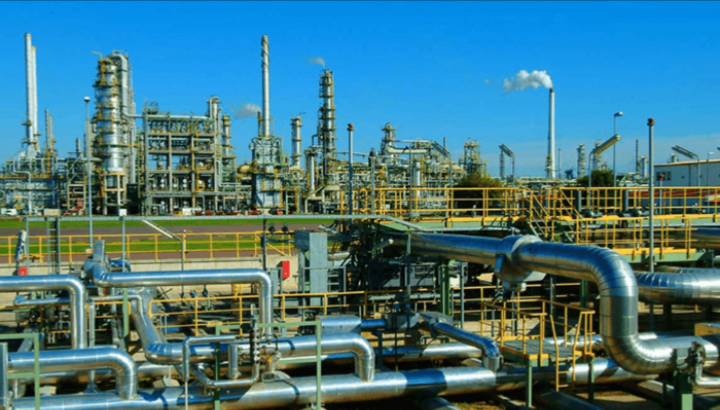

The Federal Government of Nigeria has included a budget of ₦6.04 billion in the 2026 appropriation for staffing costs at the Ajaokuta Steel Company Limited, even though the plant has not produced steel in more than four decades. This decision has raised eyebrows among citizens, economists and policy watchers who have grown weary of recurring spending on an industrial facility that remains operationally dormant.
According to figures in the 2026 budget, Ajaokuta Steel has a total allocation of ₦6.69 billion, but of that amount, almost 90.4% is earmarked for personnel costs. This clearly shows that the bulk of available funding goes to salaries, wages, allowances and statutory contributions, with minimal resources channelled into capital investment or bringing the plant to life.
Of the ₦6.04 billion personnel allocation, ₦4.79 billion is designated for salaries and wages, while another ₦1.25 billion is committed to allowances and employer obligations such as pension contributions, national health insurance and compensation insurance. These figures include contributions of ₦479.42 million for pensions, ₦239.71 million for NHIS and ₦59.82 million for employee compensation insurance, along with regular allowances amounting to ₦468.9 million.
By contrast, capital expenditure, the money that might go into repairing, upgrading or commissioning plant infrastructure, stands at only ₦410.8 million. This is less than 7% of the total allocation. Of that sum, just ₦56.4 million is marked for basic asset purchases like computers and security equipment, while ₦129.2 million is set aside for routine facility work and only ₦225.2 million goes toward rehabilitation and repairs.
The sharply disproportionate budget distribution has underscored the plant’s transformation over time: once envisaged as the cornerstone of Nigeria’s industrial revolution, the facility now exists largely to pay salaries. Since its conception in 1979, the Ajaokuta Steel Complex was expected to cut down Nigeria’s dependence on imported steel, create jobs, boost manufacturing and serve as a catalyst for value-chain industries across the country. Yet, over 40 years later, the complex remains non-producing, requiring government payments just to keep workers on the payroll.
A closer look at year-on-year budget trends shows this pattern is not new. In 2024, personnel costs at Ajaokuta stood at about ₦4.29 billion. By 2025, this figure increased sharply to ₦6.21 billion, a 44.8% rise, even though the plant still did not generate any output. The 2026 figure of ₦6.04 billion is slightly lower than the previous year but still sits high relative to capital spending.
Apart from paying staff, Ajaokuta Steel is forecast to generate zero independent revenue in 2026 and will not receive any grants, leaving it fully dependent on federal budget subventions for its continued existence. Parliament and citizens have questioned this ongoing support, given that the facility is yet to contribute to industrial productivity or economic output.
Despite the absence of production, the company still features in various constituency-style capital projects such as rural solar lighting, water facilities and road repairs in nearby regions, although these initiatives lack any direct link to steel manufacturing. Separately, the Federal Ministry of Steel Development has laid out small provisions, around ₦150.99 million for revitalisation and ₦1.06 billion for project preparation for preliminary studies and investment mobilization efforts. Yet these amounts remain trivial compared to what would be needed for full industrial revival.
“Ajaokuta Integrated Steel Complex was designed to drive industrialisation and support economic diversification.” But more than four decades on, it is essentially a payroll institution, continuing its existence on recurrent allocations rather than producing steel or generating economic value.
Budgeting billions for salaries at an idle steel plant diverts scarce public funds from productive sectors like infrastructure and manufacturing. With Nigeria facing revenue shortfalls and competing social needs, such spending deepens fiscal inefficiency and underscores the importance of genuine industrial revival to reduce imports, stimulate jobs and boost economic growth.