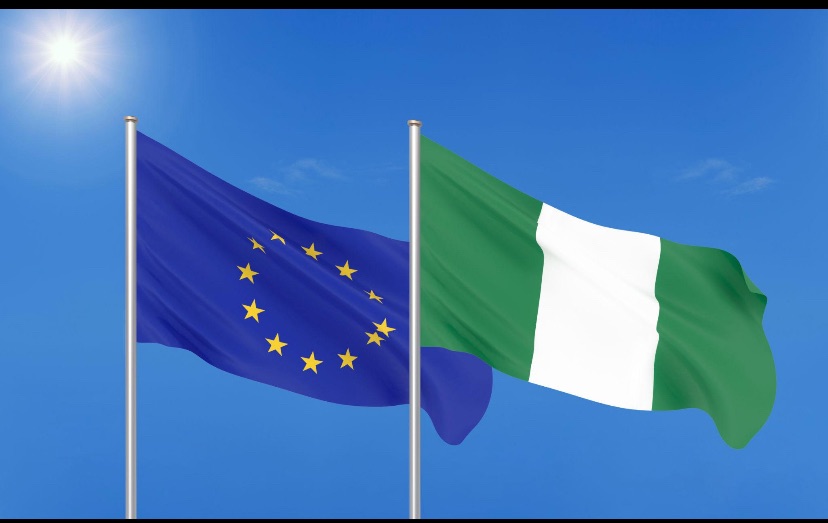

Nigeria and the European Union (EU) have renewed their commitment to building a stronger economic partnership aimed at attracting more investment, increasing trade, and supporting sustainable economic growth.
The renewed commitment was announced during the 10th Nigeria–EU Business Forum held in Abuja. The event brought together government officials, business leaders, investors, and development partners from both Nigeria and Europe to discuss ways of expanding economic cooperation and encouraging private sector growth.
Speaking at the forum, the European Union Ambassador to Nigeria and ECOWAS, Gautier Mignot, said the meeting marked an important step after Nigeria and the EU upgraded their relationship to a strengthened Strategic Partnership during the EU–Nigeria Ministerial Meeting in March 2026.
According to him, the business forum is the first major outcome of that agreement and demonstrates the shared goal of both sides to promote investment, trade, and long-term economic development.
Mignot revealed that the European Union remains Nigeria’s biggest trading partner, accounting for about 31 percent of the country’s foreign trade. He also noted that the EU is Nigeria’s largest source of foreign direct investment.
He explained that the partnership is becoming stronger through several initiatives, including the EU’s Global Gateway strategy, increased funding from the European Investment Bank, the launch of the European Bank for Reconstruction and Development’s activities in Nigeria, and improved trade and investment discussions between both parties.
Representing Vice President Kashim Shettima, the Director-General of the Presidential Enabling Business Environment Council (PEBEC), Princess Zahra Mustapha Audu, described the Nigeria-EU relationship as more than a diplomatic partnership.
She said the collaboration currently supports over €35 billion in annual trade, around €26 billion in European investments, and has created more than 130,000 direct jobs across Nigeria.
According to Audu, the Business Forum has grown beyond discussions and now serves as a platform where investment opportunities become real business projects, policy reforms, and economic development.
She added that the Federal Government’s ongoing economic reforms are helping to improve the business environment, strengthen investor confidence, and position Nigeria as an attractive destination for local and foreign investors.
The Minister of Industry, Trade and Investment, Dr. Jumoke Oduwole, also expressed confidence in Nigeria’s reform agenda. She said the government remains committed to creating a more competitive investment climate by working closely with the private sector.
Oduwole noted that recommendations from businesses and investors would help shape government policies aimed at improving Nigeria’s competitiveness and attracting investment into key sectors.
Also speaking at the event, the Minister of State for Budget and Economic Planning, Dr. Doris Uzoka-Anite, who represented the Minister of Budget and Economic Planning, Senator Abubakar Atiku Bagudu, said Nigeria’s economic progress is being driven by carefully planned reforms, fiscal discipline, and coordinated implementation.
She explained that improvements in tax administration, public financial management, and fiscal coordination are helping the government channel resources into priority sectors capable of creating jobs, attracting private investment, and improving infrastructure.
Uzoka-Anite added that new investment facilities introduced during the forum form part of the government’s broader strategy to work more closely with development finance institutions and private investors to achieve sustainable economic growth.
This year’s forum was held under the theme “Enhancing Sustainable Investment Together.”Discussions focused on expanding cooperation in renewable energy, agriculture, healthcare, manufacturing, digital infrastructure, sustainable transport, and trade.
The event highlighted the determination of both Nigeria and the European Union to transform policy agreements into practical investments that will improve infrastructure, create employment opportunities, support industrial growth, and promote inclusive economic development.
With Nigeria continuing to implement economic reforms and improve its business environment, both partners believe the strengthened relationship will encourage greater investment, drive innovation, and contribute to long-term economic prosperity.