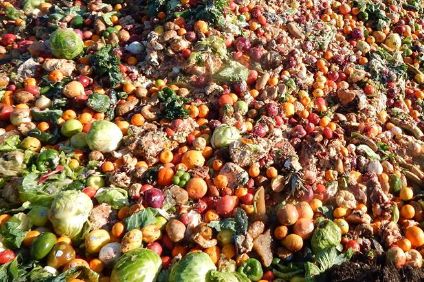

Nigeria is losing an estimated ₦5 trillion annually due to severe inefficiencies in its agricultural logistics network, a crisis that is accelerating food inflation, undermining farmer incomes, and threatening the country’s long-term food security objectives.
Industry experts and government officials estimate that up to 40 million metric tonnes of food are lost each year after harvest, representing roughly 40% of total agricultural output. The scale of the waste highlights deep structural weaknesses across Nigeria’s food supply chain, from inadequate transportation infrastructure to a chronic shortage of cold-storage facilities.
According to research cited by the Rome Business School Nigeria, the country’s inability to preserve and efficiently transport perishable produce remains a major contributor to post-harvest losses. Less than 5% of agricultural products are moved through temperature-controlled cold-chain systems, leaving crops vulnerable to spoilage before they reach consumers.
The shortage of refrigerated transport remains particularly acute. Nigeria currently has fewer than 1,000 operational refrigerated trucks, far below the estimated national requirement of more than 25,000 vehicles. As a result, highly perishable commodities such as tomatoes, peppers, fruits, and vegetables often deteriorate during transit, reducing market supply and driving up retail prices.
Transport bottlenecks further compound the challenge. Poorly maintained rural and inter-state road networks, particularly across key agricultural belts in the Middle Belt region, increase travel times and logistics costs. Haulage operators also report significant financial burdens from illegal checkpoints and unofficial levies, with some transporters paying between ₦150,000 and ₦250,000 per trip, costs that are ultimately passed on to consumers.
Boboye Oyeyemi, former Corps Marshal of the Federal Road Safety Corps and President of the Chartered Institute of Logistics and Transport (CILT) Nigeria said “The Middle Belt is the food basket of the nation. To move goods from the Middle Belt to Lagos, about 40% of them rot away”.
The economic implications extend well beyond agriculture. Analysts say persistent post-harvest losses widen the gap between farmgate and retail prices, contributing to elevated food inflation and increasing Nigeria’s dependence on food imports. This undermines government efforts to diversify the economy through agriculture and reduce pressure on foreign exchange reserves.
Stakeholders are increasingly calling for coordinated public-private partnerships to modernize rural feeder roads, expand cold-storage infrastructure, and provide incentives for private-sector investment in logistics hubs. Experts argue that targeted investments in supply-chain efficiency could unlock billions of naira in value, improve food availability, and enhance the competitiveness of Nigeria’s agricultural sector.
Without decisive intervention, Nigeria risks continuing to lose trillions of naira annually while millions of tonnes of edible food perish before reaching markets, further straining household budgets and national food security. The clock is ticking for Nigeria food security.