
Nigeria has taken another significant step toward strengthening its position in the global critical minerals value chain through a strategic partnership between the Africans for Africa (AFA) Initiative and Steron International Resources Limited, aimed at accelerating domestic processing of lithium and rare earth elements (REEs).
The Memorandum of Understanding (MoU), signed on the sidelines of the African Natural Resources and Energy Investment Summit (AFNIS 2026) in Abuja, designates Steron’s Wasa mining project as a flagship candidate for the AFA Mining Fund I Pipeline. The status unlocks targeted investment and technical support intended to establish midstream mineral processing facilities within Nigeria, shifting away from the export of raw ores.
The agreement aligns with Nigeria’s broader industrial strategy of promoting mineral beneficiation, the process of converting raw minerals into higher-value products prior to export. Policymakers view local processing as essential to creating skilled jobs, increasing export earnings, attracting manufacturing investment, and reducing reliance on commodity exports.
Central to the partnership is the adoption of the “51% Total African Benefit” model, a framework ensuring that the majority of economic value generated from mining, refining, and downstream industrial activities remains within Africa. The initiative actively encourages greater local ownership, technology transfer, and regional industrial development while positioning African producers higher along global supply chains.
Industry momentum continues to build. Several large-scale projects are progressing nationwide, including a proposed $1.3 billion lithium processing facility and a separate $400 million rare earth plant. These developments underscore growing investor confidence in Nigeria’s emerging role as a processing hub for minerals vital to electric vehicles, renewable energy technologies, battery manufacturing, and advanced electronics.
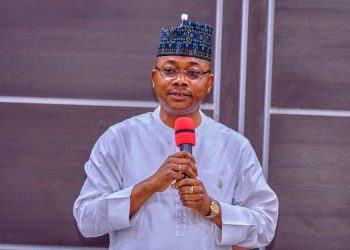
“This MoU is a testament to our shared belief that Nigerian mining projects can and must meet global ESG standards while delivering transformative economic outcomes for our local communities. Our objective is to demonstrate that responsible mining and economic development can go hand in hand. Investors increasingly demand sustainability, and communities increasingly demand inclusion. We believe both objectives can be achieved simultaneously,” Sadiq Omar said.
Still, the agreement remains an initial framework contingent on financing, regulatory approvals, and disciplined project execution. Industry observers note that while these hurdles are substantial, the deal sends a positive signal to international investors seeking long-term exposure to critical minerals. Successful implementation could sharpen Nigeria’s competitiveness in a market where demand for lithium and REEs is expected to stay robust as the global clean-energy transition accelerates.
For Nigeria, expanding domestic processing capacity is more than an industrial policy objective, it marks a strategic effort to capture greater economic value from its abundant mineral resources while positioning the country as a leading supplier of refined critical minerals to both regional and international markets.