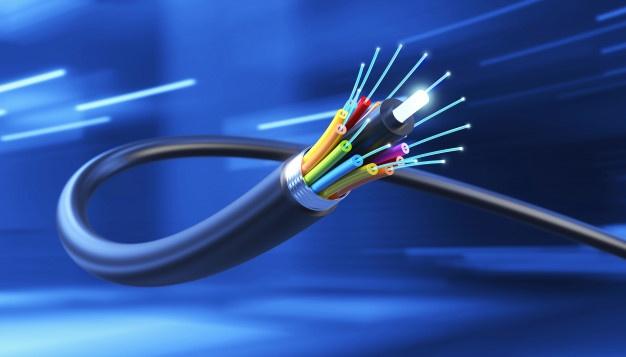

Nigeria’s broadband ambitions now hinge on a construction pace few African infrastructure programmes have attempted: potentially more than 80 kilometres of fibre-optic cable laid every day during periods of peak construction over the life of a project scheduled to run through September 2030.
That is the scale behind Project BRIDGE — Building Resilient Digital Infrastructure for Growth, the Federal Government’s flagship plan to deploy 90,000 kilometres of new fibre-optic networks, extending Nigeria’s national backbone from about 35,000 kilometres to roughly 125,000 kilometres. The World Bank says the project is designed to build open-access backbone and backhaul infrastructure in underserved parts of the country and mobilise private capital through a special purpose vehicle (SPV).
The programme is scheduled to close in September 2030. Its implementation, however, is still at an early stage. As of July 24, the World Bank said the project had become effective on April 27, 2026, with strategic advisers onboard and the selection process for private-sector investors for the planned SPV underway. No fibre had yet been recorded as deployed under the project at that reporting date.
The scale of the target makes execution critical. The World Bank’s results framework sets a closing target of 90,000 kilometres of fibre networks added by September 2030. If that entire target were spread evenly across the remaining construction period, the programme would require an average of more than 60 kilometres of deployment every day. Actual construction could be substantially more intensive during peak periods, depending on the final implementation schedule.
Delivery will be structured around an SPV designed to attract substantial private-sector participation. The World Bank appraisal provides for $500 million in International Development Association financing and $1.1 billion in expected commercial financing, producing an initial project financing envelope of about $1.6 billion. The SPV is intended to provide open-access infrastructure that internet service providers and other network users can access on commercial terms.
The financing picture has subsequently broadened. In April 2026, the African Development Bank approved $200 million for BRIDGE, while other development-finance support includes a $100 million commitment from the European Bank for Reconstruction and Development and a €22 million European Union grant. AfDB has described the broader financing package as a $2 billion project, including at least $1.2 billion expected from private investors. The figures therefore reflect different stages and descriptions of the programme rather than a simple reduction from $2 billion to $1.6 billion.
The stakes extend well beyond kilometres of cable. Government and World Bank targets include increasing the number of people using broadband from about 92 million to 150 million by September 2030, reducing wholesale bandwidth prices by 20% and raising median fixed-broadband download speeds from 22.15 Mbps to 50 Mbps.
The project also targets connectivity for 59,103 facilities, including 38,803 public schools, 16,872 health facilities and 3,428 local-government administration offices. The broader objective is to extend resilient broadband infrastructure into currently unserved and underserved areas and enable private operators to reach more households, businesses and public institutions.
Execution risk is where BRIDGE’s credibility will ultimately be tested. Fibre deployment in Nigeria faces challenges including right-of-way costs, construction logistics, security and infrastructure vulnerability. The World Bank itself currently rates the project’s overall risk as substantial and its technical-design risk as substantial.
For a government betting part of its digital-economy strategy on a nationwide fibre backbone, the decisive measure will therefore not be the size of the announcement or financing package, but the kilometres actually laid, commissioned and made commercially usable. Through 2030, that gap between announced ambition and ground-truth deployment will be the metric to watch.