
Revenue and profit are two of the most important figures in any business, but they do not mean the same thing. While both help business owners understand how their companies are performing, confusing the two can lead to poor financial decisions.
Revenue refers to the total amount of money a business earns from selling its products or services before expenses are removed. It is often described as the company’s “top line.” For example, if a fashion business sells clothes worth N10 million in a month, its revenue for that month is N10 million.
However, the business does not necessarily have N10 million available to spend. It still has to pay for materials, staff salaries, transportation, rent, electricity, taxes, marketing and other operating costs.
This is where profit becomes important.
Profit is the amount left after a business subtracts its expenses from its revenue. If the same fashion business generates N10 million in revenue but spends N7 million running the business, its profit would be N3 million.
This simple difference explains why a company can have high sales but still struggle financially.
There are different ways businesses measure profit. Gross profit is calculated by subtracting the direct cost of producing or purchasing goods from revenue. For example, if a company makes N10 million from selling products and spends N6 million producing those products, its gross profit is N4 million.
Net profit goes further by taking other business expenses into account. These may include salaries, rent, transportation, interest payments, taxes, advertising and administrative costs. The amount remaining after these expenses is the company’s net profit.
Understanding the difference between revenue and profit is particularly important for small and growing businesses. Some entrepreneurs focus heavily on increasing sales without paying enough attention to how much they are spending to generate those sales.
A business could increase its revenue from N10 million to N15 million but actually make less profit if its expenses rise even faster.
For instance, a company may offer large discounts to attract customers and record strong sales. However, if the discounts reduce its margins significantly, the business may end up with little profit despite its impressive revenue figures.
Business owners should therefore monitor both figures regularly. Revenue can show whether demand for a product or service is growing, while profit reveals whether the business model is financially sustainable.
Cash flow should also not be ignored. A profitable business can still experience financial difficulties if customers delay payments while the company has immediate bills to settle.
For investors, lenders and business managers, looking at revenue alone does not provide the full picture. A healthier assessment considers revenue growth, profit margins, expenses, debt and cash flow together.
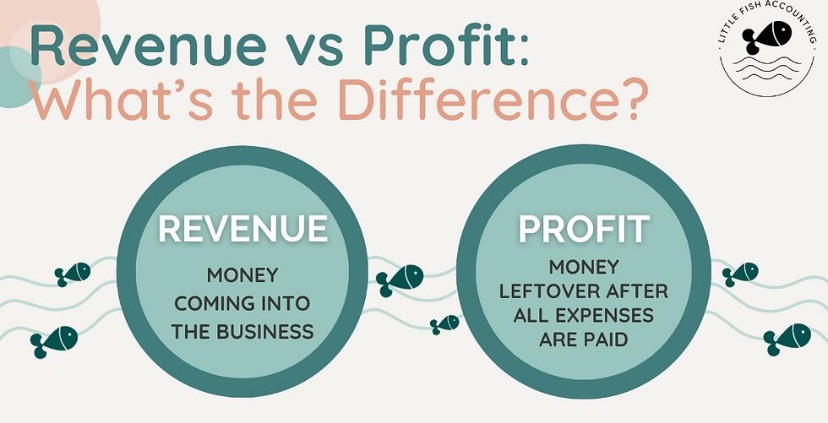
The main lesson is simple: revenue shows how much money comes into a business, while profit shows how much the business keeps after paying its costs.
Knowing the difference can help entrepreneurs price their products better, control unnecessary expenses, plan for growth and make smarter financial decisions.
In business, making more sales is important, but what ultimately matters is whether those sales are generating sustainable profit.