
Nigeria has announced a $200 million World Bank Group commitment to expand domestic fish production, as the Federal Government seeks to close an annual supply gap of more than 2.2 million tonnes and reduce the country’s dependence on imported fish.
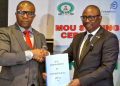
Minister of Marine and Blue Economy, Adegboyega Oyetola, disclosed the commitment through his representative, Professor Busayo Fakinlede, Senior Special Assistant to the President on Marine and Blue Economy, at an executive training on the Aquaculture Investment Guide held in Abuja.
According to a statement issued by the ministry on November 8, 2026, the proposed financing is expected to be made available to state governments as concessional loans to develop fisheries and aquaculture projects.
The ministry said the intervention would support state governments in expanding production capacity, attracting private investment and developing commercially viable aquaculture projects through public-private partnerships.
Oyetola said Nigeria’s ambition to achieve fish sufficiency would require stronger participation from state governments, investors and development partners.
According to figures released by the ministry, Nigeria requires approximately 3.6 million tonnes of fish annually but currently produces about 1.4 million tonnes, leaving a deficit exceeding 2.2 million tonnes.
The government estimates that imports used to bridge the shortfall cost the country close to $1 billion annually in foreign exchange.
The production figure represents an increase from 1.1 million tonnes in 2024, according to the Federal Government’s December 2025 disclosure reported by Voice of Nigeria.
Research published in 2026 by the International Food Policy Research Institute and available through the CGIAR research repository also identifies a significant structural gap between Nigeria’s fish demand and domestic supply. The research estimates the deficit at approximately 2.4 million tonnes and annual import expenditure at more than $1 billion.
Under the proposed state-driven framework, individual states are expected to identify priority fisheries and aquaculture value chains, assess investment readiness, develop bankable projects and establish measurable production targets.
The executive training, organised by the Federal Ministry of Marine and Blue Economy in collaboration with the World Bank Group, brought together commissioners and technical officials from Rivers, Bayelsa, Delta and Cross River states, alongside other fisheries and aquaculture officials.
The programme focused on developing viable business models, managing investment risks, meeting environmental and social safeguards and encouraging public-private partnerships.
Nigeria’s aquaculture industry has considerable potential, but production remains constrained by high feed costs, inadequate cold-chain infrastructure, fragmented fingerling supply systems and limited access to affordable financing.
A 2026 research paper by the International Food Policy Research Institute identified fish feed as accounting for between 60 and 70 per cent of aquaculture production costs, while inadequate storage and transportation infrastructure contribute to significant post-harvest losses.
The research also highlighted the need for better access to finance and improvements in the organisation of the domestic fisheries value chain.
The ministry said its ongoing efforts to strengthen the sector include the inauguration of a Technical Committee on Accelerating Fish Production in August 2026, the digitisation of fish import licensing and the development of investment proposals for Fish City and Fish Terminal projects.
It also highlighted progress towards shrimp exports to the United States following compliance with Turtle Excluder Device requirements.
However, the $200 million commitment still requires clearer implementation details. The financing allocation among states, interest rates, repayment periods, eligibility conditions and disbursement timetable have not been publicly established in the reports reviewed.
The announcement therefore represents an important financing opportunity for Nigeria’s fisheries and aquaculture industry, but its economic impact will depend on how effectively the proposed funding translates into increased production, improved infrastructure and better access to finance for local fish farmers.