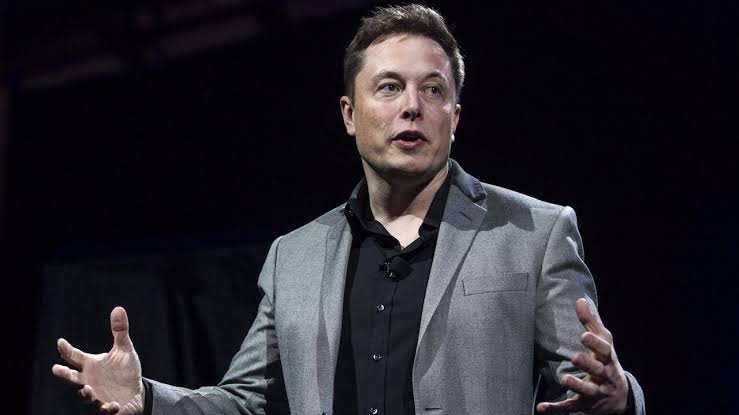

Elon Musk’s latest demographic broadside has put Nigeria’s birth rate back in the spotlight, and raised fresh questions about how AI chatbots handle contested statistics.
In a post on X, the Tesla and SpaceX chief cited his own chatbot, Grok, in claiming Nigeria recorded four million more births than the entire European Union in 2025. Grok’s figures, per Musk, put Nigeria at roughly 7.8 million births against 3.5 million across the EU’s 27 member states.
The comparison is directionally sound but methodologically uneven. Eurostat’s 2025 data, drawn from civil registries, confirms 3.46 million EU births against 4.81 million death, a natural population decline of 1.35 million, with migration now the bloc’s only source of growth. Nigeria’s figure, by contrast, is a United Nations projection rather than a verified count; the country lacks complete birth registration infrastructure, and UNICEF reported in February that only 14 million Nigerian births were formally registered over the preceding two years.Some
Some of the viral figures circulating also conflate “EU” with “Europe” more broadly, a distinction that shifts the comparison meaningfully once Russia and non-EU states are included.
The underlying trend, however, is not in dispute. Nigeria’s median age of roughly 18, set against a population nearing 230 million, points to a demographic profile almost inverse to Europe’s ageing, shrinking workforce. That imbalance carries real economic weight on both sides.For
For Nigeria, a young and expanding population is potentially the country’s biggest long-term asset, provided job creation, education and healthcare capacity can keep pace. The Emir of Kano, Muhammadu Sanusi II, told the Nigerian Economic Summit last month that the economy was, for the first time, growing faster than its population, a notable claim given that Nigeria’s poverty rate stood at 63% in 2025, according to World Bank data, amid a sustained cost-of-living squeeze.
For the EU, the calculus runs the opposite way: a contracting native workforce, rising dependency ratios, and mounting reliance on migration to sustain growth, the exact anxiety Musk has repeatedly voiced over the past week regarding European fertility decline.
What the episode ultimately underscores is less about Nigeria versus Europe and more about data provenance. AI-generated statistics, however plausible, still need to be checked against primary sources, UN projections are not the same as registered counts, and headline comparisons can obscure which “Europe” is actually being measured.