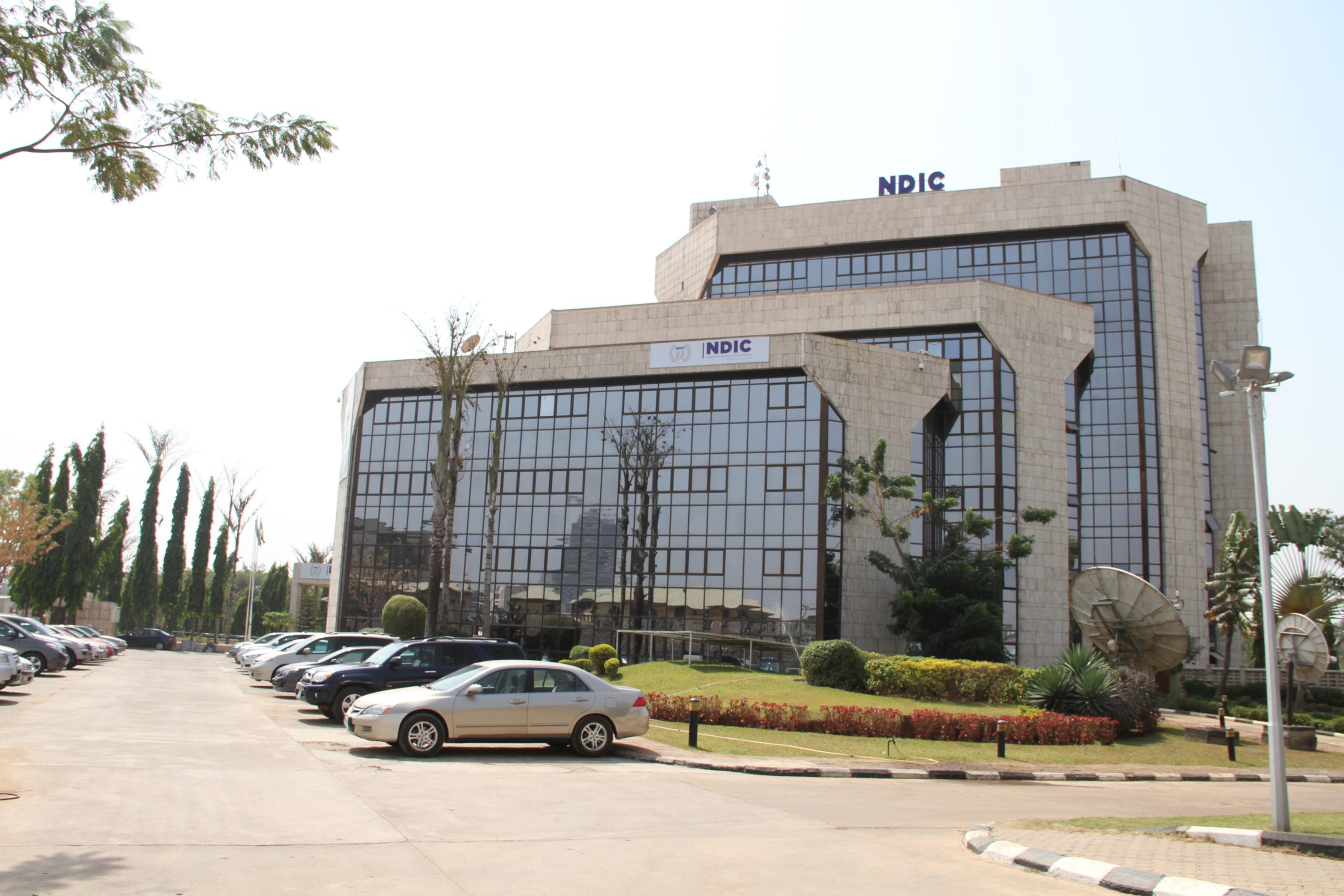

The Nigeria Deposit Insurance Corporation has reiterated its core mandate of protecting depositors, stressing that the safety of bank deposits does not depend on government bailouts. Instead, the agency says its framework is structured to ensure stability within the financial system while limiting fiscal exposure.
The corporation clarified that deposit protection in Nigeria is anchored on an established insurance mechanism rather than discretionary public funding. This model is designed to guarantee that depositors are reimbursed within defined limits if a bank fails, reducing panic and maintaining confidence in the banking sector. Deposit insurance systems globally serve this purpose by shielding savers from losses and preventing systemic crises.
According to the NDIC, its operations are backed by statutory provisions that empower it to supervise financial institutions, resolve distressed banks, and liquidate failed ones in an orderly manner. These responsibilities form part of Nigeria’s broader financial safety net, which also includes regulatory oversight and lender-of-last-resort support.
Reinforcing its position, the agency noted that depositors are protected up to insured limits, which have been revised upward in recent years. Coverage currently extends to the vast majority of bank customers, with estimates suggesting that about 99 per cent of depositors fall within the insured threshold. This expansion reflects efforts to strengthen public trust and deepen financial inclusion.
The NDIC also emphasised that its payout mechanism is structured for speed and efficiency. In the event of a bank failure, insured depositors are reimbursed promptly, while those with balances above the insured cap receive additional payments through liquidation dividends as assets of the failed institution are recovered. This dual approach ensures that losses are minimised without placing undue burden on government resources.
Crucially, the corporation underscored that it does not rely on bailout funds to fulfil its obligations. Instead, it operates a pre-funded system financed by premiums paid by insured institutions. This approach aligns with international best practices, where deposit insurance schemes are designed to be self-sustaining and to reduce moral hazard associated with government guarantees.
By distancing itself from bailout expectations, the NDIC is signalling a shift toward a more disciplined financial framework. The absence of guaranteed public rescues places greater responsibility on banks to manage risk prudently, while also encouraging depositors to remain confident in the formal banking system.
The agency further highlighted its collaboration with the Central Bank of Nigeria in monitoring banks and ensuring compliance with regulatory standards. This partnership strengthens oversight and enables early intervention in cases of financial distress, thereby reducing the likelihood of systemic failures.
Overall, the NDIC’s message is clear and consistent: depositors’ funds are secure within the limits of the insurance scheme, and the system is robust enough to function without government bailouts. By reinforcing this position, the corporation aims to sustain confidence in Nigeria’s banking sector while promoting long-term financial stability.