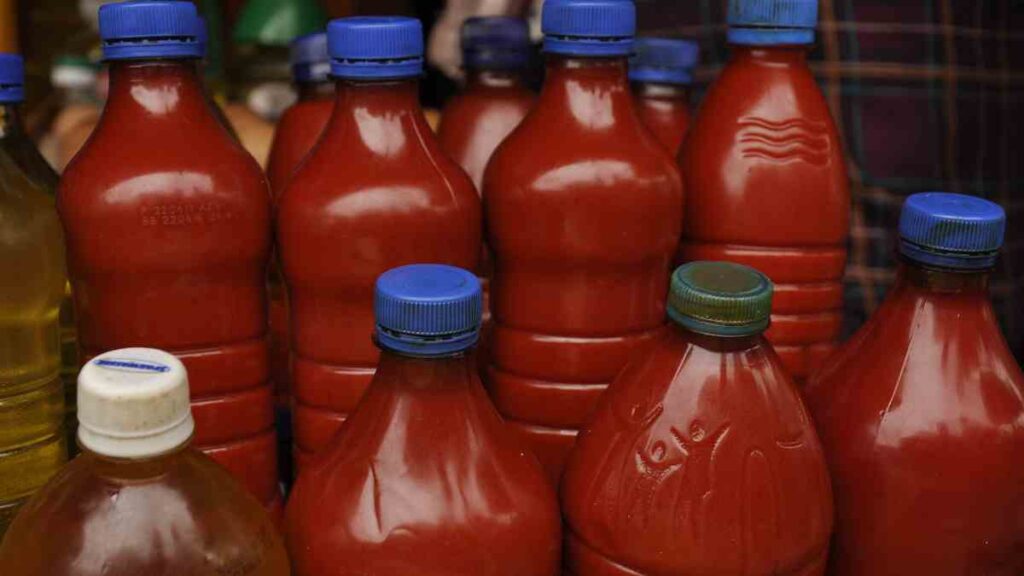

The Lagos State Government has warned residents to be cautious when buying palm oil, following concerns raised by food safety experts over the use of chemical dyes and other substances to adulterate the product.
The warning, issued through the Lagos State Consumer Protection Agency (LASCOPA), was made public on Monday, September 21, 2026, after concerns raised at the Fourth Lagos State Food Safety Conference and Exhibition held in Ikeja on Tuesday, September 8, 2026.
At the conference, Dr Nurah Oseni, a food safety expert and lecturer in the Department of Food Technology at Auchi Polytechnic, presented a paper titled “Palm Oil Adulteration: Emerging Risks, Detection Strategies and Regulatory Control.”
Oseni said some traders may use substances including Sudan and Azo dyes to give palm oil a deeper red colour, while other adulteration methods include mixing genuine palm oil with recovered or spent cooking oil.
She also raised concerns about falsified labels and batch records, which she said could make it difficult to trace the source of adulterated products.
According to Oseni, consumers should not rely on colour alone to determine whether palm oil is safe. She said genuine palm oil may naturally separate into layers, with the lower layer appearing orange to red-yellowish, but warned that visual inspection cannot confirm whether the product contains chemical adulterants.
She recommended a more scientific approach involving risk-based screening, sampling, rapid tests and laboratory confirmation. She also proposed a five-step surveillance framework for Lagos: “Risk Map, Sample, Screen, Confirm and Act.”
Speaking to the News Agency of Nigeria (NAN) on September 9, 2026, Oseni called for stronger regulation of palm oil sold in Nigerian markets, saying traders should register their products and subject them to proper testing before sale. She also stressed the importance of traceability and warned consumers against buying unlabelled or untraceable palm oil.
LASCOPA General Manager and Chief Executive Officer, Afolabi Solebo, said the agency had strengthened market surveillance and consumer education while working with other regulatory bodies to improve food safety.
Solebo said at the September 8 conference that LASCOPA had deepened collaboration with the National Agency for Food and Drug Administration and Control (NAFDAC) and the Standards Organisation of Nigeria (SON). He also urged all players in the food chain to take responsibility for ensuring food safety.
The warning comes amid wider concerns over the health and economic effects of unsafe food in Nigeria.
On June 8, 2026, Minister of State for Health and Social Welfare, Dr Iziaq Salako, said Nigeria records nearly 50 million foodborne illnesses and more than 53,000 deaths annually. The Federal Ministry of Health said the figures were disclosed during the 2026 World Food Safety Day commemoration in Abuja.
LASCOPA has urged consumers to remain vigilant and report suspected cases of adulterated food products through the agency’s official channels.