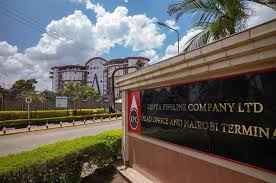

The Kenya Pipeline Company (KPC) is set to list on the Nairobi Securities Exchange after a successful Initial Public Offering that achieved a 105.7 percent subscription rate, raising Sh106.3 billion ($820 million) from investors.
The government sold a 65 percent stake in KPC, equivalent to 11.8 billion shares priced at Sh9 each. Investor applications reached 12.4 billion shares, exceeding the available allocation. With no green shoe option allowing additional share sales, the government will refund Sh5.4 billion ($41.7 million) from excess applications.
Treasury Cabinet Secretary John Mbadi presented the results on March 4, describing the outcome as a reflection of investor confidence in Kenya’s capital markets and economic fundamentals. “The finalisation of the KPC IPO is a significant milestone. At its core, it speaks to how the government prudently manages its assets,” Mbadi said.
Ownership structure reveals that institutional investors will hold 41 percent of the company, with the government retaining a 35 percent stake. East African Community investors, led by the Uganda National Oil Company (UNOC), now hold 21.2 percent, making KPC a truly regional corporate entity. Retail investors account for 2.56 percent, while foreign investors, KPC employees, and oil marketers hold smaller portions.
More than 70,000 ordinary Kenyans participated in the IPO, which was conducted fully online and extended by several days to attract additional retail buyers. Mbadi noted that this broad participation achieves the key objective of democratizing public assets by widening the shareholder base.
Proceeds from the sale will be channeled into Kenya’s newly created National Infrastructure Fund (NIF), earmarked for transport, energy, and agricultural projects. Together with the Sovereign Wealth Fund, NIF has been positioned as a solution to development financing amid tightening fiscal space, where annual debt repayments consume approximately 40 percent of government revenues.
For Kenya’s economy, the successful IPO carries multiple implications. It demonstrates the depth of domestic capital markets and investor appetite for state-owned enterprise stakes. The listing increases institutional investors’ desired stock of assets on the NSE, which surpassed Sh3 trillion in market capitalisation at the close of 2025, potentially attracting increased foreign capital flows. The infrastructure fund mechanism provides an alternative to external borrowing for development projects, reducing pressure on public finances. KPC plans to use the new investment to expand pipeline capacity, facilities, and oil refinery operations.