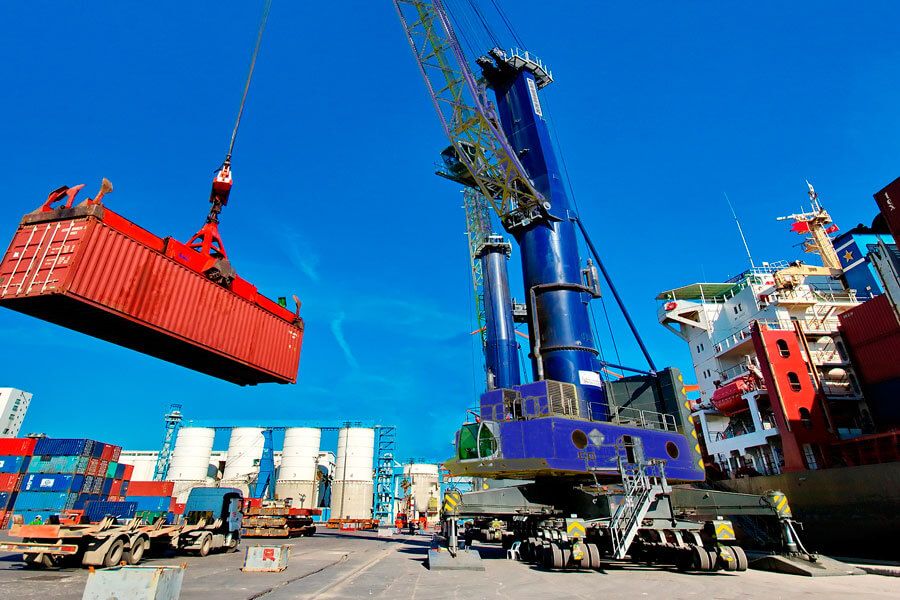

Nigeria’s maritime sector recorded one of its strongest years on record in 2025, with total cargo throughput surging 24.8 percent to 129.3 million metric tonnes, driven by rising export volumes and a dramatic increase in transshipment activity that positions the country as a growing regional trade hub. The latest operational performance report from the Nigerian Ports Authority (NPA) reveals that exports now account for 39 percent of total cargo, up significantly from previous years, signalling a structural shift toward trade diversification that aligns with the federal government’s economic agenda.
Container traffic climbed 25.7 percent to over 2.1 million Twenty-foot Equivalent Units (TEUs), while transshipment containers recorded an extraordinary 205.8 percent surge, underscoring Nigeria’s emergence as a logistics gateway for West and Central Africa. Import-laden containers grew 32.8 percent, while export containers rose 3.1 percent, reflecting sustained demand for Nigerian goods in international markets.
Lekki Port emerged as the nation’s premier maritime facility, handling 40.6 percent of total cargo and attracting the largest vessels, with an average Gross Registered Tonnage (GRT) of 55,712. Onne Port followed with 19.1 percent, while Apapa Port accounted for 16.7 percent of throughput. Tin Can Island Port recorded the highest frequency of ship arrivals at 22.7 percent of total calls, though Lekki and Onne increasingly received the industry’s “heavyweight” vessels, enhancing Nigeria’s capacity to handle larger, more valuable cargoes.
Total ship calls rose nearly 12 percent to 4,477 vessels, reflecting broad-based growth across all operational metrics. Liquid bulk cargo, including fuel and chemicals, remained dominant at 54.7 percent, while containerized cargo accounted for 24 percent. Analysts note that the increasing size and sophistication of vessel traffic, coupled with container growth, points to a maritime sector gradually aligning with global shipping standards.
NPA Managing Director Abubakar Dantsoho expressed confidence that the next phase of growth will be driven by the federal government-approved port modernization programme and the implementation of the National Single Window system. The comprehensive initiative is designed to overhaul ageing infrastructure, deepen berths, rehabilitate quays, expand cargo-handling capacity, and deploy advanced digital solutions across Nigeria’s port network.
For Nigeria’s economy, the port performance carries multiple implications. Rising export volumes validate efforts to diversify beyond crude oil and promote non-oil sector exports. The surge in transshipment activity attracts international shipping lines, increases NPA revenue, and strengthens Nigeria’s position in regional trade. However, sustaining this momentum requires continued investment in infrastructure, streamlined customs procedures, and improved connectivity to hinterland markets. The National Single Window system, when fully implemented, promises to reduce cargo dwell time, enhance transparency, and boost Nigeria’s competitiveness relative to regional peers like Togo’s Lomé Port and Ghana’s Tema Port.