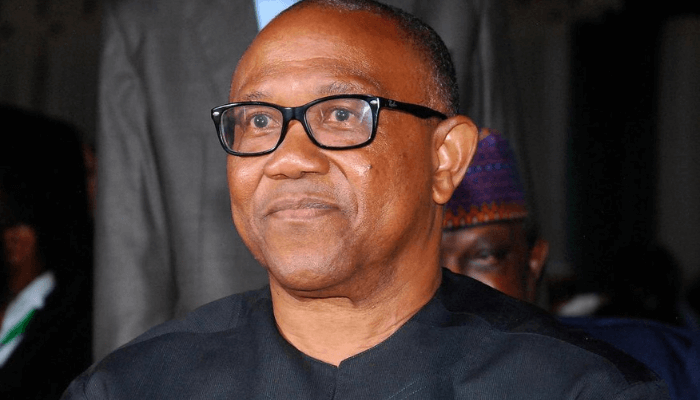

Former Anambra State Governor Peter Obi has challenged the World Bank’s improved economic growth forecast for Nigeria, arguing that rising economic indicators have not translated into better living conditions for citizens.
Obi made the remarks on Monday, October 12, in a statement titled “Celebrating Microeconomic Stability Amidst Increasing Poverty,” published on his official X account. The World Bank projects Nigeria’s economy will grow by 4.3% in 2026, up from 4.0% in 2025, with growth expected to reach 4.4% annually in 2027 and 2028. However, Obi argued that economic growth figures alone do not reflect the realities of households struggling with poverty, unemployment and the rising cost of living.
“So-called ‘economic stability’ has not resulted in higher living standards, improved employment opportunities, and reduction of poverty and inequality across Nigeria,” he stated.
He maintained that economic stability should be measured by citizens’ ability to afford food, access healthcare, educate their children and secure decent jobs, rather than increases in government revenue, foreign reserves or gross domestic product.
“An economy is not truly stabilized simply because government revenue increases, foreign reserves strengthen, or GDP grows. Stability exists when citizens can afford food, obtain healthcare, provide education for their children, and live with dignity,” he added.
Obi called on the Federal Government to prioritise policies that improve household welfare and create employment opportunities instead of relying primarily on economic indicators to demonstrate progress.
In its October 2026 Africa Economic Update, the World Bank raised its growth forecast for Sub Saharan Africa to 4.3% in 2026, from its earlier projection of 4.0%. The institution had estimated regional growth at 4.1% for 2025. Nigeria was among the economies with improved growth projections, alongside Angola, Ethiopia and Zambia. However, the World Bank warned that growth across the region remains insufficient to significantly reduce extreme poverty and generate enough jobs for its expanding workforce.
The institution is also pursuing private sector investment initiatives to support Nigerian businesses and employment. During its 2026 fiscal year, it plans to mobilise up to $5.79 billion in private financing. Under its Financial Inclusion for Nigeria programme, the World Bank expects to attract about $1.89 billion in private financing to support more than 250,000 micro, small and medium sized enterprises. The programme, backed by $500 million in financing, is expected to support approximately 850,000 direct and indirect jobs. In March 2026, the institution also approved a $500 million credit for the Nigeria Sustainable Agricultural Value Chains for Growth project.
Obi’s criticism highlights the gap between projected economic expansion and the improvements Nigerians expect in their daily lives, particularly in household purchasing power, employment and access to essential services.