
The Federal Government has inaugurated a 15-member Ministerial Advisory Committee (MAC) to strengthen economic policymaking, improve coordination across government institutions, and accelerate the implementation of fiscal and structural reforms aimed at restoring sustainable economic growth.
The committee, inaugurated on Tuesday, 14th July, 2026 in Abuja by the Minister of Finance and Coordinating Minister of the Economy, Mr. Taiwo Oyedele, forms part of the government’s efforts to deepen collaboration between the public and private sectors as Nigeria seeks to translate recent reforms into measurable economic outcomes.
Speaking at the inauguration, Chairman of the Presidential Committee on Fiscal Policy and Tax Reforms, Taiwo Oyedele, described the initiative as a “public-policy-private partnership” designed to bridge the gap between policy formulation and execution.
“Today is not about creating another committee. It is about institutionalising a better approach to policymaking by connecting ideas with implementation and improving the quality of economic decisions for the benefit of Nigerians,” Oyedele said.
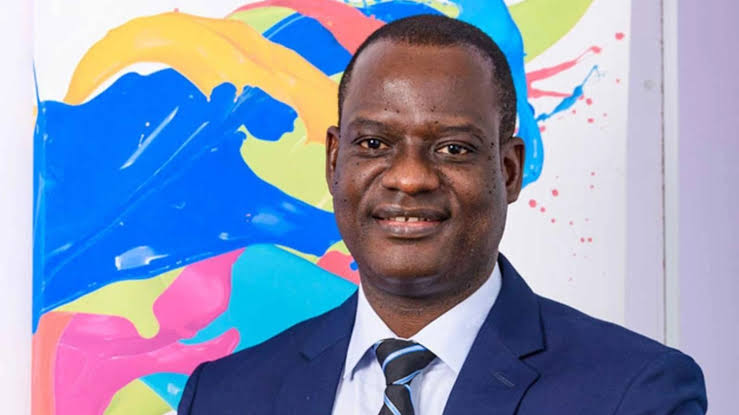
The advisory committee is chaired by Sterling Bank Managing Director Abubakar Suleiman, with economist Dr. Ayo Teriba serving as Vice Chairman. Other members include leading economists, financial experts, business executives and representatives of the organised private sector, including Prof. Uche Uwaleke, Chinyere Almona, Vincent Nwani, Segun Oloketuyi, Jide Adeola, Dimeji Salaudeen, Damilola Akinbami, Idris Belo-Osagie, Engr. Jani Ibrahim, Segun Ajayi-Kadri, Prof. Joseph Nnanna, Dr. Suleyman Ndanusa, and Dr. Baba Yusuf Musa.
Oyedele noted that members accepted to serve without remuneration, describing their decision as an act of national service.
He said the committee would provide independent, data-driven advice on economic policy, public financial management, fiscal sustainability and intergovernmental coordination while helping ensure reforms deliver tangible benefits to businesses and households.
According to him, President Bola Tinubu’s administration has undertaken some of Nigeria’s most significant economic reforms, including the removal of fuel subsidies, the liberalisation of the foreign exchange market and an overhaul of the country’s tax system.
While acknowledging that the reforms have imposed short-term costs on citizens and businesses, Oyedele argued that they were necessary to restore fiscal sustainability and build a more competitive economy.
“The true measure of reform is not the number of policies announced but whether they create jobs, reduce inflation, stabilise the naira, encourage investment and improve the lives of Nigerians,” he said. “It is time to move from reform to results.”
He added that the committee would advise government on the second- and third-order effects of policy decisions, identify emerging risks before they escalate, benchmark Nigeria’s reforms against global best practices and recommend practical adjustments where necessary.
The government is targeting annual economic growth of 7% as part of its ambition to build a $1 trillion economy by 2030, a goal that economists say will require sustained macroeconomic stability, stronger private-sector investment, improved infrastructure and consistent policy implementation.
Responding on behalf of the committee, Chairman Abubakar Suleiman pledged that members would focus on delivering practical recommendations rather than producing lengthy reports.
He said the committee would engage businesses, investors and citizens to assess the real-world impact of government policies and provide timely feedback to policymakers, enabling the government to refine reforms where necessary and strengthen public confidence in Nigeria’s economic transformation agenda.