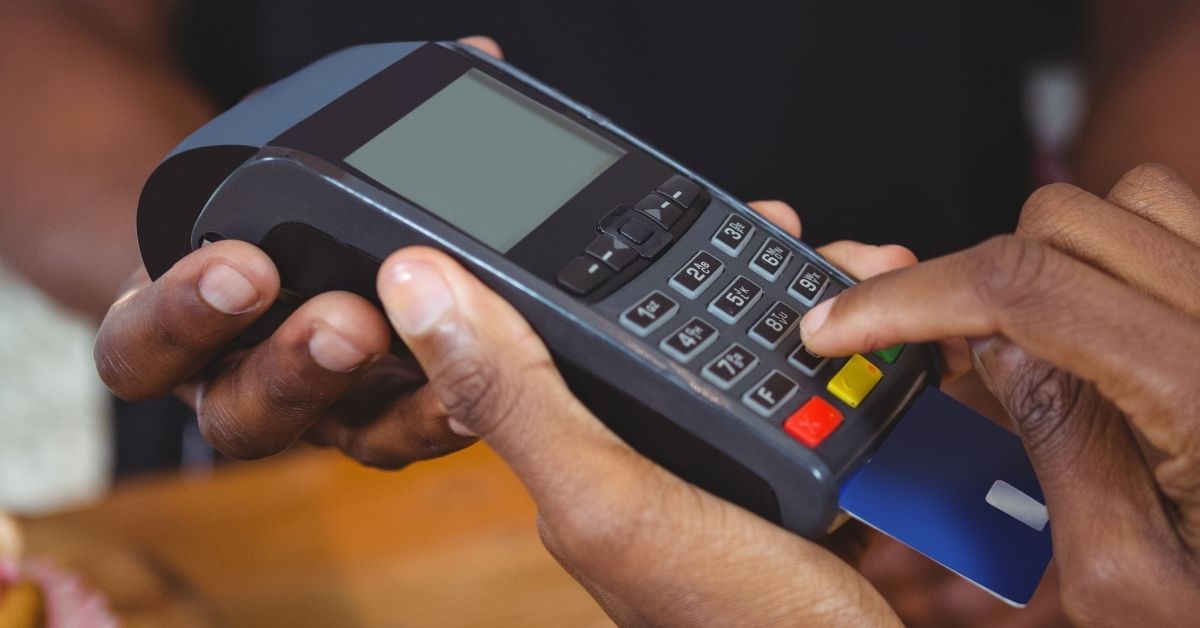

A POS kiosk can look like one of the simplest businesses in Nigeria: a small table, a terminal, some cash and a customer waiting to withdraw money.
That distinction matters because a POS operator can own a functioning terminal and still struggle to make money if there is not enough working capital to serve customers.
The money moves, but it is not all profit.
POS agents make money from transaction fees and commissions on services such as withdrawals, transfers, deposits and bill payments. But the money passing through the terminal should not be confused with the agent’s income.
Consider a simple illustration.
If an agent handles 30 withdrawal transactions of ₦5,000 each in a day, that is ₦150,000 moving through the business.
At a ₦150 customer charge per transaction, the gross fees would be ₦4,500.
But that ₦4,500 is not automatically profit. The agent may still have provider charges and other operating expenses to absorb.
The point is simple: volume creates the opportunity, but margins determine the business.
Current market guides put common POS withdrawal charges in the broad range of about ₦100 to ₦300, depending on the transaction and provider, while individual operators can structure their charges differently.
CBN has put a ceiling on the game
The Central Bank of Nigeria’s October 2025 agent-banking guidelines introduced a ₦1.2 million daily cumulative cash-out limit for an individual POS agent. Customers using agent banking are subject to a ₦100,000 daily transaction limit and ₦500,000 weekly limit for cash-in and cash-out transactions.
That changes how the business should be understood.
An agent processing ₦1.2 million in cash withdrawals has not made ₦1.2 million. That is transaction value.
The actual earnings are the fees and commissions generated from those transactions, less the cost of running the business.
Two agents can use similar terminals and charge similar fees while earning completely different amounts.
One may sit beside a busy market, transport hub or densely populated neighbourhood where customers constantly need cash.
Another may operate on a quiet street where only a handful of people need the service each day.
The difference is transaction volume and customer traffic.
And there is another problem: liquidity.
An agent who runs out of cash during the busiest part of the day may watch customers walk to the next kiosk. The same thing happens when the agent lacks enough electronic balance to process transfers or other transactions.
That is why working capital is often more important than the terminal itself.
The POS business teaches a broader lesson about entrepreneurship.
People often look at the visible asset, the machine and assume that is where the money is.
It isn’t.
The real business is the constant movement of transactions, adequate liquidity, customer trust and tight control of costs.
The terminal merely makes the transaction possible.
The cash keeps the business alive.