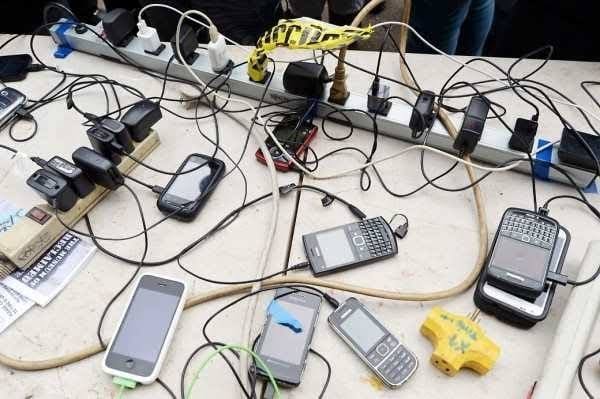

There is a business in Nigeria that can fit on a small table.
No fancy office. No expensive storefront. No complicated technology.
Just electricity, charging cables and people with dying phones.
In some places, charging a phone now costs about ₦200, while charging a power bank can cost ₦300. It sounds like pocket change until you realise what the business is really selling: access to electricity when the grid cannot provide it.
Commercial phone charging has existed in Nigeria for years, but the business has survived because the underlying problem has refused to disappear.
A 2025 TechCabal report documented charging operators in Lagos and Ibadan making money from the business, while some operators have expanded into phone accessories, repairs and other services. One Lagos operator previously charged ₦100 per phone before increasing his price as operating costs rose.
The economics can become surprisingly interesting.
At ₦200 per phone, 20 customers generate ₦4,000 in revenue. Fifty customers generate ₦10,000.
But that is revenue, not profit.
If the operator relies on petrol generators, fuel can quickly eat into the earnings. That is why some charging businesses are now turning to solar. A July 2026 report by The Vanguard found commercial charging operators moving away from petrol generators as fuel costs made the traditional model increasingly difficult to sustain.
And that tells a bigger Nigerian business story.
The charging operator is not really selling electricity.
The operator is selling convenience created by an electricity shortage.
The customer does not necessarily want to pay ₦200 to charge a phone. They pay because a dead phone can mean missed calls, missed payments, lost business or being disconnected from the people they need.
Nigeria’s electricity challenge has therefore created an entire informal market around staying powered.
It is one of those businesses most people walk past without noticing.
Until their battery hits 1%.
Then suddenly, that little table becomes essential.