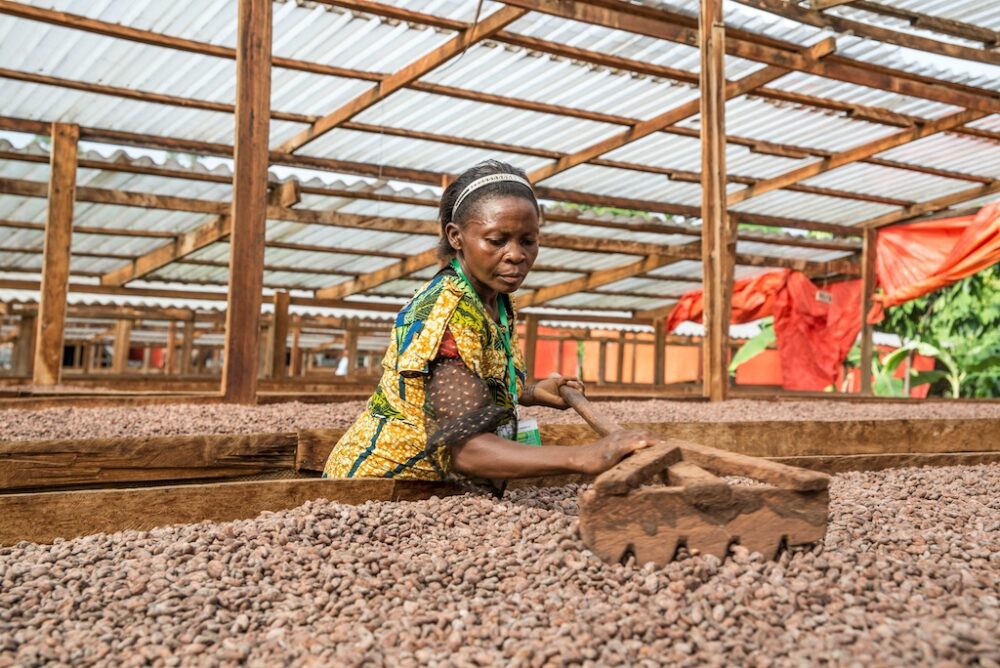

Coffee and cocoa producers in Côte d’Ivoire have raised urgent concerns over large volumes of unsold cocoa sitting in warehouses, warning that the situation could trigger widespread financial stress across the sector and disrupt the upcoming farming season. At a press briefing in Abidjan, the Association of Coffee-Cocoa Producers said between 40,000 and 45,000 tonnes of cocoa remain stored in cooperative warehouses and production areas months after the harvest season ended.
The group explained that the delay in clearing these stocks is depriving many farmers of income, making it difficult for them to pay workers and cover daily expenses. Association president Karim Sermé warned that tensions are already rising in some farming communities as workers demand wages while producers struggle with cash shortages. The situation threatens not only current livelihoods but also the ability to prepare for the next planting season.
Although farmers welcomed government efforts to buy back some of the stock through an emergency programme launched in January, they say the process has slowed in recent weeks. The government allocated 280 billion CFA francs to purchase unsold beans at the guaranteed main-season price, with 23,000 tonnes reportedly acquired as of early March. However, progress has stalled, leaving substantial volumes still in storage.
For Côte d’Ivoire’s economy, the cocoa sector is not merely important but foundational. It supports millions of rural livelihoods, generates substantial export revenue, and underpins economic stability in producing regions. Any prolonged disruption to farmer incomes threatens not only individual households but the social fabric of entire communities.
The stockpile situation reflects the broader challenges facing Ivorian cocoa in global markets. A dramatic collapse in world prices, from record highs above $12,000 per tonne in late 2024 to approximately $2,950 per tonne currently, has left Ivorian beans uncompetitive at the guaranteed farmgate price of 2,800 CFA francs per kilogram maintained since October. The government reduced the mid-crop price to 1,200 CFA francs to stimulate demand, but main-crop stocks accumulated before that adjustment remain problematic.
Producers are urging the state to accelerate the evacuation of cocoa stocks to prevent further financial strain and ensure a smooth start to the next cocoa season. The urgency reflects the seasonal rhythm of cocoa production, where farmers need cash flow to prepare fields, purchase inputs, and mobilise labour ahead of the next harvest.
The association’s warning comes as Côte d’Ivoire implements broader reforms to improve transparency and traceability in the sector. From September 2026, all cocoa transactions must be conducted using a producer’s card, a system designed to ensure farmers receive full payment at official prices. While such reforms address structural issues, they do not solve the immediate cash flow crisis facing farmers with unsold stocks.
For the government, the situation presents a delicate policy challenge. Clearing stocks through continued purchases requires fiscal resources that are not unlimited. Allowing stocks to remain unsold risks farmer distress and potential unrest. Finding a path through this dilemma requires balancing immediate support with longer-term market development.
The unsold cocoa also carries quality implications. Extended storage degrades bean quality, potentially damaging Côte d’Ivoire’s reputation as a premium supplier and reducing the price buyers are willing to pay. Moving stocks efficiently preserves value for farmers and the country.