
The Federal Government has initiated fresh bilateral discussions with China, focusing on agriculture and skills development, in pursuit of President Bola Ahmed Tinubu’s Renewed Hope Agenda to expand Nigeria’s non-oil external revenue base.
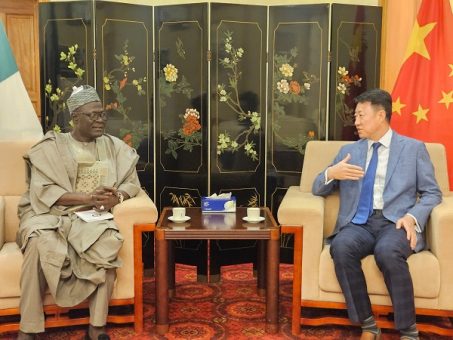
The high-level talks were conducted between Senator Dr. Babangida Hussaini, who represents Jigawa North-East and chairs the Senate Committee on the Northwest Development Commission, and the Ambassador of the People’s Republic of China to Nigeria, His Excellency Yu Dunhai.
Senator Hussaini described the meeting as “productive and fulfilling,” emphasising that the discussions centred on practical areas of cooperation designed to directly benefit Nigeria and his home state of Jigawa.
A key focus of the new initiative is enhancing the export of crucial Nigerian agricultural commodities to China. Specifically, the talks targeted improving market access for products such as sesame seeds and hibiscus flowers, which hold significant potential for non-oil revenue generation.
“We discussed establishing a strong and sustainable trade linkage between our major markets particularly Gujungu Market and the Maigatari International Border Market and markets in China,” Senator Hussaini stated. This strengthening of commercial ties is intended to stimulate local economies, generate foreign exchange, and diversify Nigeria’s export earnings away from crude oil.
In addition to agricultural trade, the discussions explored opportunities for Nigerian youth to access training, exposure, and capacity-building programmes in China. These programmes will focus on critical areas, including technology, skills development, and postgraduate studies.
Senator Hussaini expressed confidence in the impact of these educational exchanges, noting, “I am confident that these partnerships will open new doors for our young people, enabling them to grow, innovate, and contribute meaningfully to national development.”
The bilateral talks are a direct step towards realising the core economic mandate of the Tinubu administration: diversifying the economy and stabilising the Naira.
Economists argue that expanding the export base, particularly in high-value agricultural commodities like sesame and hibiscus, is essential for addressing Nigeria’s persistent foreign exchange shortages. By generating more external revenue through non-oil exports, the country can increase its forex supply, reduce pressure on the Naira, and fund essential imports and industrial inputs.
Furthermore, investing in skills development in technology and trade through partnerships like the one discussed with China is crucial for boosting human capital. This ultimately enhances the productivity and competitiveness of Nigerian labour, preparing the workforce for a modern, diversified global economy.
Senator Hussaini concluded by reaffirming his commitment to pursuing strategic partnerships that will bring development and long-term progress to Jigawa and Nigeria at large, thanking Ambassador Yu Dunhai for his openness to collaboration.