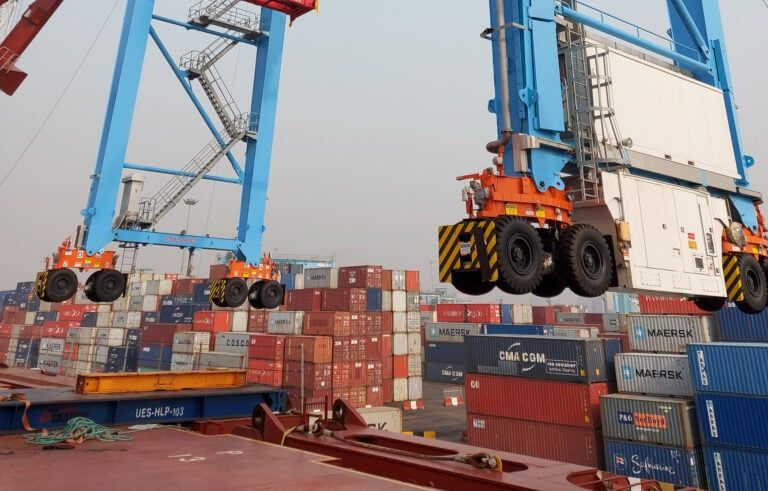

APM Terminals Apapa recorded a six per cent increase in export volumes during the first half of 2026, as the terminal continues to support Nigeria’s efforts to expand non oil exports and improve access to international markets. The terminal disclosed the development in a statement, attributing the growth to the resilience of Nigerian exporters and improvements made to its operations.
Kamal Alhraishat, Managing Director of APM Terminals Apapa, said the increase showed that Nigerian exporters were responding positively to efforts aimed at making export activities more efficient.
“Over the last five years, exports through our terminal have maintained a positive growth trajectory. The terminal recorded a six per cent increase in export volumes in the first half of 2026. This reflects both the resilience of Nigerian exporters and the targeted improvements we have made to facilitate export trade, simplify cargo flows and improve access to international markets,” he said.
According to him, the terminal has introduced several measures to make it easier for exporters to move their goods. One of these measures is the introduction of dedicated export lanes at the terminal gate, which are designed to speed up access for export cargo. Alhraishat said the terminal’s responsibilities extend beyond the movement of containers, noting that the goal is to help Nigerian exporters compete more effectively in global markets.
“Our role goes beyond handling containers. We want to make it easier, faster and more competitive for Nigerian exporters to access global markets. Dedicated export lanes and our rail connectivity are all designed around that objective. “The rail connection between Lagos and Moniya (Ibadan) operates three times a week, providing exporters with an efficient alternative to road transportation. By reducing reliance on trucks and exposure to interstate and Apapa traffic, we can improve the predictability of cargo movement and help exporters reach international markets more efficiently,” he added.
The terminal also uses the Ebute Metta rail corridor to move export goods from different parts of Lagos. The rail option is expected to help exporters avoid some of the congestion associated with road transportation while reducing the time required to move cargo to the port. Beyond transportation and terminal operations, APM Terminals Apapa said it has continued to engage stakeholders through its Exporters Forum. The platform brings together exporters, government agencies, shipping companies and logistics operators to discuss challenges affecting the export value chain.
“Through our Exporters Forum, now in its third year, we are creating a platform where exporters, government agencies, shipping lines, logistics partners and other stakeholders can come together to address real challenges across the export value chain. “The objective is not only to discuss these challenges, but to translate the feedback into practical actions that make Nigerian exports more efficient and competitive. Our next session is scheduled to hold at the terminal on Wednesday, 2 September,” Alhraishat said.
Kayode Olufemi-Daniel, Head of Commercial at the terminal, stressed that reducing delays was particularly important for agricultural exports because delays could affect the quality of products.
“Time is a critical factor in export trade, particularly for agricultural products. Delays within the supply chain can affect the quality of goods and, in some cases, render them unsuitable for export by the time they reach their destination. That is why we continuously review our operational processes and engage all stakeholders to identify opportunities for improvement and reduce delays across the value chain,” he said.
Major commodities exported through the terminal include soybeans, cashew nuts, cocoa, hibiscus flowers and solid minerals. The terminal said it would continue working with exporters, government agencies and other industry stakeholders to strengthen Nigeria’s export system and improve the competitiveness of Nigerian products internationally.