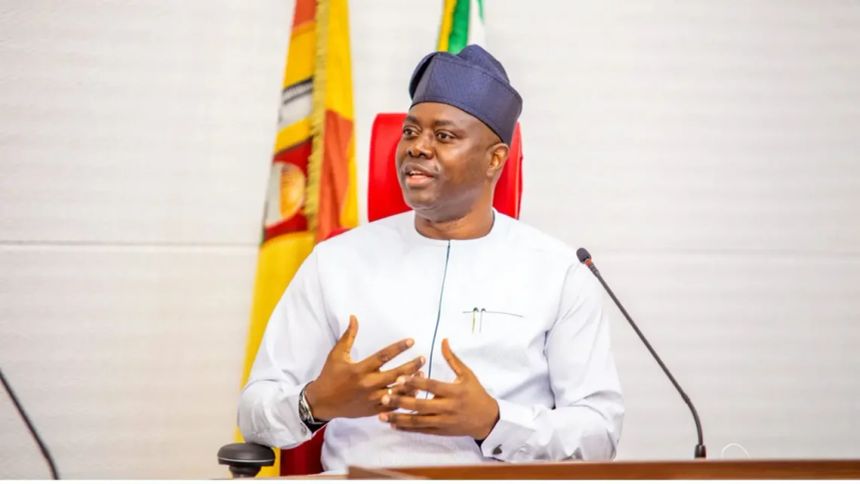

Oyo State Governor and presidential candidate of the Allied Peoples Movement (APM), Seyi Makinde, has proposed directing additional revenue from crude oil sales towards improving the welfare of Nigerians if elected president in 2027.
Makinde said earnings generated when crude oil prices exceed the benchmark used for national budgets should translate into better living conditions for citizens rather than simply increasing government revenue. He made the proposal on Wednesday in Abuja during the unveiling of his Reset Agenda manifesto ahead of the January 16, 2027 presidential election.
The governor, who was accompanied by his running mate, Lawal Daura, and the party’s national chairman, Yusuf Dantalle, said Nigeria’s natural and human resources should deliver tangible benefits to its population. Under the current budget system, Nigeria uses a benchmark crude oil price to estimate expected revenue. Earnings above the benchmark have traditionally been saved or shared among the federal, state and local governments.
However, Makinde questioned how ordinary Nigerians benefit when international crude oil prices increase, arguing that higher government earnings should reflect in people’s daily lives.
“For us, macroeconomic reforms must translate into improvements in people’s lives,” he said.
He questioned the value of achieving economic stability when citizens continued to struggle with poverty and poor living conditions.
According to him, the gap between government economic policies and the actual experiences of Nigerians remains one of the country’s major challenges. Makinde also called for greater accountability in public spending, insisting that political promises should be supported by clear implementation plans, measurable targets and institutions responsible for delivering results. He pledged to introduce performance targets within his first 100 days in office if elected president, saying Nigerians should be able to assess government performance through measurable outcomes.
On electricity, the APM candidate said the Federal Government must remain accountable for improving power supply despite the transfer of some electricity regulatory responsibilities to state governments. He urged Nigerians to demand better performance from the Federal Government, particularly in addressing challenges affecting electricity generation and distribution.
Makinde maintained that his decision to seek the presidency was driven by the need to address the country’s economic and institutional challenges and restore the vision of its founding fathers. He said his proposed administration would prioritise better living conditions, particularly for people in rural communities, while expanding access to opportunities regardless of ethnic or religious differences.
“We must develop people’s abilities and expand their access to opportunities. We must also have institutions that work,” he said.
On electoral reforms, Makinde proposed that presidential candidates should secure more than 50 per cent of votes cast to win elections. He argued that the requirement would encourage broader political cooperation and produce leaders with wider public support. He also advocated a transitional government of national unity and a national conference where stakeholders could discuss Nigeria’s challenges and agree on a common direction.
His running mate, Daura, a former Director General of the Department of State Services, criticised what he described as the suppression of opposition political parties. He maintained that allowing opposition parties to operate freely and compete fairly was essential to sustaining democracy. Meanwhile, Dantalle urged the Independent National Electoral Commission to remain neutral and ensure peaceful and credible elections in 2027.
He said the coming election should focus on the future of Nigerians rather than the political interests of individual parties, describing electoral fraud as the worst form of banditry. The proposals form part of Makinde’s broader Reset Agenda, which focuses on economic improvements, accountable leadership, stronger institutions and political reforms.