


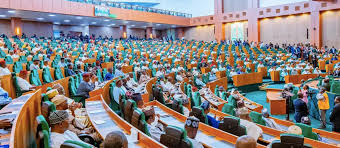

The House of Representatives was hit by a significant wave of political realignment on Thursday, March 12, 2026, as 12 lawmakers formally announced their exit from various opposition parties during a plenary session. The shifts, which saw members moving into the ruling All Progressives Congress (APC) and the African Democratic Congress (ADC), signal a deepening fracture within the opposition as the legislative session progresses.
The structural and political consequence of these defections was articulated in separate letters read by the Deputy Speaker, Rep. Benjamin Kalu. The defecting lawmakers, formerly of the Peoples Democratic Party (PDP), Labour Party (LP), Young Progressives Party (YPP), and New Nigeria People’s Party (NNPP), all cited “irreconcilable differences” within their original parties as the legal and strategic basis for their departures.
Analytically, the APC emerged as the primary beneficiary of the movement from the north. Four prominent lawmakers from Adamawa State James Barka, Laori Bitrus, Zakaria Nyampa, and Kobis Thimnu led the transition from the PDP to the ruling party. They were joined by Midala Balami from Borno and Mohammed Bargaja from Sokoto, further consolidating the APC’s majority in the lower chamber. Additionally, the ADC secured a substantial influx from the south, gaining Afam Ogene, Lilian Orogbu, Jessey Onakalusi, and Murphy Osaro from the Labour Party, alongside Peter Aniekwe from the YPP.
The impact on “Opposition Unity and Legislative Dynamics” remains a vital dimension of this week’s events. Beyond the 12 formal announcements on Thursday, Deputy Speaker Kalu revealed that eight more lawmakers, including Uchenna Okonkwo (LP-Anambra) and three NNPP members from Kano Hassan Hussein, Tijani Khali, and Muhammed Shehu have already notified the House of their intent to defect. Their letters are expected to be read officially once they are physically present at plenary, suggesting that the tally of defections will continue to rise in the coming days.
Furthermore, these developments follow a similar trend observed during Wednesday’s session, where Garba Inuwa, Abdullahi El-Rasheed, Mohammed Audu, and Joshua Obika (LP-FCT) all migrated to the APC, while Adewale Adebayo moved from the PDP to the Accord Party. This consistent exodus from the PDP and Labour Party suggests a systemic breakdown in internal party discipline and a strategic migration toward parties seen as more stable or influential ahead of future electoral cycles.
The long-term outlook for the 10th Assembly suggests a more lopsided legislative environment where the ruling APC and emerging third forces like the ADC hold increased leverage over policy debates. As the opposition’s numerical strength wanes, the burden of providing a robust check on executive power may fall on the few remaining stalwarts or the internal conscience of the now-enlarged ruling bloc.


