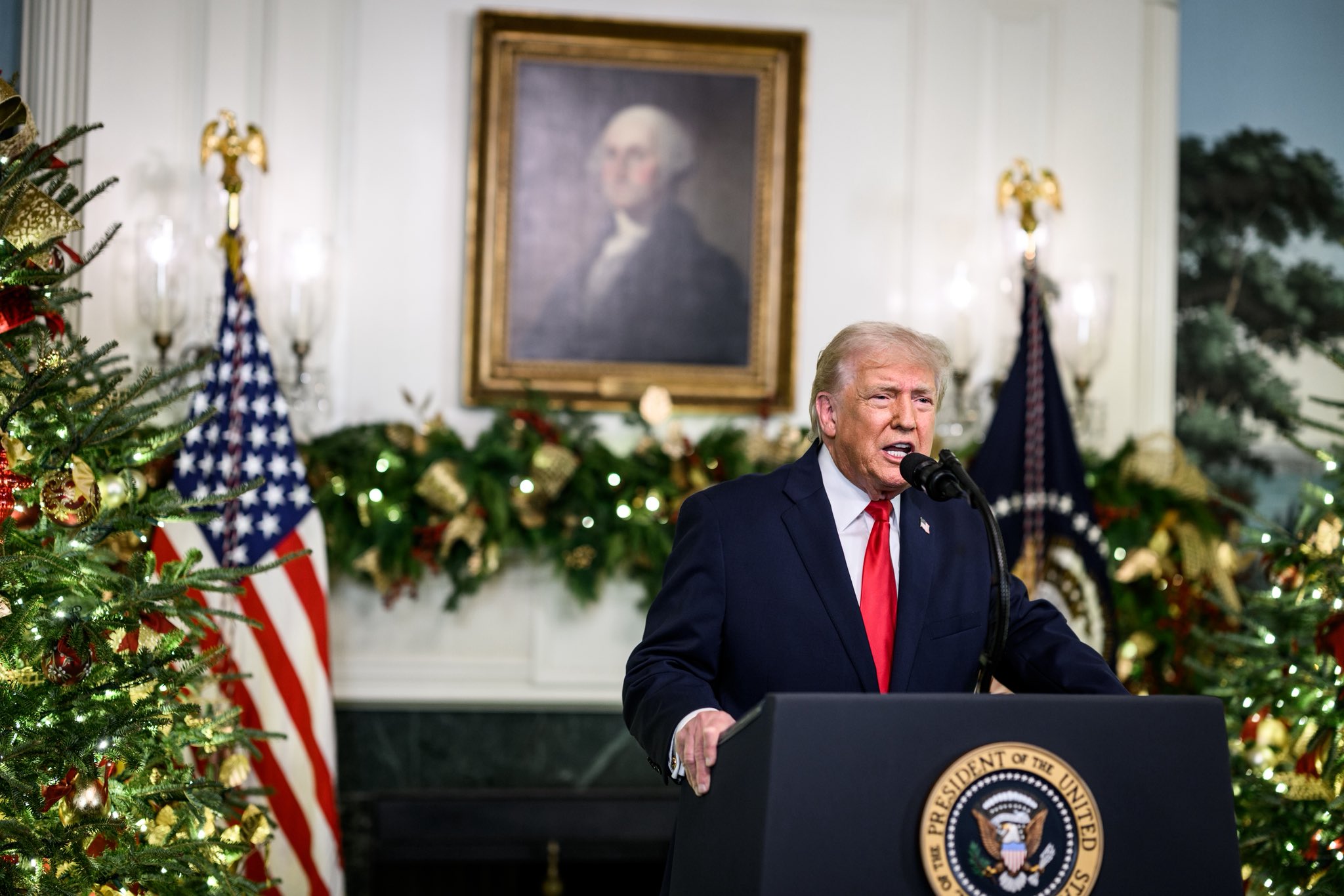

Global financial markets are facing renewed uncertainty after U.S. President Donald Trump threatened to impose fresh tariffs on goods from eight European countries, raising concerns about a resurgence of transatlantic trade tensions.
According to reports by Reuters, Trump said the United States could introduce a 10 percent tariff on imports from Denmark, Norway, Sweden, France, Germany, the Netherlands, Finland and the United Kingdom starting February 1. The levy would rise sharply to 25 percent by June 1 if negotiations fail to resolve a dispute linked to Greenland.
The warning came after the eight countries issued a joint statement supporting Greenland’s position, prompting reactions from European leaders. Ireland’s prime minister cautioned that the European Union would respond with countermeasures should Washington proceed with the proposed tariffs.
Market analysts say the announcement has revived memories of last year’s “Liberation Day” tariffs in April 2025, which triggered sharp sell-offs and heightened global risk aversion. Although investors have since become more accustomed to policy shocks, the latest development has unsettled expectations that trade tensions had eased for the year.
Holger Schmieding, chief economist at Berenberg Bank, told Reuters that hopes of a calmer trade environment have faded, warning that markets could be heading back into a period of uncertainty similar to early 2025.
Signs of caution are already emerging. Gold prices remain near record highs as investors seek safe-haven assets, while analysts expect global markets to reopen in a defensive, risk-off mode. Tony Sycamore, an analyst at IG, said the standoff has increased fears of strained NATO relations and disruptions to recent trade agreements, further weighing on investor confidence.
Despite the growing unease, European equities have so far held up. Germany’s DAX and Britain’s FTSE have each gained more than three percent this month, with defence stocks outperforming broader markets amid rising geopolitical risks.
Tina Fordham, founder of Fordham Global Foresight, described the development as a renewed escalation in U.S.-EU trade tensions, noting its timing alongside the European Union’s recent trade pact with South America’s Mercosur bloc.
Currency markets may also feel the impact in the coming days. Reuters noted that the euro could come under pressure as Asian trading opens, while the U.S. dollar’s reaction may be muted due to its traditional role as a safe-haven currency during periods of geopolitical stress.