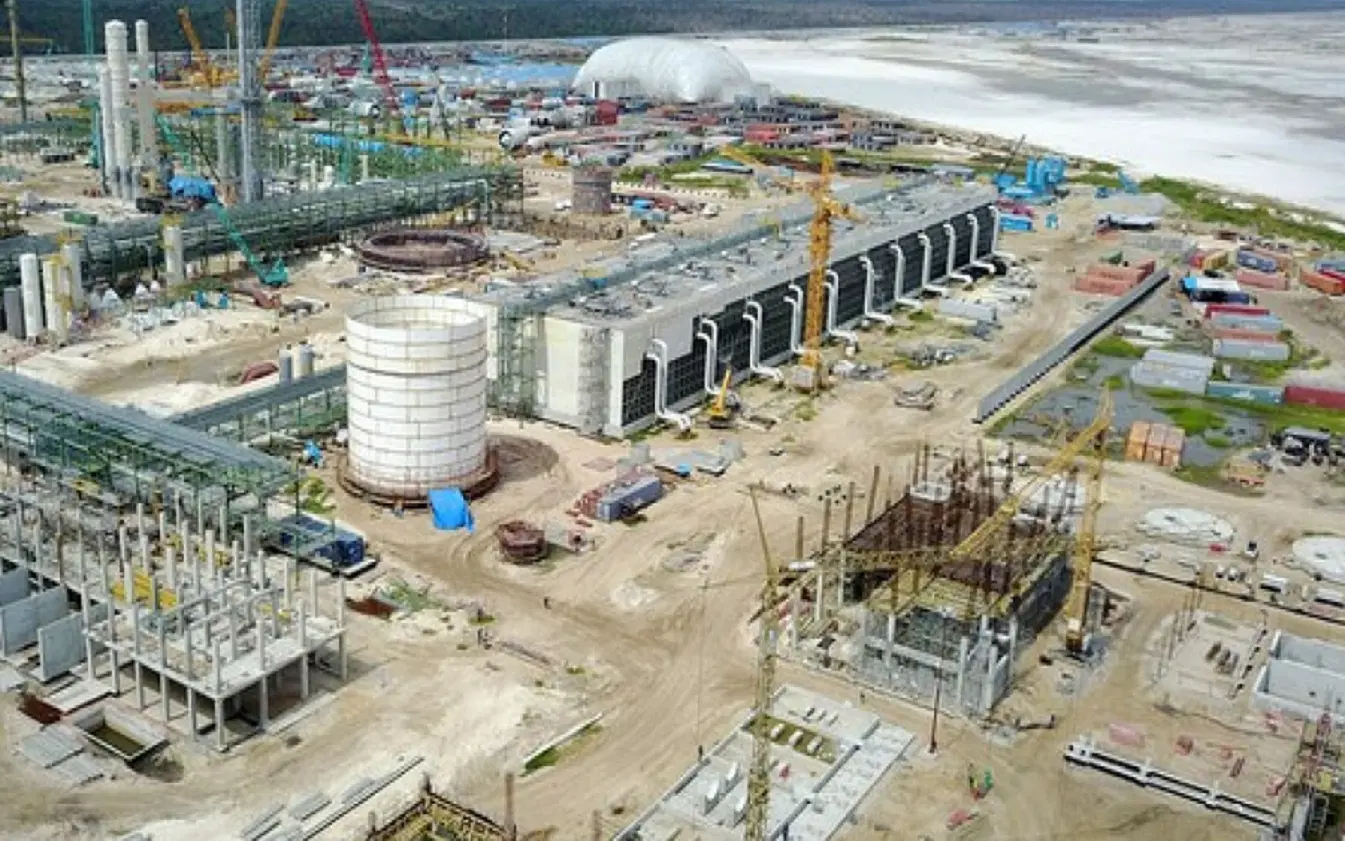

The Dangote Petroleum Refinery, already Africa’s largest single-train refinery, is embarking on a massive expansion phase, underscoring a commitment to operational self-sufficiency and positioning Nigeria as a global energy hub. The expansion, part of the facility’s broader $20 billion complex, is spearheaded by billionaire Aliko Dangote and targets a near doubling of refining capacity within three years, alongside a significant boost in power generation. This strategic move is poised to redefine the continent’s energy landscape by ensuring reliable fuel supply and dramatically increasing the production of high-grade petrochemicals.
The core of the expansion is the plan to increase the refinery’s crude processing capacity from its current 650,000 barrels per day (bpd) to an ambitious 1.4 million bpd. This upgrade, expected to be finalized by 2028, will position the Dangote facility to surpass India’s Jamnagar Refinery as the largest in the world. According to Aliko Dangote, the financing for this monumental undertaking will be secured through a combination of existing cash flow, strategic investors, and capital raised via public listing. A major listing is planned for the Nigerian Exchange (NGX) in the coming year, intended to “democratise ownership” and make the refinery “the golden stock of the Exchange,” with any foreign listing being secondary.
Crucially, the expansion is intricately tied to achieving complete operational independence from the national power grid. The refinery targets generating 1,000 megawatts (MW) of electricity, a capacity sufficient to power a mid-sized city. This integrated energy strategy is non-negotiable for an operation of this magnitude, ensuring uninterrupted functionality for the refining, petrochemical, and fertilizer units. By building an internal power system designed to rival that of an entire state, the company aims to eliminate dependence on the frequently fragile public grid, thereby guaranteeing continuous product output and maintaining maximum efficiency.
Beyond sheer volume, the expansion focuses heavily on product quality and market diversification. The facility plans to upgrade its output from the current Euro V-grade fuel to the more stringent Euro VI standards. This commitment aligns the refinery with global environmental benchmarks, enabling Nigeria to become a key supplier of cleaner fuels across Africa, thereby reducing the dumping of toxic fuels in the region and ensuring Nigerians receive high-quality petroleum products at competitive prices.
Furthermore, the expansion is not limited to crude refining. The group will significantly expand its petrochemical production, boosting polypropylene output from 900,000 metric tonnes to 2.4 million metric tonnes per annum. This growth will be accompanied by increased production of vital industrial components such as base oils and linear alkylbenzene, which are essential for manufacturing lubricants and detergents. This diversification will strengthen the refinery’s overall value proposition and revenue streams.
The economic implications for Nigeria are transformative. The expansion is projected to generate billions in annual revenue, with initial estimates exceeding $55 billion. It is also expected to create thousands of direct and indirect jobs and provide billions of dollars in foreign exchange savings by eliminating reliance on imported refined petroleum products. By stabilizing domestic fuel supply and reducing import-related dollar demand, the facility has already played a significant role in stabilizing fuel prices and strengthening the local currency. This massive industrial build-out is viewed not just as capacity growth, but as a vote of confidence in Nigeria’s industrial future and a bold step in shaping Africa’s energy destiny.