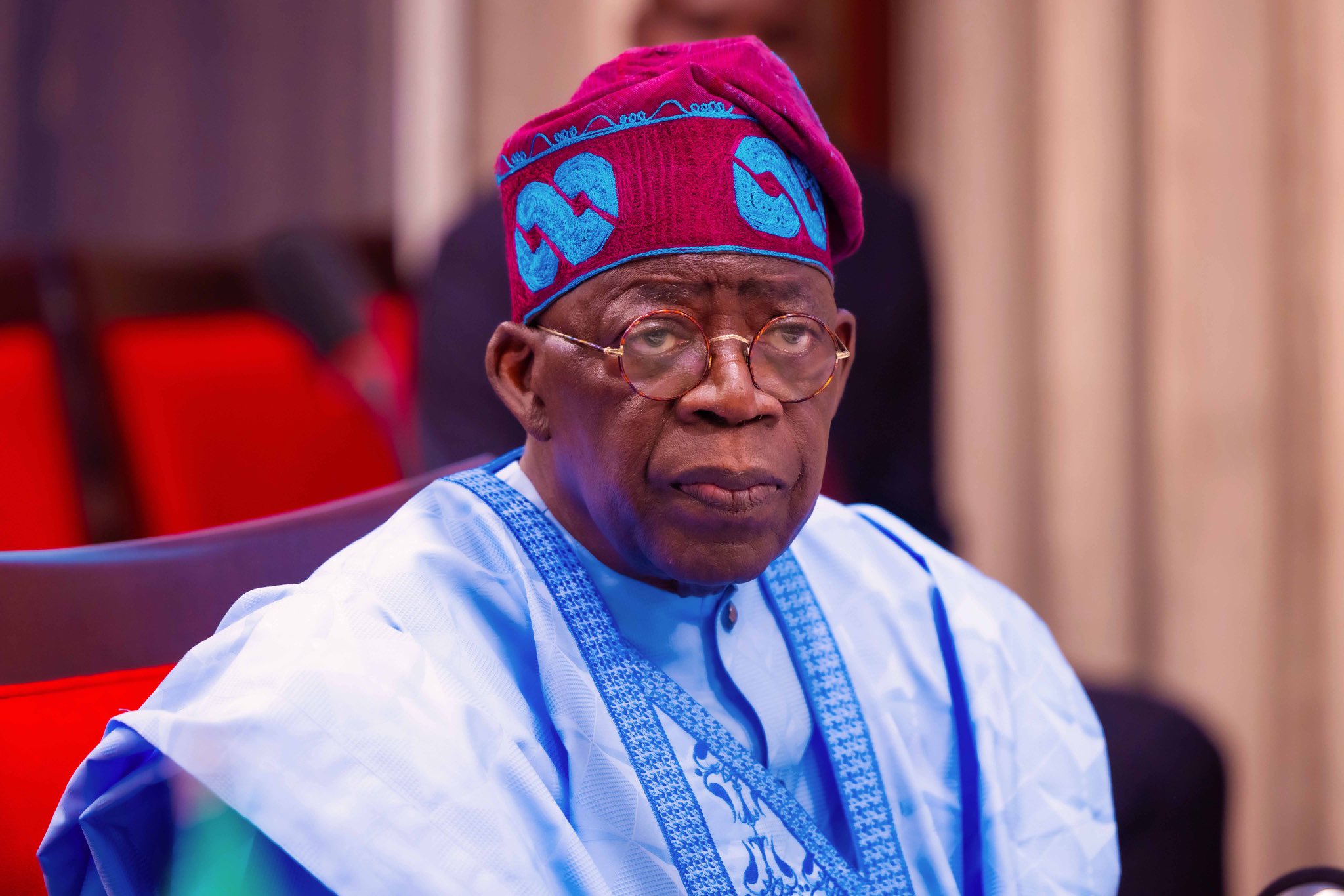

President Bola Tinubu has pledged to revive Nigeria’s government-owned refineries, but warned that restarting the plants will not constitute success unless they can operate profitably and deliver sustainable value to the economy.
Tinubu made the commitment on Thursday when he received the national executive of the Nigeria Union of Petroleum and Natural Gas Workers (NUPENG), led by its National President, Salimon Akanni Oladiti, at the State House in Abuja.
“The refineries that you mentioned are going to come back to work,” Tinubu said, adding that his administration was pursuing a “firm reset” and structural reworking of the economics surrounding the facilities.
“Ordinary flame and smoke of a refinery doesn’t mean that it’s working until it’s profitable and yields the value for which it is built,” he said.
The comments underline the commercial challenge facing Nigeria’s long-running refinery rehabilitation programme. Success will ultimately depend not only on whether the plants can process crude but also on whether they can operate sustainably without repeatedly requiring government intervention.
Tinubu said his administration had accepted responsibility for fixing problems inherited from previous governments, regardless of how long they had persisted.
The president also defended the removal of petrol subsidies, which he said had been necessary to free resources for infrastructure and address longstanding economic distortions. NUPENG backed the reform, with Oladiti describing the decision as a courageous step that had helped free resources for infrastructure development.
The latest refinery push comes against the backdrop of an April agreement between NNPC Limited and two Chinese companies. NNPC signed a memorandum of understanding with Sanjiang Chemical Company Limited and Xinganchen (Fuzhou) Industrial Park Operation and Management Co. Ltd for a potential technical-equity partnership supporting the completion and operation of the Port Harcourt and Warri refineries. The arrangement also provides for possible expansion.
The MoU does not, however, amount to confirmation that either refinery has returned to sustained commercial production. That distinction is important as the government seeks to rebuild confidence in Nigeria’s refining capacity.
NUPENG also urged the government to sustain refinery rehabilitation, arguing that functional plants would strengthen energy security, reduce dependence on imported petroleum products and create employment opportunities. The union separately raised concerns about casualisation in the oil and gas industry.
Tinubu also urged transport operators to ensure that lower operating costs associated with compressed natural gas (CNG) reach commuters through lower transport costs.
For Nigeria, the refinery programme carries consequences beyond fuel supply. A commercially viable state refining network could reduce exposure to imported petroleum products and improve domestic energy security. But Tinubu’s latest remarks set a clear benchmark: the plants must do more than produce fuel or show signs of activity; they must generate sustainable economic value.