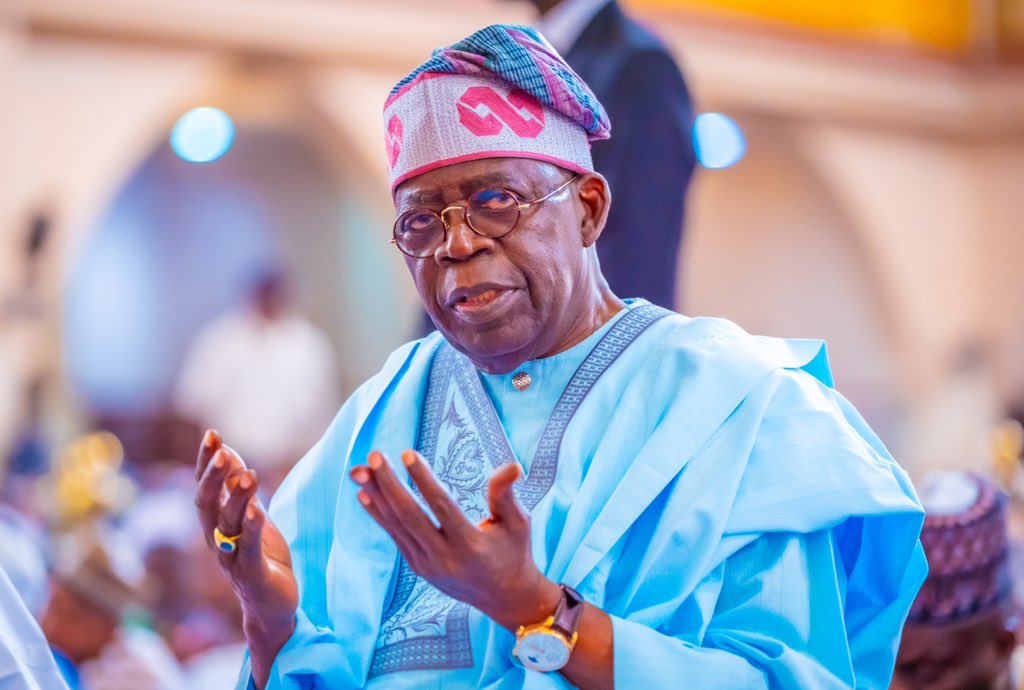

President Bola Tinubu’s declaration that Nigeria is moving from an “age of reform” to an “age of prosperity” has put a new test on the country’s economic recovery, whether improving macroeconomic indicators can translate into lower operating costs and higher productivity for businesses.
In his Independence Day address today, Tinubu said Nigeria’s economy had grown by more than 4% in 2026, while inflation had fallen, foreign reserves had been rebuilt and the foreign exchange market had stabilised. He said the next phase would focus on shared prosperity and reducing the cost of living by lowering the cost of producing and transporting goods.
The latest official GDP data provide some support for the growth claim. The National Bureau of Statistics reported that real GDP grew by 4.43% year-on-year in the second quarter of 2026, taking first-half growth to about 4.16%.
Inflation has also moderated. The NBS reported on September 15, 2026, that headline inflation fell to 15.39% in August from 15.43% in July. But the decline represents a slower rate of price increases, not a reversal of the higher prices already built into household and business costs.
That distinction matters for mid-market businesses.
PwC Nigeria’s August 21, 2026 economic outlook said Nigeria’s improved macroeconomic position had created a stronger base for growth, but warned that structural constraints were limiting how far those gains were reaching households and businesses. It specifically identified power, transport, broadband, security and workforce constraints as areas requiring attention to lower business costs and raise productivity.
Transport is a particularly visible pressure point. At the 2026 Transport Industry Summit in Lagos on September 25, 2026, the Federal Government’s Technical Adviser on Transportation, Logistics and Innovation, Segun Ochuko Obayendo, said fragmented transport modes, delays, multiple checkpoints, insecurity and poor coordination were constraining economic growth and increasing logistics costs.
Power presents another execution challenge. NERC’s July 2026 commercial performance data showed DisCos billed ₦250.79 billion for electricity received but collected ₦205.53 billion, while its August operational data showed average available generation capacity of 4,758MW. The figures underline the scale of the electricity market businesses still have to operate within as the government pursues industrial growth.
The digital economy offers a similar example. NCC data show that Nigerians consumed 1.66 million terabytes of data in July 2026, compared with 1.13 million terabytes in July 2025. The nearly 47% increase prompted the commission to call for fresh investment in digital infrastructure on September 29, 2026.
The issue, therefore, is not whether Nigeria’s macroeconomic indicators have improved. The data show progress in GDP growth and inflation moderation. The harder question is whether those gains are being converted into cheaper power, more efficient transport, better connectivity and lower production costs.
For businesses, that is where the transition from reform to prosperity will become tangible.
If infrastructure bottlenecks continue to absorb a significant share of operating costs, stronger GDP growth may coexist with limited productivity gains at the firm level. Conversely, sustained investment in electricity, roads, ports, logistics and broadband could allow the macroeconomic stabilisation to translate into more competitive Nigerian businesses.
PwC put the challenge directly in its August 2026 outlook, macroeconomic stability creates the conditions for growth, but structural constraints determine how far its benefits are felt across the economy.
The next phase of Nigeria’s reform story will therefore be measured not only by GDP, inflation or foreign exchange stability, but by whether it becomes cheaper and more reliable to produce, move, power and connect a business.