
The Federal Government has directed all state governments and the Federal Capital Territory (FCT) to establish functional nutrition councils within the next three months, as part of efforts to improve coordination and tackle malnutrition nationwide.
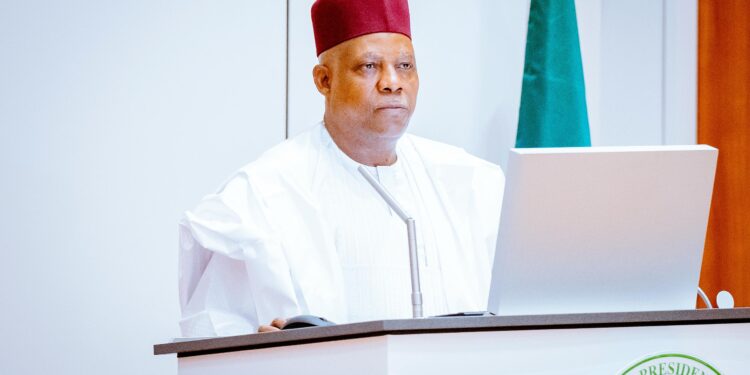
The directive was issued during a meeting of the National Council on Nutrition, chaired by Vice President Kashim Shettima. It reflects a broader national push to strengthen nutrition governance, boost food security, and ensure that interventions effectively reach communities at the grassroots level. This move follows the adoption of a new long-term framework aimed at addressing food and nutrition challenges across the country. The policy outlines a structured plan to combat malnutrition and improve health outcomes, particularly among children and other vulnerable groups.
“The National Council on Nutrition (NCN) has adopted the National Policy on Food and Nutrition (NPFN), 2026-2035 and directed the Federal Ministry of Budget and Economic Planning to present the policy to the Federal Executive Council for ratification,” the statement said. A major part of the directive is the emphasis on state-level responsibility for nutrition programmes. Currently, only a few states have fully operational nutrition councils. To address this gap, the Nigeria Governors’ Forum has been mandated to coordinate the establishment of councils in the remaining states and the FCT within the three-month deadline.
“Following the adoption of the policy, Council directed the Chairman of the Nigeria Governors’ Forum, working through the NGF secretariat, and in coordination with the Office of the Vice President, to lead the establishment and inauguration of State Councils on Nutrition in the remaining 27 States and the FCT within the next 3 months.”
In addition to setting up councils, states have also been instructed to develop and roll out comprehensive food and nutrition action plans within six to nine months. These plans are expected to align with national objectives and ensure practical implementation of policies.The directive also aligns with the “Nutrition 774” initiative, which focuses on delivering nutrition interventions across all 774 local government areas in Nigeria. The programme is designed to improve coordination, accountability, and access to essential nutrition services, especially for women and children.
Officials noted that the policy requires collaboration across several sectors, including health, agriculture, education, and social protection. This multi-sectoral approach is seen as key to addressing the root causes of malnutrition and achieving sustainable results.To support implementation, the government is also working on strengthening funding and legal frameworks for nutrition programmes. Plans are underway to present a National Nutrition Bill to the National Assembly, while exploring diverse funding sources from public, private, and international partners.
With millions of Nigerians affected by poor nutrition, particularly children and women, the government believes the initiative could have significant social and economic benefits. Improved nutrition is expected to enhance public health, increase productivity, and reduce long-term healthcare costs. Overall, the directive signals a renewed commitment to tackling Nigeria’s nutrition challenges through coordinated action, stronger institutions, and measurable outcomes at both national and state levels.