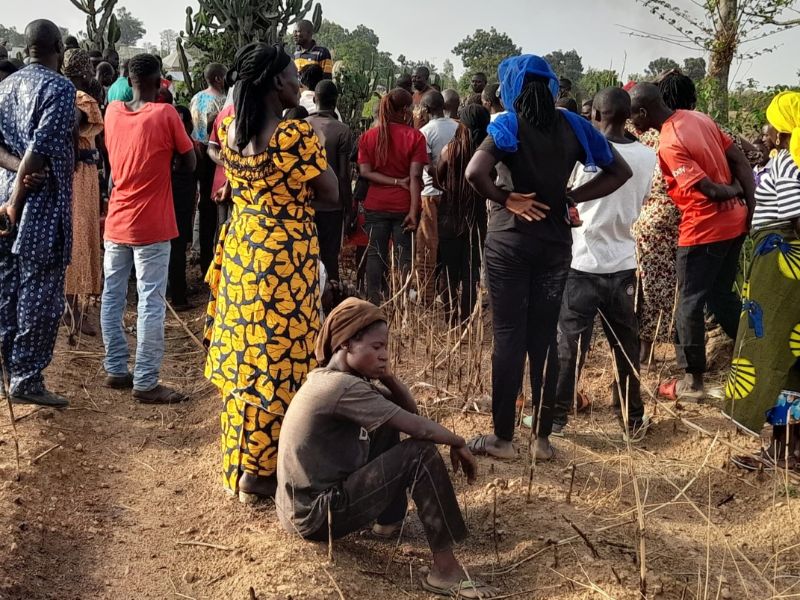

At least 12 people were killed, and several others abducted in two separate attacks in central Nigeria, underscoring the ongoing insecurity that continues to hamper social and economic life in the region, local officials confirmed on Wednesday.
In Plateau State, attackers targeted a mining site in Atoso village late on Tuesday, killing 12 individuals and abducting three others, according to Dalyop Solomon Mwantiri, head of the Berom Youth Moulders Association. Five additional people were hospitalised with gunshot wounds. Residents identified the assailants as armed Fulani militias, who have been linked to a series of violent clashes across the Middle Belt in recent years. Police confirmed that investigations were ongoing.
The attack comes just days after four children were killed in a nearby community, highlighting the increasingly indiscriminate nature of violence in the state. Local officials have expressed growing concern over the impact of these attacks on livelihoods, particularly in Plateau State, which relies heavily on small-scale mining and agriculture. Mining sites, often operated by informal labourers, provide crucial income for local families and are a significant contributor to the local economy. The targeting of such sites threatens both employment and the broader regional economic stability, potentially discouraging investment in a sector already challenged by infrastructural deficits and regulatory oversight.
In neighbouring Kogi State, at least 13 worshippers were abducted during a Sunday attack on the First ECWA Church in Ayetoro-Kiri, Information Commissioner Kingsley Fanwo reported. Local hunters engaged the gunmen in a firefight, killing four attackers, while the remainder fled, reportedly wounded. Attacks on places of worship, particularly in central Nigeria, have heightened fears among local populations and disrupted community cohesion. In addition to the immediate human cost, such incidents can depress local commerce, reduce school attendance, and displace households, creating longer-term economic stress for communities.
Security analysts say the persistence of such violence illustrates the broader challenges facing Nigeria in balancing development, security, and social cohesion. Central Nigeria, spanning Plateau, Kogi, and neighbouring states, has become a hotspot for clashes involving armed groups, cattle herders, and criminal networks. While federal and state security agencies have increased patrols and initiated joint operations, the sporadic nature of the attacks and the difficult terrain often hamper sustained interventions.
Economically, the impact of recurrent violence in these regions is significant. Mining, farming, and local trade, which underpin rural economies, are frequently disrupted by abductions, killings, and the threat of raids. Insurance and financial services remain underdeveloped in these areas, leaving businesses and households highly vulnerable to losses. Investors are often deterred by the perception of heightened political and security risks, slowing infrastructure development and limiting access to formal credit. Local markets suffer as traders relocate to perceived safer areas, reducing the availability of goods and services and inflating prices for essential commodities.
Humanitarian organisations have also warned that persistent insecurity exacerbates poverty and food insecurity. Families displaced by attacks often lose both shelter and income sources, while the cost of medical care for injured survivors places additional strain on already impoverished households. Government relief programmes are frequently delayed due to logistical challenges and security risks, leaving communities dependent on informal support networks or local aid groups.
The Plateau State attack also highlights the growing complexity of ethnic and pastoral conflicts in Nigeria. Analysts note that disputes over land use, grazing rights, and resource access have intensified over the past decade, with armed groups increasingly exploiting these tensions to carry out criminal activity. The resulting insecurity creates a negative feedback loop, where fear and displacement hinder economic activity, further entrenching poverty and limiting opportunities for conflict resolution.
In response to the recent attacks, state authorities have pledged to increase security patrols and work with local communities to improve intelligence gathering. However, experts caution that lasting solutions require investment not only in security infrastructure but also in social and economic development, including sustainable livelihoods, education, and conflict resolution initiatives. Without addressing these root causes, analysts warn that violence in central Nigeria is likely to persist, with continued human and economic costs.
As the country grapples with these twin crises of insecurity and underdevelopment, the latest attacks serve as a stark reminder that improving safety and promoting economic growth remain deeply intertwined challenges for Nigeria’s central regions.