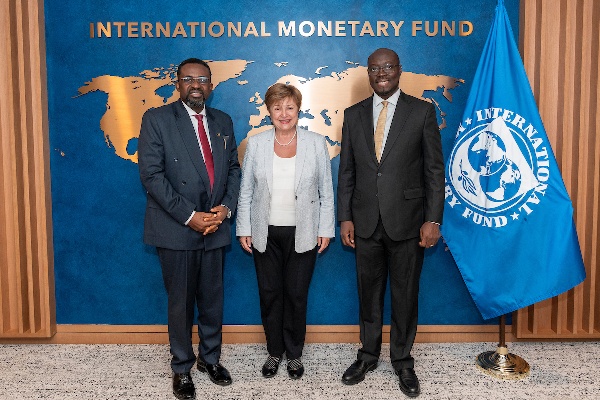

The International Monetary Fund has approved Ghana’s fifth review under its IMF-supported programme, unlocking an immediate disbursement of approximately $385 million, the Fund announced. The decision follows a December 17 meeting of the IMF’s Executive Board in Washington and reflects what the Fund described as “broadly satisfactory” economic performance, despite some delays in implementing complex structural reforms.
This latest tranche brings total IMF disbursements to Ghana since May 2023 to around $2.8 billion, providing a crucial boost to the West African nation’s external reserves and fiscal stability. The IMF highlighted that macroeconomic stabilisation is gaining traction in Ghana, noting robust economic growth alongside single-digit inflation for the first time since 2021, signalling a welcome easing of the pressures that have constrained households and businesses over the past two years.
The Fund commended Ghana for progress on several fronts, including debt restructuring, fiscal consolidation, reforms in the energy sector, and strengthening financial sector resilience. These measures have helped stabilise public finances, with Ghana expected to post a primary surplus equivalent to 1.5% of GDP this year. Such fiscal discipline is critical for rebuilding investor confidence and reducing the cost of borrowing for the government.
Monetary policy has also contributed to the stabilisation effort. The Bank of Ghana has successfully rebuilt reserves while cautiously easing policy rates, balancing the need to support growth with the imperative of maintaining price stability. According to the IMF, sustaining these gains requires continued implementation of structural reforms to restore full macroeconomic stability and ensure long-term debt sustainability.
Economists note that the IMF disbursement arrives at a pivotal moment for Ghana. The country has faced mounting fiscal and external pressures, including high debt service obligations, energy sector deficits, and a history of inflationary shocks. The programme support, combined with ongoing reforms, is expected to alleviate some of these pressures, stabilise the cedi, and provide resources for critical social and infrastructure spending.
The IMF’s assessment underscores the delicate balance Ghana must maintain between reform and growth. While progress in reducing inflation and strengthening public finances is encouraging, the Fund emphasised that delays in structural measures could undermine long-term stability. Areas such as energy subsidy rationalisation, public sector efficiency, and financial sector oversight remain priorities for Ghanaian policymakers.
International investors and development partners have welcomed the approval, viewing it as a signal that Ghana is on a credible path to stabilisation. The IMF’s endorsement may also support broader capital inflows, including concessional financing and private investment, which are critical for sustaining economic momentum.
For ordinary Ghanaians, the broader economic implications are tangible. Lower inflation and a more stable currency can ease the cost of living, while fiscal consolidation creates space for targeted social spending. At the same time, structural reforms are expected to enhance the efficiency of public services, energy provision, and financial institutions, creating conditions for more sustainable growth.
As Ghana moves forward, analysts stress the importance of maintaining reform momentum and avoiding policy reversals that could jeopardise stability. The IMF review provides both an endorsement of progress achieved and a roadmap for the challenges ahead, signalling that Ghana’s economic recovery remains on track but requires continued vigilance and commitment.