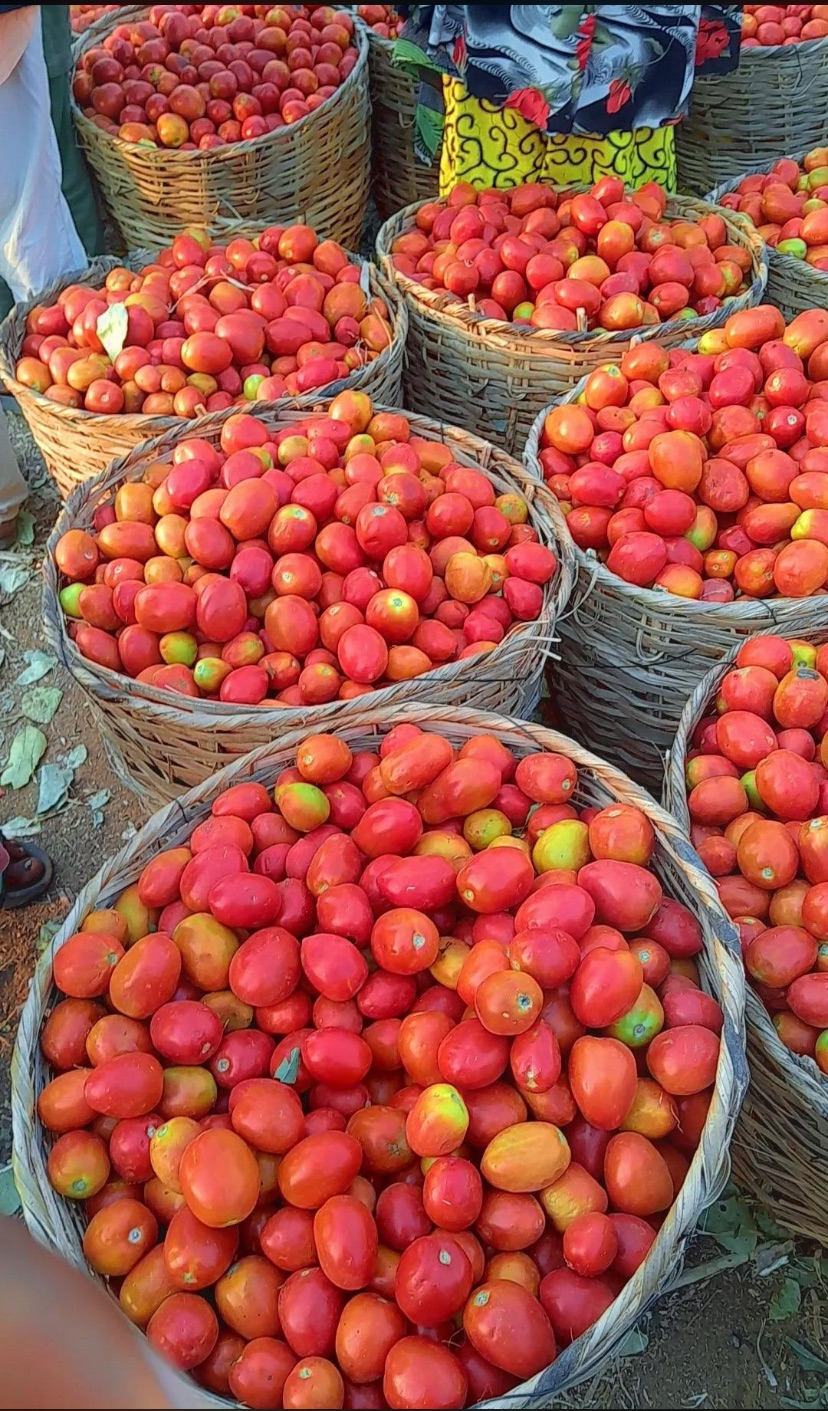

Tomatoes may be coming into Lagos in larger quantities, but the journey from the farm to the market is still adding thousands of naira to the price consumers pay.
The tomato market has experienced a dramatic price swing in 2026. In January, a 50kg basket sold for about ₦18,000–₦20,000, but by May and June, the same size basket had climbed to ₦100,000–₦130,000, depending on the variety, according to the Tomatoes Growers and Processors Association of Nigeria (TOPAN).
The increase was largely linked to the end of the dry-season harvest and reduced supplies before the arrival of the wet-season crop.
By August, however, prices had started coming down as harvests from producing areas reached Lagos. A News Agency of Nigeria report published in August said a 50kg basket that had sold for as much as ₦130,000 between late May and June was selling for around ₦40,000–₦45,000 in some Lagos markets.
But cheaper tomatoes at the wholesale level do not necessarily mean cheap tomatoes for every Lagos household.
At Mile 12 and other markets, traders still have to account for the cost of moving tomatoes from producing communities to Lagos. Tomatoes are highly perishable, meaning farmers and traders have limited time to move the produce before it begins to spoil.
The supply chain can involve farmers, local buyers, transporters, wholesalers and retailers before the tomatoes finally reach a consumer in Lagos. Every stage can add a margin to the final price.
Recent Lagos market data shows just how wide the price differences can be. On August 24, round tomatoes were recorded at a median of ₦6,500 per painter, with prices ranging from ₦5,000 at Mile 12 to ₦12,000 at Ajah. The same data showed that prices had risen 71.4% over 90 days.
For retailers, the challenge is not only the purchase price. Transport, loading and unloading, market charges, spoilage and other operating expenses can all affect the price placed on a basket or smaller quantity.
The situation also shows why tomato prices can change sharply even when farmers are producing more.
In July, a Lagos food-price survey recorded round tomatoes falling from ₦55,000 to ₦50,000 per basket, while oval tomatoes dropped from ₦90,000 to ₦75,000, as fresh harvests entered the Lagos market.
The decline has provided some relief compared with the extreme prices recorded earlier in the year, but consumers remain exposed to sudden changes whenever supply tightens.
For farmers, higher market prices can create an opportunity to earn more, but they can also come with higher production costs. Fertiliser, pesticides, labour, irrigation, seeds and transportation all determine how much money a farmer eventually takes home.
Nigeria’s tomato supply is also affected by storage problems. Because tomatoes spoil quickly, farmers who cannot store their harvest properly may be forced to sell quickly, particularly when large quantities reach the market at the same time.
This means the price of a basket in Lagos is not simply the price a farmer receives at the farm gate. It reflects the entire journey — from cultivation and harvesting to transportation, wholesale trading and retailing.
For consumers, that journey is increasingly visible in the price of a simple ingredient used in everyday meals.
And while the arrival of wet-season harvests has brought tomato prices down from their 2026 peak, the market remains highly sensitive to supply, transportation costs and seasonal production.
The tomato sitting in a Lagos market may have travelled hundreds of kilometres — and every kilometre can add something to the price.