
As Nigeria moves through 2026, a profound and troubling paradox defines its national condition. On one hand, official macroeconomic indicators signal a cautious recovery: inflation is cooling, the Naira is stabilizing, and Gross Domestic Product (GDP) is projected to grow. On the other, the lived experience of millions of Nigerians is one of intensifying hardship, where the basic calculus of daily survival is becoming more desperate. This chasm between headline data and human reality is not merely a perception gap; it is the central story of Nigeria’s contemporary economic crisis. By weaving together the cold projections of analysts with the visceral voices from the streets, a stark portrait emerges—one of an economy healing in aggregate while its citizens sink deeper into poverty. This deep dive explores that reality through the experiences of named Nigerians whose daily struggles lay bare the nation’s profound economic contradictions.
The Paradox of Cooling Inflation and Rising Poverty
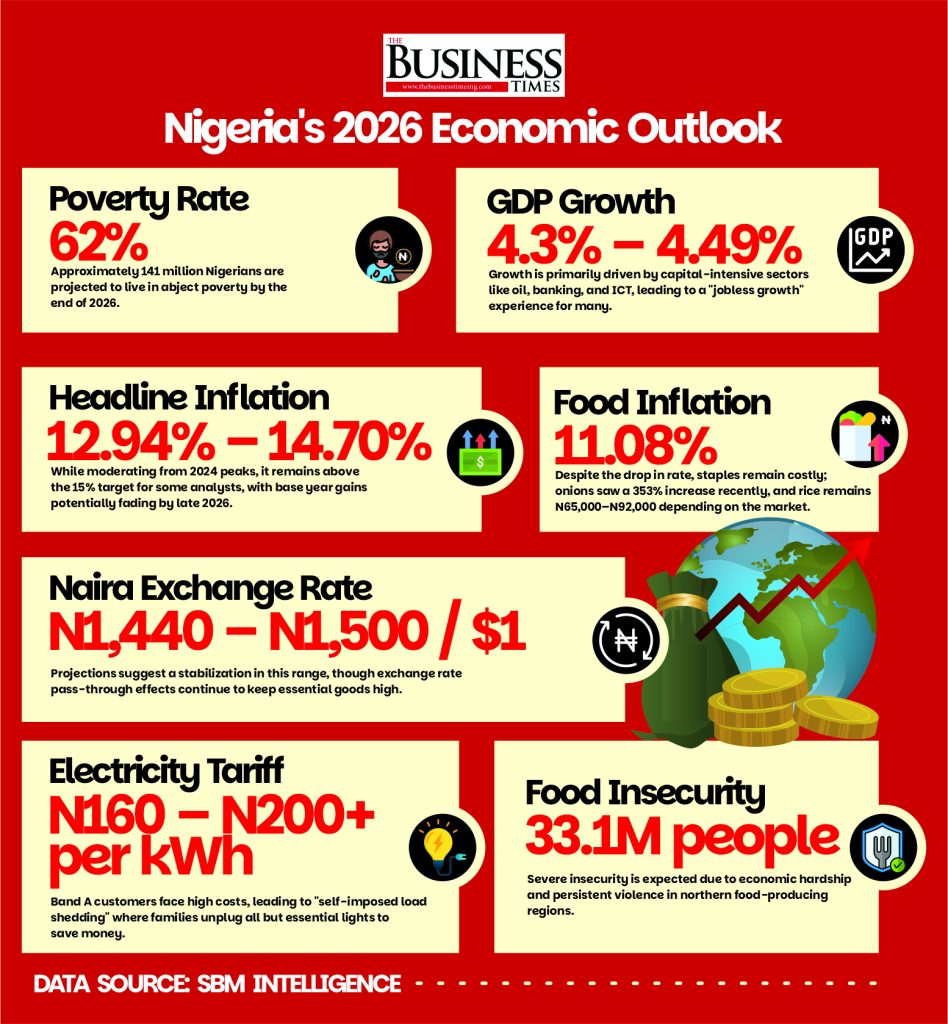
The latest data from professional services firm PwC frames the enigma with sobering clarity. Headline inflation has eased for consecutive months, falling to a three-year low. Yet, the poverty rate is set to climb to 62% by 2026, pushing an additional two million Nigerians below the poverty line, for a total of 141 million citizens in destitution . This “disinflation dividend” has failed to translate into a welfare dividend. The reason lies in the brutal mathematics of eroded purchasing power. While the rate of price increases has slowed, the absolute level of prices for essentials remains at historic peaks. For low-income households, who spend up to 70% of their income on food and essentials, this stagnation is catastrophic. The government’s necessary but painful reforms—removing fuel subsidies and liberalizing the forex market—initially supercharged inflation. The subsequent cooling is a statistical correction that does not reverse the structural devastation inflicted on household budgets.
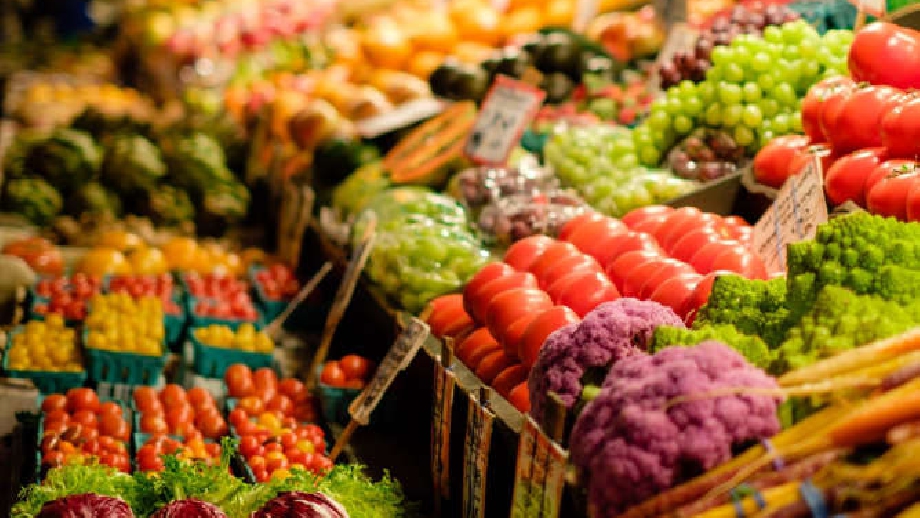
This abstract reality finds concrete, painful expression in the voices of everyday Nigerians. While official figures suggest improvement, mothers at the market like Rosemary (a mother of four from Lagos) scoff at the official narrative, reporting that prices for staples like onions and local rice remain cripplingly high. Consequently, families are forced into painful dietary “rebasing,” swapping protein and nutritious foods for heavy, cheap starches, moving from three meals to two, or even adopting the “1-0-1” strategy—one meal a day. The cooling of inflation is a technicality when the act of feeding a family remains a daily crisis.
Jobless Growth and the Mirage of Opportunity
Compounding the price crisis is a labor market utterly disconnected from macroeconomic growth. Nigeria’s economy is projected to grow at over 4% in 2026, a figure that rings hollow to its burgeoning youth population, where figures suggest a crisis-level youth unemployment rate potentially affecting millions . This is a textbook case of “jobless growth,” where expansion is concentrated in capital-intensive sectors like oil and finance that generate few mass employment opportunities. A socio-economic analyst, commenting on youth sentiment, encapsulates the frustration by pointing to graduates like Emeka, a recent NYSC graduate from Enugu who finished his service the previous year and remains at home, searching in vain for a salaried position.
The economy lacks the capacity to absorb the millions of graduates and young people entering the labor force annually . The result is a generation consigned to the precarious “hustle economy.” For workers like Chidi, an anonymous digital gig worker in Abuja, this means surviving from one task to the next on platforms that offer no security, benefits, or a clear pathway to prosperity. This reality erodes not just present income but future potential. Chidi describes this collapse of horizon, noting that dreams of migration (“Japa”) or entrepreneurship are supplanted by the grim arithmetic of daily survival, as saving the required “proof of funds” to leave the country has become an impossible feat.
The Precipice: One Shock Away from Destitution
For millions of Nigerians who are technically above the poverty line, the margin is perilously thin. They constitute the “working poor,” whose incomes are consumed entirely by daily needs, leaving zero buffer for shocks. This vulnerability transforms routine life into a high-wire act. Amina, a street-level respondent and low-income mother in Abuja, voices this pervasive anxiety, knowing that a single medical emergency for her daughter would force her to divert money from school fees to a chemist, potentially derailing her child’s future.
Medical expenses are the most feared crisis point, capable of wiping out months of meager savings in an instant. In response, families are making heartbreaking intergenerational trade-offs. The middle class, as once understood, is evaporating; its members live in constant fear of the slip down into the swelling ranks of the poor, now predicted to be 141 million strong.
The Comprehensive Squeeze: Transport, Energy, and “Hybrid” Survival
The cost-of-living crisis extends far beyond the food basket, creating a comprehensive squeeze that reshapes fundamental routines. Soaring fuel and transport costs have made the simple act of going to work untenable for many. Sobande, a civil servant in Abuja interviewed by Nairametrics, lays bare the irrationality of this economic reality . He explains that despite a new minimum wage, the cost of commuting from an area like Masaka—about ₦5,000 daily—devours his income. “If I come to work every day, I will be working for the bus driver,” he states, forcing him and colleagues into an informal “hybrid” schedule of skipping office days to save on transport, a desperate measure born of necessity, not convenience.
Similarly, with soaring electricity tariffs, “load shedding” has become a self-imposed household strategy. Families unplug everything but a single lightbulb and fan, meticulously rationing prepaid meter credit. The infrastructure of normal life has become a luxury few can afford consistently.
Grassroots Resilience and the Failure of Formal Systems
In the vacuum left by a retreating state and inaccessible formal financial systems, Nigerians are falling back on and innovating within traditional community frameworks. This grassroots resilience is both inspiring and a damning indictment of systemic failure. Tessy Ajakaye, a 50-year-old trader in Abuja, explains her lifeline to Voice of America . For her, “Ajo means small, small savings that you don’t take to the bank.” This traditional rotating savings scheme is the sole reason her small shop remains open, providing a lump sum to restock inventory where banks would deny her a loan at prohibitive rates. “It’s the community that keeps us from sinking, not the government,” she affirms.
Rotating savings and credit associations (Ajo/Esusu) have become the de facto small-business financing sector. Neighbors are forming bulk-buying clubs to purchase staples directly from sources, bypassing predatory retail markups. In peri-urban areas, “survival gardens” are sprouting in backyards, a quiet turn towards subsistence agriculture. These are not signs of thriving local economies but of communities building lifeboats as the formal ship founders.
A Call for Reconciling Data with Dignity
The Nigerian reality of 2026 is thus a tale of two economies. One, captured in charts and government bulletins, shows green shoots of stabilization. The other, lived by Rosemary at the market, Emeka at home job-seeking, Amina fearing a doctor’s bill, Sobande on the expensive commute, Chidi in the gig hustle, and Tessy Ajakaye in her Ajo group, is an economy of profound precarity. Here, growth is an abstraction, stability is statistical, and the future has been collapsed into the present tense of survival.
These named voices from the streets are not outliers; they are the human data points that give true meaning to the aggregate numbers. Their experiences confirm that without targeted, compassionate intervention—such as scaling social safety nets, investing in mass employment sectors, and regulating essential costs—macroeconomic stability will remain a hollow victory.
Ultimately, Nigeria’s challenge is to reconcile its economic metrics with the dignity of its citizens. True recovery will be measured not by inflation percentages alone, but when a mother like Rosemary can buy a bag of rice, not a bucket; when a graduate like Emeka finds a job, not a hustle; when a parent like Amina can face a medical bill without sacrificing her child’s education; when a worker like Sobande can afford to commute to his job every day; and when the collective resilience of community support practiced by Tessy is supplemented by, not substituted for, effective and empathetic governance. Until then, the disconnect will remain, and the boiling reality of the streets will mock the cooling numbers on the official page.