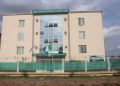

In a major push to formalize West Africa’s massive informal trade sector, the Nigerian Shippers’ Council (NSC) and its regional partners have intensified operations at the Border Information Centre (BIC). During a high-level dialogue at the Seme–Krake axis on Thursday, February 26, 2026, regulators and trade bodies positioned the BIC as a critical tool for farmers, logistics providers, and traders moving goods between Nigeria, Benin, and the wider ECOWAS market.
The strategic and structural consequence of this initiative is the systematic removal of information asymmetry, which has long been a bottleneck for cross-border commerce. Ify Okolue, Director of Consumer Affairs at the NSC, explained that the BIC provides real-time, accurate data on tariffs, documentation, and sanitary measures. By locating a primary center at Seme, the Council is leveraging the corridor’s role as a vital link between Nigerian seaports and inland West African markets, ensuring that logistics inefficiencies on land do not undo the progress made at the ports.
Analytically, the expansion of the BIC network reflects a broader shift toward regional integration. The Council, in collaboration with the ECOWAS Commission, GIZ, and Customs, has already established centers at key border points including Jibiya–Maradi, Illela–Sokoto, and Mfum. A new center at Idiroko is slated to go live before the end of Q2 2026. These desks are supported by inland dry ports in Kaduna, Dala, and Funtua, as well as planned vehicle transit areas designed to improve driver safety and reduce transit-related accidents.
The impact on “Trade Facilitation and Regulatory Compliance” is a vital dimension of this reform. Representing the Comptroller-General of Customs, Wale Adenuga, the Customs Area Controller of Seme, emphasized that the current administration is obsessed with speed. He guaranteed that legitimate, compliant goods could now be cleared for export to Benin within 48 hours, thanks to a unified command structure between Nigerian and Beninese authorities. This enforcement strategy is designed to isolate illegitimate trade while providing a “green lane” for traders who utilize the BIC to ensure their documentation is flawless.
Furthermore, the ECOWAS Commission highlighted that information desks are essential for protecting vulnerable participants in the trade ecosystem. Kolawole Sofola, ECOWAS Director of Trade, noted that many informal traders, particularly women and youth, often face harassment or extortion simply because they are unaware of the rules under the ECOWAS Trade Liberalisation Scheme (ETLS). By providing a formal “Trade Information Desk,” the commission aims to replace grey-market “settlements” with official, transparent procedures, a move that has already benefited over 1,800 traders along the Lagos–Abidjan axis.
The long-term outlook for the Seme–Krake corridor depends on the continued uptake of these digital and physical information tools. Pius Akutah, Executive Secretary of the NSC, expressed optimism at the rising usage rates of the BIC, noting that every compliant transaction strengthens the competitiveness of the corridor. As Nigeria moves to deepen its transit trade with land-linked neighbors like Niger, Chad, and Mali, the Border Information Centre stands as the frontline infrastructure for a more transparent and profitable regional economy.