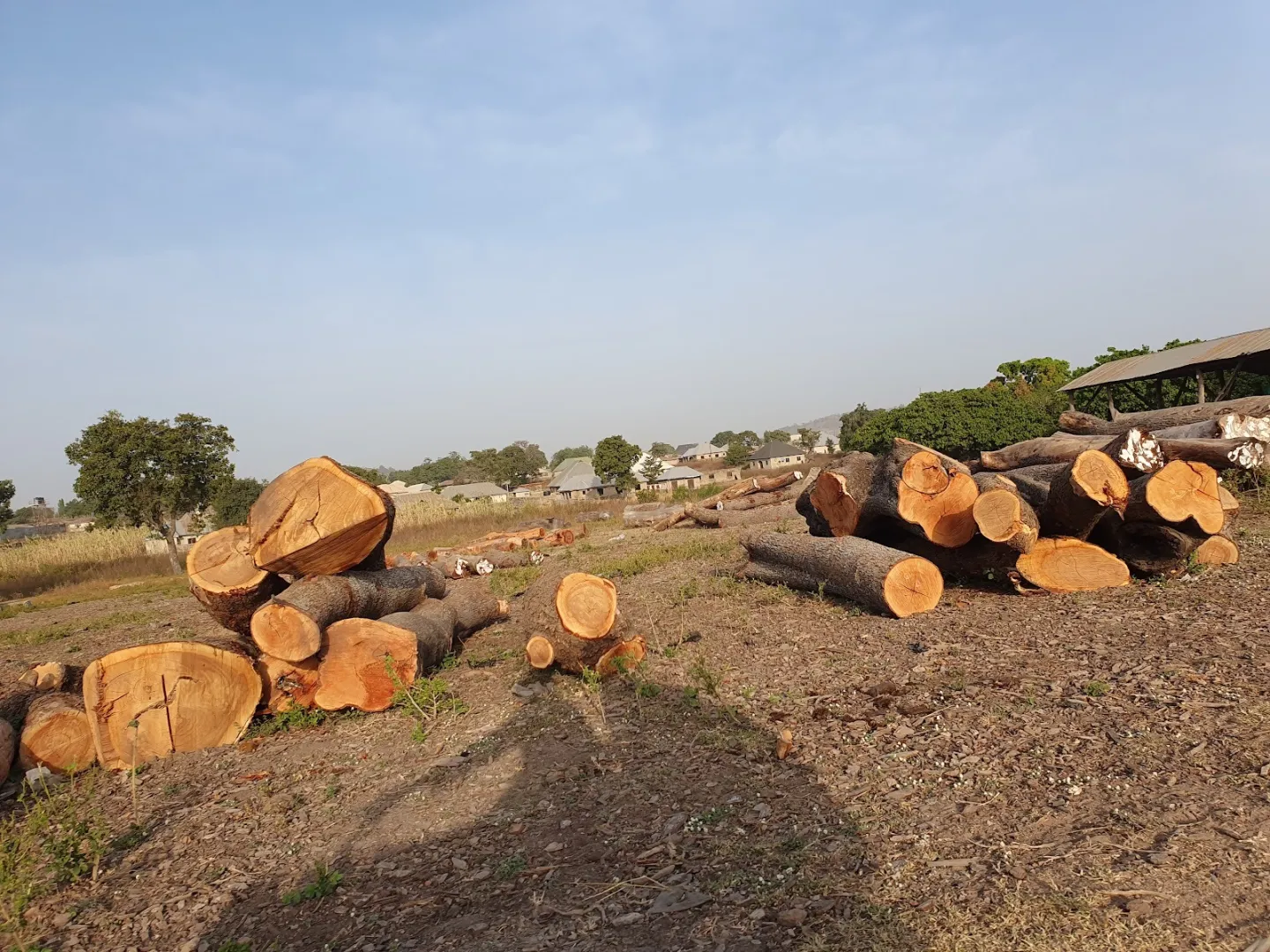

An investigation by Premium Times has revealed a sophisticated illicit timber trade network spanning Nigeria’s North-Central region and the Republic of Benin, which is now serving as a primary funding mechanism for terrorist groups. The illegal felling and smuggling of high-value wood, particularly Rosewood (Pterocarpus erinaceus), has evolved from a simple environmental crime into a high-stakes national security threat. For the Nigerian economy, this development signals a dual crisis: the rapid depletion of critical natural capital and the strengthening of non-state armed groups that continue to destabilize agrarian and transport corridors essential for regional trade.
The economic significance of this illicit trade is rooted in its high profitability and low regulatory oversight. Criminal syndicates, often operating with the complicity of rogue officials, exploit the porous borders between Nigeria and Benin to move massive volumes of “red gold” to international markets, particularly in Asia. From a business journalism perspective, this is a classic “shadow economy” that bypasses the formal fiscal framework, depriving the federal and state governments of billions of naira in potential tax revenue and royalties. The Environmental Investigation Agency (EIA) previously noted that Nigeria’s wood exports saw a 350% growth during periods of crude oil price volatility, suggesting that illegal timber has become a preferred “alternative currency” for organized crime and terrorist financiers.
The link between environmental degradation and terrorism is particularly evident in the North-Central states of Kogi, Nasarawa, and Niger. These regions, which house vast forest reserves, have become operational hubs where insurgent groups levy “taxes” on illegal loggers or directly control the extraction process. For the agricultural sector, the presence of these groups in the forests creates a “no-go zone” for legitimate farmers, leading to reduced crop yields and heightening national food insecurity. The systematic looting of these forests also undermines Nigeria’s climate mitigation commitments, as the loss of canopy cover accelerates desertification and disrupts the local microclimates necessary for sustainable farming and herding.
Institutional integrity is perhaps the most significant casualty of this trade. The Premium Times investigation highlights a deep-seated corruption network where CITES (Convention on International Trade in Endangered Species of Wild Fauna and Flora) permits are allegedly falsified or retrospectively issued to “legitimize” stolen timber. This systemic failure within the Ministry of Environment and various border security agencies creates a climate of impunity that deters formal, sustainable investment in the forestry sector. For Nigeria to attract “green bonds” and international conservation funding, it must first demonstrate an ability to enforce the rule of law within its own protected territories.
The regional context of this trade further complicates Nigeria’s position in West Africa. The cross-border nature of the smuggling routes necessitates a coordinated bilateral response between Abuja and Porto-Novo. However, as long as Benin remains a primary transshipment point for Nigerian timber, the incentives for local enforcement remain weak. For the “Renewed Hope” agenda to succeed in its security and economic diversification goals, the government must treat illegal logging as a priority financial crime. This requires a shift from purely military interventions to a “follow the money” approach, utilizing the Nigeria Financial Intelligence Unit (NFIU) to track the illicit flows that bridge the gap between forest floor felling and international bank accounts.
Strengthening the protective framework for Nigeria’s forests is no longer merely an ecological concern; it is a fundamental pillar of national economic and physical security. The conversion of natural resources into “terrorist capital” represents a direct threat to the sovereign integrity of the Nigerian state. Moving forward, the administration must integrate forest guards into the broader security architecture and ensure that the economic value of Nigeria’s timber is captured through formal, sustainable channels rather than being siphoned off to fuel the next wave of regional instability.