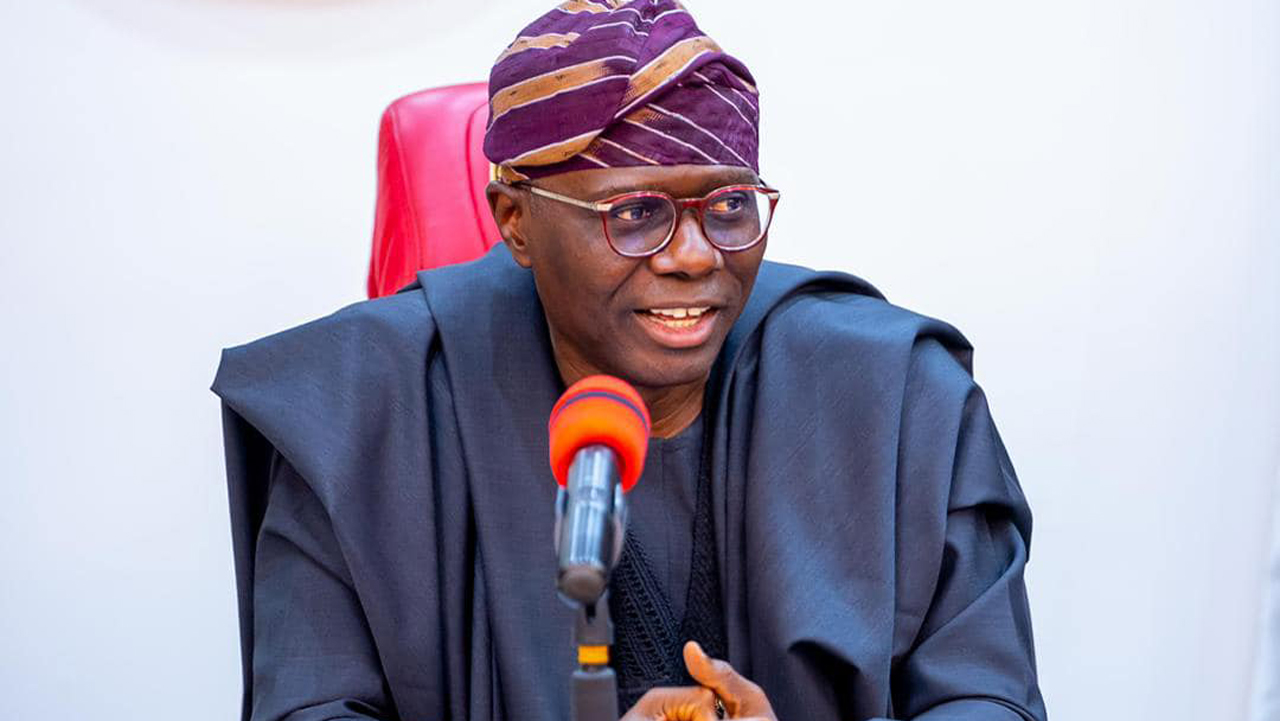

Lagos State Governor Babajide Sanwo-Olu has raised concerns over the rising cost of land in Ikeja, saying prices have climbed above ₦3 million per square metre and are making it increasingly difficult for low-income earners to afford homes in the area.
Sanwo-Olu disclosed this during his acceptance speech after being invested as an Honorary Fellow of the Nigerian Institute of Town Planners (NITP) at its 57th Annual Conference and Annual General Meeting held in Ikeja.
According to a report by The Punch on Monday, November 2, 2026, the governor was represented at the event by the Commissioner for Physical Planning and Urban Development, Dr Oluyinka Olumide.
“The average cost of land in Ikeja is slightly above N3m per square metre. So, it will be difficult for low-income earners to live around that environment,” the governor said.
He explained that the high cost of land was one of the reasons his administration had invested heavily in railway transportation to enable workers to live in less expensive communities such as Agbado while commuting to central Lagos for work.
Sanwo-Olu said the state’s development strategy was shaped by the need to accommodate a growing population, expand infrastructure, provide housing and protect the environment within Lagos’s limited land area of approximately 3,577 square kilometres.
He identified investments in rail transportation, road infrastructure, urban regeneration and improved physical planning as important components of the administration’s efforts to make Lagos more organised and liveable.
The governor’s remarks highlight the growing challenge of housing affordability in Nigeria’s commercial capital, where rising property values are putting pressure on workers seeking accommodation close to employment centres.
The problem is particularly significant given the state’s estimated housing deficit. In a separate report published by The Punch on October 29, 2026, Sanwo-Olu said Lagos was facing an estimated shortage of 3.3 million housing units, driven by population growth and increasing demand for accommodation.
The governor said the state had delivered more than 10,600 homes since 2019 through different housing initiatives, including partnerships with private developers and financing arrangements.
The rising cost of land is also reflected in property market data. BusinessDay reported in an analysis of land prices published earlier in 2026 that land in Ikeja GRA had increased from about ₦600,000 per square metre in January 2024 to approximately ₦1.5 million per square metre.
The figures underline the pressure facing developers attempting to provide affordable housing in established residential and commercial districts.
Rail transportation is central to the Lagos government’s response. The Lagos Red Line connects Agbado with Iddo through major locations including Agege, Ikeja, Oshodi, Mushin and Yaba, providing an alternative to road transportation for commuters.
However, improved transport connectivity will need to be complemented by increased housing supply, affordable financing and effective urban planning to make accommodation more accessible to low-income residents.
Sanwo-Olu said his administration would use its remaining time in office to consolidate its achievements, strengthen institutions and ensure that Lagos continued to develop along an orderly and sustainable path.