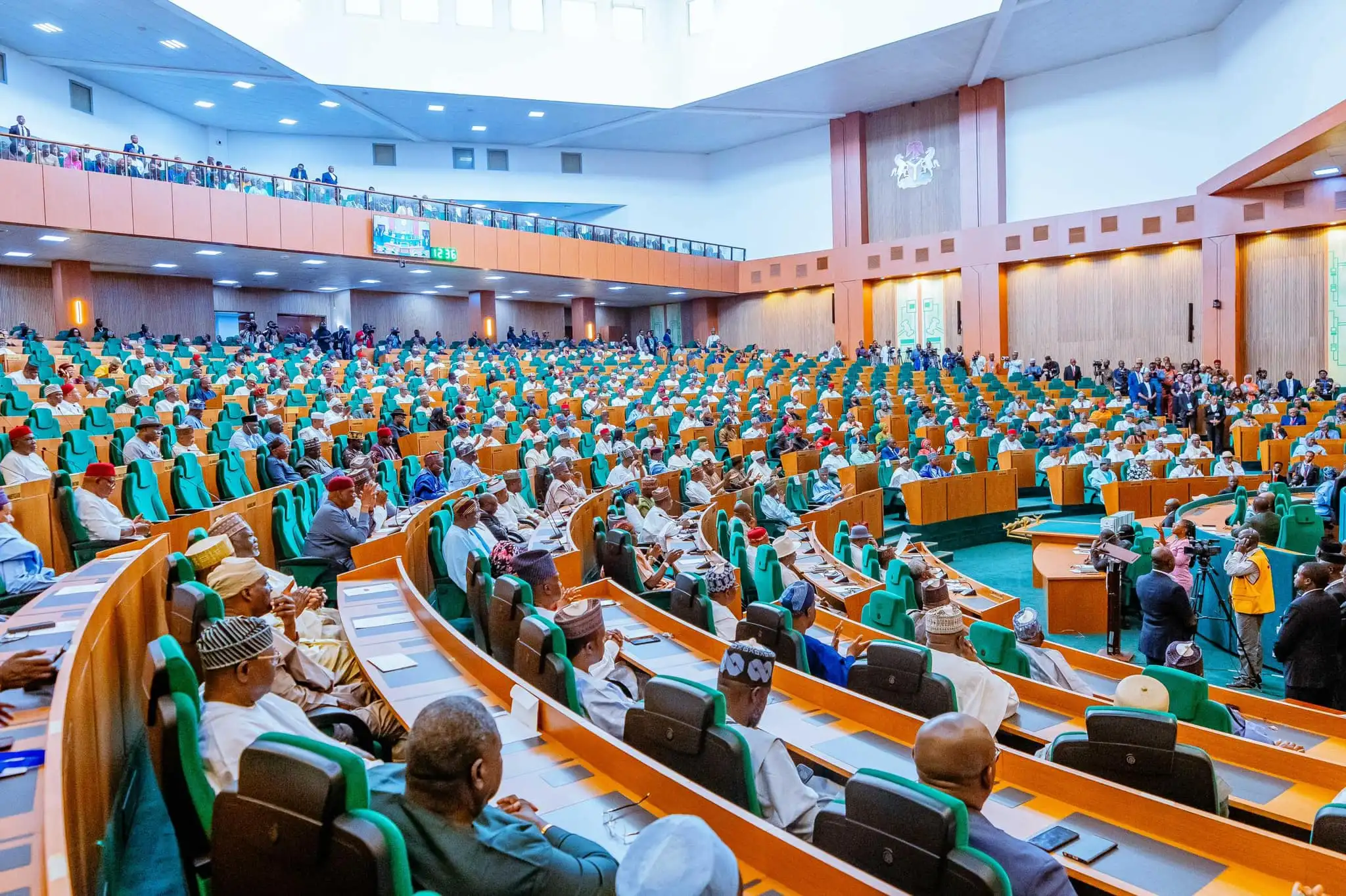

Nigeria’s House of Representatives has advanced a bill seeking to move Value Added Tax (VAT) to the exclusive legislative list, a development that could significantly reshape the country’s fiscal framework and revenue-sharing system. The bill, which scaled its second reading on the floor of the House, is co-sponsored by Deputy Speaker Benjamin Kalu and six other lawmakers, including Joshua Gana, who led the debate.
The proposed legislation is designed to address long-standing conflicts and inefficiencies in Nigeria’s tax administration by clarifying the roles of the federal, state, and local governments. For years, overlapping tax jurisdictions and disputes among revenue-collecting agencies have led to multiple taxation, legal battles, and uncertainty for investors. The bill, its sponsors argue, aims to bring uniformity, transparency, and accountability to the country’s fiscal architecture.
Leading the debate, Gana described Nigeria’s current fiscal structure as confusing, inefficient, and conflict-prone. He said the amendment seeks to streamline responsibilities and eliminate years of overlapping mandates between the various levels of government. According to him, the bill’s goal is to ensure that every naira raised, shared, or spent by the government is traceable, lawful, and transparent.
The bill contains four key provisions aimed at tackling systemic weaknesses in Nigeria’s tax system. First, it seeks to provide constitutional clarity on the collection of stamp duties. Under the proposed amendment, stamp duties collected by the federal government would apply only to documents or transactions involving corporate entities, while those arising from individual transactions would remain under the authority of state governments. Gana noted that this would prevent future jurisdictional conflicts that have previously delayed revenue collection.
Second, the bill seeks to move VAT—also known as consumption tax—to the exclusive legislative list. This would give the National Assembly, and by extension the federal government, clear constitutional authority to legislate and collect VAT across Nigeria. Supporters of the bill argue that this move would create a uniform and predictable VAT regime, replacing the current fragmented system in which both states and the federal government claim the right to collect VAT.
Third, the proposed legislation seeks to prohibit the outsourcing of tax collection to private consultants or agents. The practice, common at state and local government levels, has often led to corruption, harassment of small businesses, and revenue leakages. By banning it, lawmakers hope to restore public confidence in tax administration and ensure that revenues collected are remitted directly to government coffers.
The fourth key provision introduces a maximum limit of nine taxes, levies, or charges that any individual or business can be subjected to in a fiscal year. This measure is expected to ease the burden of multiple taxation that has long discouraged business growth, particularly among small and medium-sized enterprises.
The bill also aims to streamline local government tax powers by removing redundant levies that often result in harassment of traders, artisans, and small business owners. Lawmakers believe a simplified and coordinated tax structure will improve Nigeria’s business environment, attract investment, and reduce administrative costs.
If passed, the legislation would not only settle the constitutional question surrounding VAT but also redefine fiscal federalism in Nigeria. The debate over VAT collection has been one of the most contentious fiscal disputes in recent years.
In 2021, the Rivers State Government secured a Federal High Court judgment granting states the right to collect VAT within their territories. The ruling was hailed by advocates of fiscal autonomy but challenged by the Federal Inland Revenue Service (FIRS), which argued that VAT collection should remain a federal responsibility. The matter remains before the Supreme Court, pending a final decision.
VAT has become one of Nigeria’s most significant non-oil revenue sources. According to FIRS data, VAT collections reached ₦6.72 trillion in 2024, up from ₦3.64 trillion the previous year—an increase of roughly 84.6 percent. This underscores the tax’s importance to government finances at all levels, making its regulation politically sensitive.
The bill now proceeds to the Committee on Constitution Review for further scrutiny and public consultation before its third reading. The review process is expected to draw keen interest from state governments, fiscal policy experts, and business groups, given its potential to reshape Nigeria’s fiscal landscape.
If enacted, the new framework could pave the way for a more harmonised, transparent, and efficient tax system—one that balances national revenue objectives with equitable distribution among the three tiers of government.