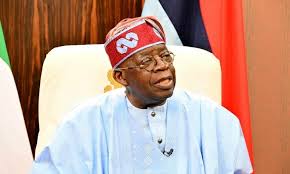

The opposition Peoples Democratic Party (PDP) has openly challenged President Bola Tinubu to demonstrate the same commitment to democracy at home that he recently showed abroad by granting asylum to Guinea-Bissau’s opposition leader,Mr. Fernando Dia Da Costa.
The controversy arose following President Tinubu’s decision to offer asylum and protection to Mr. Fernando Dia Da Costa, the opposition presidential candidate in Guinea-Bissau. Nigeria’s Minister of Foreign Affairs, Amb. Yusuf Tuggar, and his Special Assistant on Media, Alkasim Abdulkadir, explained that the move was necessary to shield Mr. Da Costa from threats to his life, safeguard Guinea-Bissau’s democratic future, and reinforce Nigeria’s commitment to peace and conflict resolution in the West African sub-region, especially following a disputed election and a recent coup.
However, the PDP argues that the principles guiding this humanitarian and pro-democracy intervention should be applied equally within Nigeria’s borders.
Comrade Ini Ememobong, the PDP’s National Publicity Secretary, called on President Tinubu to “replicate the intervention” domestically. He specifically pointed to what he called the “activities of anti-democratic forces” within the President’s own government and political machine. He alleged that these forces are “openly orchestrating, funding, and engineering crises in major opposition parties.”
While acknowledging that the President isn’t expected to directly assist opposition groups, Ememobong stressed that Tinubu has a constitutional duty to maintain a political environment that is “free, open, and competitive.” The PDP official stated that the current political space is being “constricted through coercion of elected officials to defect to the ruling party and the sponsorship of crises in opposition parties.”
The PDP insists that the “philosophical underpinning” that led to Nigeria’s action in Guinea-Bissau should also guide the President’s domestic conduct. The party warned that failure to act promptly in defence of democracy could lead to the “decline” of Nigeria’s electoral democracy and an “slide toward a one-party state.”
“The President must act promptly in defence of democracy in Nigeria,” the party asserted. “He cannot present himself as a defender of democracy in the sub-region while enabling anti-democratic practices at home that undermine democratic institutions and processes.”
Political stability is a crucial precursor to economic confidence and investment. The PDP’s call to safeguard domestic democracy, if ignored, carries significant economic risks. Nigeria’s position as a regional economic leader is dependent on its internal stability.
Frequent political crises, forced defections, and a shrinking competitive political space signal institutional risk to both foreign and domestic investors. A slide towards a one-party state, as warned by the PDP, could undermine the predictability and transparency of policymaking. This lack of checks and balances can lead to policy decisions that favour political patronage over sound economic principles, ultimately discouraging foreign direct investment (FDI) and increasing capital flight.
By intervening in Guinea-Bissau, President Tinubu aims to promote regional stability, which benefits Nigeria’s economic interests in the ECOWAS bloc. However, if international observers perceive Nigeria’s domestic politics as unstable or undemocratic, the nation risks losing the goodwill and economic advantage it gains from promoting regional peace. The cost of maintaining genuine multi-party democracy is often viewed by economists as an investment in long-term economic stability and growth. Failure to do so could lead to a downgrade in the perception of Nigeria’s overall risk profile.