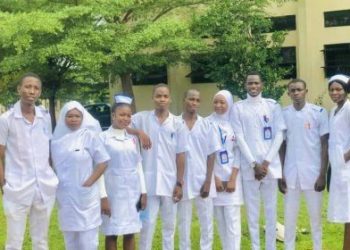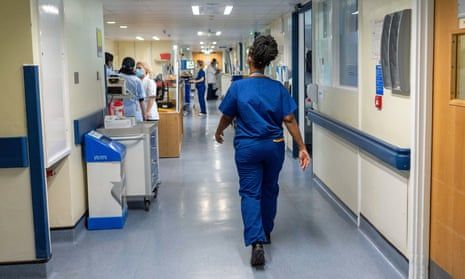

More than 10,000 Nigerians are currently listed among workers in the United Kingdom’s National Health Service (NHS), highlighting the growing movement of Nigerian healthcare professionals abroad and the pressure it places on the country’s already stretched health system.
Data from NHS Million, a UK campaign organisation, shows that 10,494 Nigerians work within the NHS. Nigeria ranks sixth among the nationalities represented in the UK health service, behind the United Kingdom, India, the Philippines, Ireland and Poland. Nigeria also has the largest representation of any African country on the list. Zimbabwe comes next with 4,780 workers, followed by Ghana with 3,395, Egypt with 2,895 and South Africa with 1,829.
The movement of Nigerian healthcare workers to the UK has continued for several decades, but the pace increased following Nigeria’s 2016 recession and the disruption caused by the COVID 19 pandemic. The UK has also continued to recruit healthcare professionals from Nigeria and other Commonwealth countries as it deals with persistent staff shortages across its health system.
Nigeria has recognised the growing challenge. In 2024, the Federal Government approved the National Policy on Health Workforce Migration, designed to address the movement of medical professionals and improve the country’s ability to retain skilled workers. However, while an implementation plan for the policy has been completed, the full implementation process has yet to begin. The scale of the migration is reflected in the 2025 State of Health of the Nation Report released by the Federal Ministry of Health and Social Welfare.
The report showed that more than 20,000 Nigerian healthcare workers moved abroad within one year. They included 3,919 doctors, 7,487 nurses and midwives, 6,861 medical laboratory professionals, 702 pharmacists, 658 physiotherapists and 274 dentists. Nigeria currently has 95,456 registered doctors, but only 60,551 have active practising licences, highlighting the gap between the number of professionals registered and those actively available to provide healthcare services.
The United Kingdom remains one of the major destinations for Nigerian doctors. Data from the General Medical Council showed that 4,691 Nigerian trained doctors joined the UK medical register between May 2023 and April 2026. Overall, 15,896 Nigerian trained doctors are licensed to practise in the UK. The impact of the migration is not evenly distributed across Nigeria. Northern states, in particular, have much lower doctor densities, meaning the loss of healthcare professionals can deepen existing shortages and make access to medical services more difficult.
The Federal Government has taken some steps to increase the health workforce. In 2025, it trained an additional 23,000 frontline health workers, bringing the total trained between 2024 and 2025 to 78,146. However, that figure represents only about 65 percent of the national target of 120,000 workers. The bigger challenge remains retention. Higher salaries, better working conditions and stronger career opportunities abroad continue to attract Nigerian healthcare professionals.
The NHS benefits by filling staffing gaps with experienced Nigerian workers. The professionals gain better income and international experience, while the UK economy benefits from the skills they bring. Nigeria, however, loses trained professionals after investing resources in their education and development. Patients in understaffed hospitals, particularly in underserved areas, also bear the consequences.