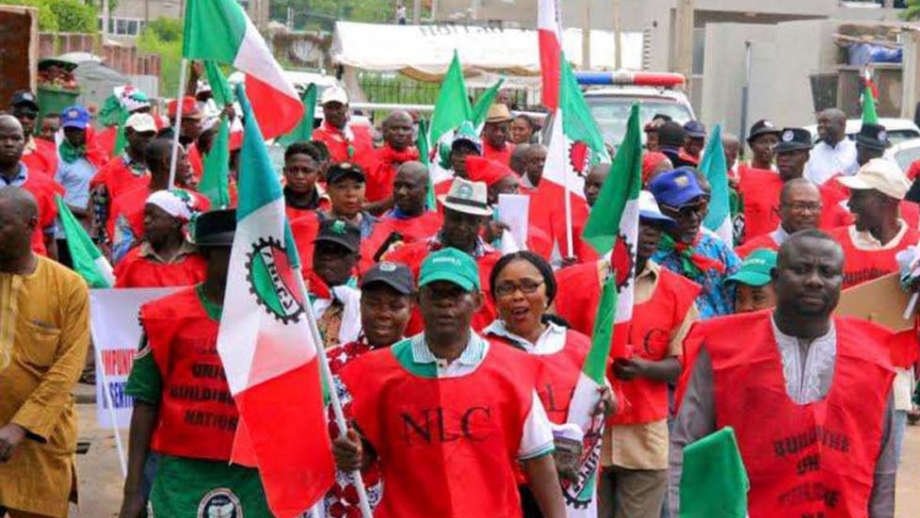

The Nigeria Labour Congress has declared the country’s N70,000 minimum wage a “poverty wage,” signalling the opening of a renewed campaign for a living wage as inflation continues to erode workers’ incomes.
NLC President Joe Ajaero made the declaration at the opening of the 2026 NLC Rain School at the Workers’ Solidarity Centre in Uyo, Akwa Ibom State, telling delegates that “the battle for a living wage will soon begin in earnest.” He urged affiliates to approach upcoming negotiations from a position of strength rather than concession.
The union’s push is underpinned by fresh government data. According to the National Bureau of Statistics’ Cost of a Healthy Diet report for March 2026, an adult now requires an average of N1,541 daily, about N46,230 a month, to maintain a nutritionally adequate diet, a figure that excludes transportation and meal preparation costs. Extrapolated across a three-person household, that would put monthly food costs alone near N138,690, roughly double the current minimum wage, though the NBS figure itself is calculated per adult rather than per household.
The gap comes as food inflation remains elevated and transportation, electricity and housing costs continue to strain budgets following the 2023 fuel subsidy removal and naira float.
The Federal Government has signalled openness to renegotiation. Chief of Staff Femi Gbajabiamila said this week that the N70,000 wage “must be honestly reassessed against today’s realities,” pledging that the administration would engage labour “as a partner” once the statutory review process begins. President Bola Tinubu signed the N70,000 wage into law in July 2024, a package that also shortened the review cycle from five to three years.
Organised labour has already tabled its opening position. At the 2026 May Day protests, the NLC and Trade Union Congress jointly demanded a new minimum wage of N154,000, more than double the current benchmark, arguing it better reflects the cost of feeding, housing and transporting a family under present conditions. A related demand from the Joint National Public Service Negotiating Council, submitted to the Head of Service in March, sought a 120% salary review on the same basis.
Beyond wages, the NLC is pressing for a national minimum pension for retirees, faster passage of pending labour reform bills, and stronger legal protections for workers. With formal talks expected to open in the coming months, wage negotiations look set to become one of the defining economic policy battles ahead of the 2027 elections, testing the balance between workers’ welfare, inflation management and fiscal sustainability.