Nigeria’s stock market has emerged as the best-performing equity market in the world this year when measured in dollar returns, moving ahead of South Korea’s Kospi index. The strong performance reflects growing investor confidence in Nigeria’s economy, supported by government reforms, stronger oil prices, and improved foreign exchange conditions.
According to Bloomberg’s tracking of 92 global stock exchanges, Nigerian equities have delivered a 68 percent return in dollar terms this year. This puts Nigeria slightly ahead of South Korea’s Kospi index, which has gained 66 percent despite facing recent challenges.
South Korea’s stock market has struggled in recent weeks as investors became concerned about the future of artificial intelligence (AI) companies. The Kospi index has dropped by more than 22 percent from its June peak, placing it in a technical bear market. At the same time, the South Korean won has lost around five percent of its value against the US dollar this year, reducing returns for foreign investors.
Nigeria, however, has experienced a different story. The country’s stock market has continued to attract investors because of ongoing economic reforms, rising crude oil prices, and better availability of foreign exchange. These factors have strengthened confidence in the Nigerian economy and encouraged more investment in listed companies.
Financial services firms have played a major role in the market’s impressive performance. One of the biggest success stories is Fortis Global Insurance Plc, whose shares have produced an extraordinary return of about 1,400 percent in dollar terms this year, making it one of the market’s top performers.
The Nigerian Exchange (NGX) has also recorded strong gains. On July 8, the NGX All-Share Index climbed by 2.27 percent, closing at 242,459.98 points compared to the previous close of 237,083.28 points. During the same trading session, the market’s total value increased by N3.45 trillion, bringing its overall capitalisation to N155.59 trillion.
A major contributor to that rally was Airtel Africa, whose share price rose by the maximum daily limit of 10 percent to close at N5,801.40.
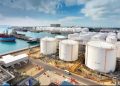
Market experts believe Nigeria’s recent success is driven by local economic improvements rather than the global technology boom. Damilola Okeleye, a trader at Stonex Nigeria Financial Ltd, explained that unlike South Korea, Nigeria’s stock market has little direct exposure to the highly volatile AI sector. Instead, investors are focusing on domestic opportunities created by economic reforms and expectations that Dangote Petroleum Refinery and Petrochemicals could eventually be listed on the Nigerian Exchange.
Another positive development is Nigeria’s inclusion on S&P Dow Jones Indices’ 2027 watchlist for a possible upgrade from a “Standalone” market to a “Frontier” market. The organisation said it will continue monitoring Nigeria’s progress through 2026 before making a final decision in 2027.
If Nigeria receives the frontier market classification, it could attract more international investors because many global frontier market funds are currently unable to invest in standalone markets. Such an upgrade would also strengthen Nigeria’s reputation in the global investment community.
Adding to the positive outlook, the naira has appreciated by about four percent against the US dollar since the beginning of the year. This has boosted returns for foreign investors, unlike previous years when currency weakness often reduced the value of gains made in the stock market.
Overall, Nigeria’s impressive market performance highlights growing investor confidence and signals a stronger outlook for the country’s financial markets as economic reforms continue to take effect.