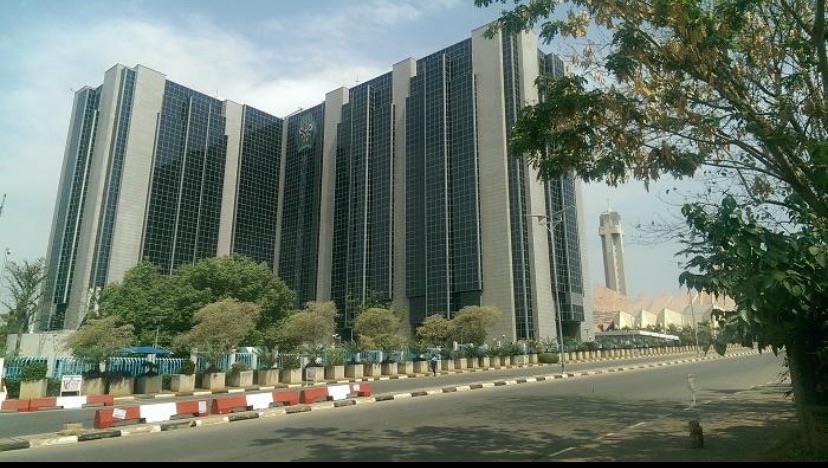

Nigeria recorded a major increase in non-oil revenue in February 2026, with collections rising to N2.40 trillion, according to the latest Economic Report released by the Central Bank of Nigeria (CBN). The strong performance meant that non-oil revenue accounted for 76.57 per cent of the country’s total federation revenue for the month.
The report revealed that total provisional federation revenue increased to N3.14 trillion in February, representing a 16.94 per cent rise compared to January. The growth was mainly driven by higher revenue generated from taxes and other non-oil sources, showing early positive results from the Federal Government’s tax reforms introduced in 2025.
Non-oil revenue climbed from N1.86 trillion in January to N2.40 trillion in February, reflecting a 28.85 per cent month-on-month increase. According to the CBN, stronger collections from corporate income tax and Value Added Tax (VAT) were the major factors behind the impressive growth.
VAT remained the largest contributor to non-oil earnings, generating N1.08 trillion, which represented 45.07 per cent of total non-oil revenue. Corporate income tax followed closely, contributing N912.38 billion, accounting for 37.97 per cent of the total.
The CBN explained that the significant increase in tax collections indicates that recent tax reforms are beginning to improve government revenue by expanding non-oil income sources and reducing dependence on crude oil earnings.
While non-oil revenue recorded strong growth, income from the oil sector moved in the opposite direction. Oil revenue declined by 10.18 per cent to N735.13 billion during the month.
The report attributed the decline to lower receipts from Petroleum Profit Tax (PPT) and oil royalties, despite a slight improvement in international crude oil prices. This highlights the continued uncertainty surrounding Nigeria’s oil revenue, making non-oil income increasingly important for government finances.
Following statutory deductions and other approved transfers, a total of N1.90 trillion was shared among the three tiers of government from the federation revenue generated in February.
The Federal Government received N525.23 billion, while state governments shared N767.29 billion. Local government councils received N517.29 billion, and oil-producing states were allocated N90.19 billion as their constitutionally approved 13 per cent derivation revenue.
The report also revealed how the federation allocation was distributed among the states.
Lagos State received the highest allocation at N195.09 billion, maintaining its position as the largest beneficiary due to its strong economic activities and internally generated revenue profile.
It was followed by Rivers State, which received N63.57 billion, while Delta State got N61.73 billion. Oyo State received N54.86 billion, making it one of the top five beneficiaries, while Kano Statereceived N52.17 billion.
At the lower end of the allocation table, Ebonyi State received the smallest share at N21.56 billion. Other states with relatively lower allocations included Nasarawa with N22.41 billion, Gombe with N22.56 billion, Ekiti with N23.00 billion, and Taraba with N23.45 billion.
The latest figures suggest that Nigeria’s efforts to strengthen tax collection and diversify government revenue away from crude oil are beginning to produce positive results. With non-oil income now contributing more than three-quarters of total federation revenue, the country appears to be making steady progress toward building a more sustainable and resilient economy.