
Nigeria’s growing gas industry could attract billions of dollars in investment and create thousands of jobs, but concerns over pipeline vandalism and crude oil theft are threatening to undermine the expected benefits.
Pipeline Infrastructure Nigeria Limited (PINL) has therefore called for stronger protection of the country’s energy infrastructure following the securing of more than $20 billion in gas sale and purchase agreements by NNPC Limited within the past year.
The company said the agreements represented an important opportunity for Nigeria to expand its gas economy, support industrial development and improve energy security.
Speaking at a stakeholders’ engagement forum in Yenagoa, Bayelsa State, PINL’s General Manager, Community and Stakeholders Relations, Dr Akpos Mezeh, said the agreements covered 1.29 billion standard cubic feet of gas per day for long-term liquefied natural gas (LNG) supply.
An additional 750 million standard cubic feet per day has also been secured for domestic industrial gas supply.
According to Mezeh, the agreements, which involve major investors including the Dangote Refinery, show that investors are becoming more confident in Nigeria’s gas sector.
He explained that the projects could support industrialisation, increase employment opportunities, improve energy supply and contribute to long-term economic growth.
However, he warned that these benefits could be lost if pipelines and other energy facilities remain vulnerable to attacks.
Major Gas Projects Progressing
Nigeria is also making progress on several major gas infrastructure projects.
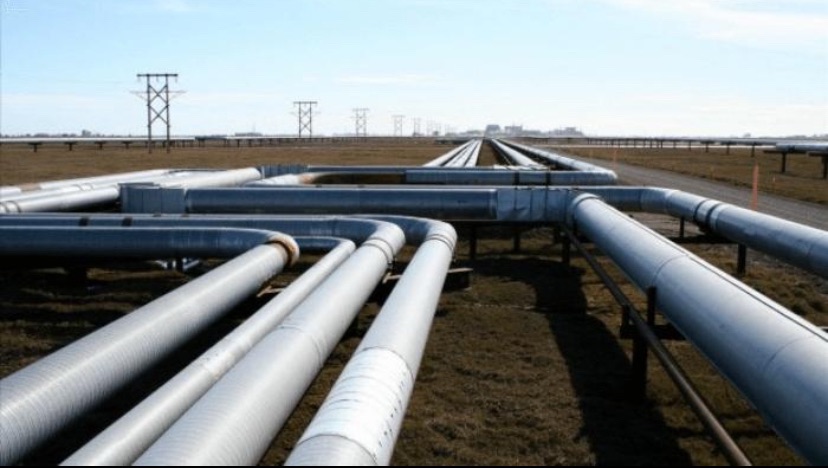
Mezeh disclosed that the Obiafu-Obrikom-Oben Gas Pipeline had reached 98 per cent completion, with final connection activities underway.
The Ajaokuta-Kaduna-Kano Gas Pipeline, another major project expected to improve gas distribution across the country, had also reached 94 per cent completion.
He also pointed to the commissioning of the ANOH Gas Processing Plant as another major development supporting Nigeria’s domestic gas infrastructure.
Mezeh stressed that completing these projects would only deliver their full economic value if the infrastructure was properly protected.
He urged traditional rulers, community leaders, youths and women to work closely with security agencies and pipeline operators to prevent vandalism and other attacks.
Communities Key to Pipeline Protection
According to PINL, people living around pipeline corridors have an important role to play because they are often the first to notice suspicious movements or activities.
Mezeh said operations along the Trans Niger Pipeline and Eastern Gas Network corridor remained largely uninterrupted in the past month because of cooperation between security agencies, contractors and host communities.
Despite this progress, some cases of attempted vandalism, sabotage and equipment failure were recorded. He said affected facilities were quickly repaired, while some suspects were arrested and investigations were continuing.
PINL also highlighted the importance of ensuring that local communities benefit from the expanding gas industry.
Mezeh said the company would continue supporting youth and women empowerment programmes, skills training, entrepreneurship initiatives and scholarships in its host communities.
The company has also approved its scholarship programme as an annual initiative for students from host communities throughout the duration of its contract with the Federal Government.
The decision followed what the company described as the success of its first scholarship programme.
Regular Engagement Planned
To improve communication with communities, PINL said its stakeholders’ engagement forum would now take place every two months. The meetings are expected to give stakeholders enough time to implement and monitor decisions reached during discussions.
The company believes stronger cooperation between communities, security agencies and energy operators will help create a safer environment for investment.
For Nigeria, protecting pipelines is becoming increasingly important as billions of dollars flow into the gas sector. If infrastructure remains secure, the investments could support new businesses, create employment, improve energy supply and strengthen government revenue.
PINL therefore urged Nigerians to reject pipeline vandalism, crude oil theft and other forms of sabotage, stressing that protecting energy infrastructure is closely connected to the country’s economic future.