
Nigeria is taking steps to address the shortage of crude oil supplied to local refineries as the country’s refining capacity continues to grow.
The Nigerian Midstream and Downstream Petroleum Regulatory Authority (NMDPRA) said it plans to work with the Nigerian Upstream Petroleum Regulatory Commission (NUPRC) to resolve challenges affecting crude oil deliveries to domestic refineries.
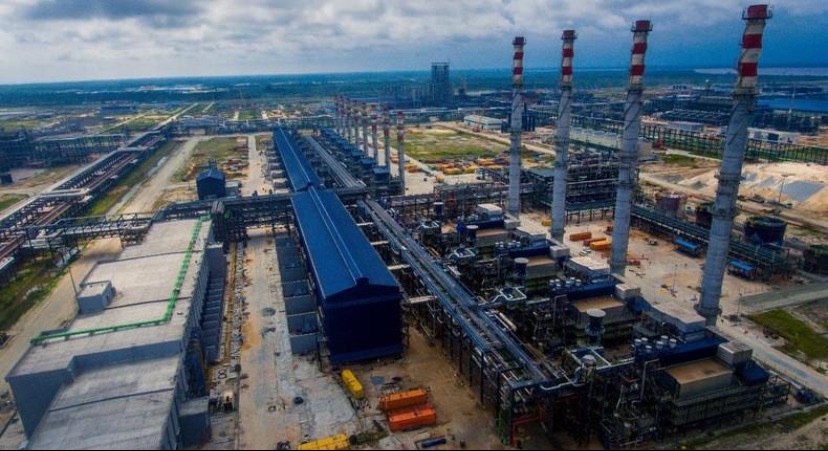
The move comes as Nigeria’s installed refining capacity has reached about 1.125 million barrels per day (bpd), the highest level recorded in the country. A major part of this capacity comes from the Dangote Petroleum Refinery, which has a nameplate capacity of 700,000 bpd.
NMDPRA Director-General, Rabiu Umar, disclosed the plan in Lagos during the 49th annual conference of the Society of Petroleum Engineers (SPE) Nigeria Council.
Umar explained that the government wants to reduce the practice of exporting crude oil while importing refined petroleum products. Instead, the government is targeting a system where more of Nigeria’s crude is processed within the country.
He said the government’s long-term ambition is to refine all the crude produced locally.
Nigeria is targeting crude oil production of about 3 million barrels per day in the coming years. However, achieving that goal would require a significant increase from the country’s current production level.
The NUPRC estimated Nigeria’s crude production at around 1.73 million bpd in June, meaning production would need to almost double before the government’s 3 million-bpd target can be achieved.
A major part of the government’s strategy is the enforcement of domestic crude supply obligations. Under Nigeria’s petroleum laws, oil producers are required to supply a portion of their crude production to local refineries.
According to Umar, enforcing this requirement is critical to ensuring that Nigeria’s growing refining industry has enough crude to operate efficiently.
The issue has become more important as new refining capacity comes on stream. The Dangote refinery has already increased Nigeria’s ability to produce refined petroleum products locally and has also opened opportunities for exports to markets in West Africa and Europe.
However, the growing importance of the Dangote refinery has also raised concerns about excessive dependence on a single large refinery for domestic fuel supply.
The company is reportedly planning to expand its refinery capacity to 1.4 million bpd, which could further increase its influence on Nigeria’s petroleum market.
Meanwhile, Nigeria’s government-owned refineries in Port Harcourt, Warri and Kaduna remain part of the country’s long-term refining strategy. Their combined potential capacity is more than 300,000 bpd, but they have struggled to operate consistently at full capacity.
The Nigerian National Petroleum Company Limited (NNPCL) is now looking at a new approach to rehabilitating the facilities by bringing in private partners whose payments would be linked to actual refinery performance.
This model is intended to avoid the problems associated with previous rehabilitation arrangements, where contractors were paid regardless of whether the refineries successfully returned to sustained production.
With crude production, refining capacity and energy demand all expected to rise, resolving crude supply shortages will be crucial to Nigeria’s ambition of becoming a major refining and petroleum products-exporting hub.
The success of the government’s strategy will ultimately depend on increasing crude production, enforcing domestic supply obligations and ensuring that both private and state-owned refineries operate efficiently.