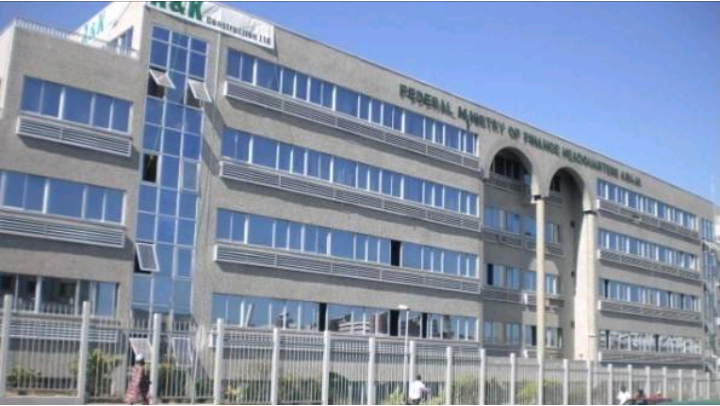

The Debt Management Office (DMO) has announced that the Federal Government of Nigeria will aim to raise ₦900 billion from its January 2026 bond auction, a key part of its strategy to fund budget needs and support the domestic fixed-income market. The auction is scheduled for January 26, 2026, with settlement set for January 28, 2026, according to a DMO circular.
The offering comprises the reopening of three Federal Government of Nigeria (FGN) bonds spanning medium and long tenors: ₦300 billion from the 18.50% FGN February 2031 bond, ₦400 billion from the 19.00% FGN February 2034 bond, and ₦200 billion from the 22.60% FGN January 2035 bond. Each bond is priced at ₦1,000 per unit with a minimum subscription of ₦50,001,000 and further increments in multiples of ₦1,000. Coupon rates are fixed, with interest paid semi-annually and principal repaid at maturity under a bullet structure.
According to the DMO, total bond allotments in 2025 reached about ₦5.12 trillion, a figure that reflects strong investor engagement with government securities.
“The Debt Management Office (DMO) has announced that the Federal Government will seek to raise N900 billion through the reopening of three federal bonds in its January 2026 auction.”
Nigeria has increasingly relied on domestic debt instruments such as FGN bonds to finance budget deficits and manage fiscal obligations while avoiding inflationary pressures tied to money creation. These instruments are attractive to institutional investors like pension funds, insurance firms, and qualified individuals seeking predictable fixed returns over defined periods.
Investors also enjoy several statutory and regulatory incentives. The bonds qualify under the Trustee Investment Act and are recognised as government securities under the Company Income Tax Act (CITA) and Personal Income Tax Act (PITA), often providing tax advantages on interest earnings. They are listed on the Nigerian Exchange (NGX) and the FMDQ OTC Securities Exchange, enhancing tradability and price discovery. FGN bonds also count as liquid assets for banks when calculating liquidity ratios and are backed by the government’s full faith and credit.
From an economic perspective, the auction comes as Nigeria navigates a challenging fiscal environment marked by sizeable budget deficits and rising debt service obligations. Recent fiscal data show that debt servicing has been consuming a growing share of government revenue, while domestic borrowing continues to be a preferred route to meet funding needs. Higher interest costs and increased issuance of both short- and long-term instruments have propelled domestic debt service bills upward, even as reforms aim to stabilise macroeconomic indicators and support growth.
“The offering spans medium- and long-term bonds, providing investors with opportunities across multiple maturities.”
Beyond standard FGN bonds, the DMO has also been issuing FGN Savings Bonds with competitive yields to deepen the domestic debt market and encourage savings, especially among retail investors. These savings bonds offer double-digit interest rates in a high-inflation environment and have been well-subscribed in recent cycles.
Analysts say that while domestic debt markets play a crucial role in funding government operations and offering investors secure instruments, the growing reliance on internal borrowing underscores the need for stronger revenue generation and fiscal discipline. Sustained borrowing, if left unchecked, could heighten the cost of debt service and crowd out spending on critical infrastructure and social programs.
Applications for the January bond auction must be submitted through authorised Primary Dealer Market Makers (PDMMs) in accordance with the DMO’s guidelines.