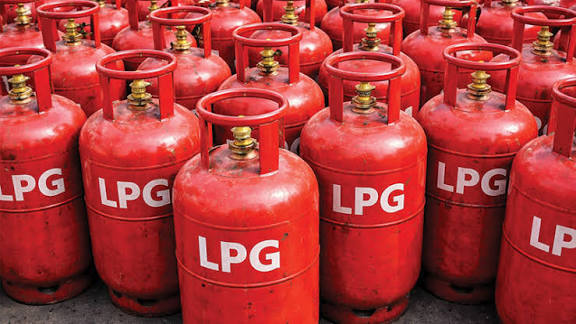

Nigeria has escalated its response to the sharp rise in liquefied petroleum gas (LPG) prices, summoning top security and regulatory agencies to an emergency coordination meeting aimed at restoring stability to the domestic cooking gas market.
The Federal Government said it is working with the Department of State Services (DSS), the Economic and Financial Crimes Commission (EFCC), and the Nigeria Police Force to investigate and curb alleged hoarding, illegal storage, and diversion of LPG supplies. Authorities say these practices have tightened supply conditions and pushed retail prices to between ₦1,800 and ₦2,000 per kilogram in several urban centres.
Minister of State for Petroleum Resources (Gas), Ekperikpe Ekpo, directed the Nigerian Midstream and Downstream Petroleum Regulatory Authority (NMDPRA) to intensify surveillance across the LPG distribution chain. The regulator has been tasked with identifying bottlenecks, enforcing compliance, and ensuring that product movement is not obstructed by speculative withholding of supply.
Officials familiar with the discussions say President Bola Tinubu has expressed concern over the inflationary pressure the price surge is exerting on households, particularly as demand typically rises during peak cooking gas consumption periods.
Beyond enforcement measures, the government is also leaning on supply-side interventions to ease pressure on the market. These include a fast-tracked local blending initiative in partnership with Nigeria LNG Limited, as well as expected incremental output from Seplat Energy’s gas processing facilities. The objective, according to officials, is to improve domestic availability and reduce reliance on volatile supply routes.
Market analysts note that Nigeria’s LPG sector has remained vulnerable to logistical constraints, weak enforcement at depots, and periodic diversion to higher-paying regional markets. These structural inefficiencies often amplify price swings even when upstream production remains relatively stable.
The government has vowed to maintain “uninterrupted movement” of LPG across the country and warned that individuals or entities found to be manipulating supply channels will face enforcement action.
While the immediate focus is stabilisation, energy economists argue that sustained relief will depend on expanding storage infrastructure, improving distribution transparency, and accelerating domestic processing capacity. Without these reforms, they caution, administrative crackdowns may only provide temporary reprieve.
For now, authorities are betting on a dual strategy of enforcement and expanded supply to cool prices and restore confidence in the cooking gas market ahead of the seasonal demand peak.