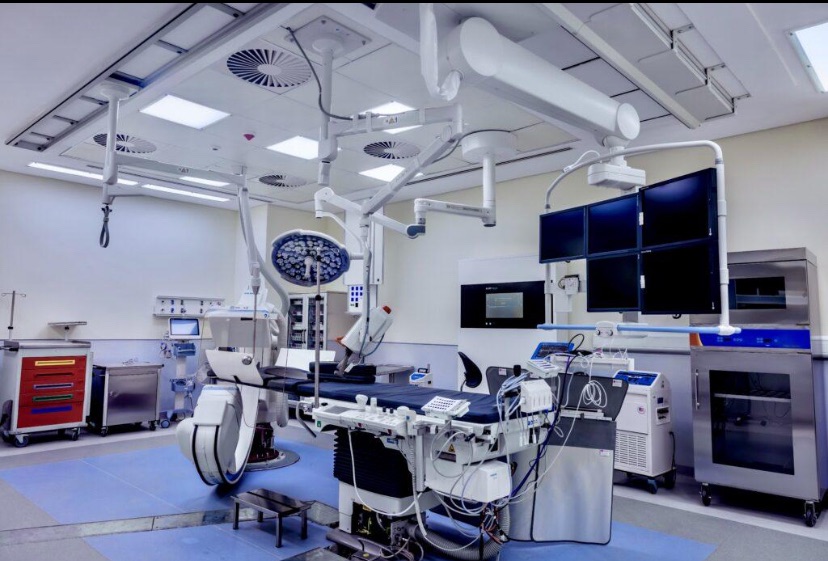

A new healthcare company, Atunse Healthcare Limited, has started operations in Nigeria with plans to provide advanced medical services and promote regenerative medicine.
The company was established through a partnership between United States-based KweHealth, LLC and Nigeria’s Tri-State Healthcare System. Its goal is to strengthen local healthcare capacity and reduce the amount of money Nigerians spend seeking specialised treatment abroad.
The launch comes at a time when medical tourism remains a major concern for Nigeria. The country reportedly lost an estimated $2.39 billion in 2024 as Nigerians travelled overseas for medical treatment.
Speaking at the launch in Lagos, Atunse Healthcare President and Chairman, Prof. Kamar Adeleke, said the partnership would bring international scientific, manufacturing and clinical expertise into Nigeria.
He explained that KweHealth would provide scientific and manufacturing capabilities, while Tri-State Healthcare System would contribute its clinical and institutional experience.
According to Adeleke, Atunse is a Nigerian-based company focused on regenerative therapies and other advanced treatments. The company hopes to help expand the range of medical services available locally and keep more healthcare spending within the Nigerian economy.
Adeleke also pointed to Africa’s heavy dependence on imported medical products. He said the continent imports about 99 per cent of its vaccines and more than 95 per cent of its medicines, while producing less than one per cent of its vaccine requirements.
He argued that the problem goes beyond the money spent by Nigerians who can afford to travel abroad. Many citizens who cannot afford overseas treatment are also affected because some advanced medical procedures are not readily available within the country.
Speaking at the event, Fatima Aliko Dangote, Group Executive Director, Commercial Operations, Oil & Gas, Dangote Industries, said improving healthcare should be treated as a national economic priority.
Representing Dangote Group President and CEO Aliko Dangote, she said a strong healthcare system would help Nigeria protect its workforce, retain skilled professionals, attract investment and respond better to future health emergencies.
She also referenced the COVID-19 pandemic, noting that the crisis exposed the dangers of depending heavily on other countries for essential medical supplies.
Lagos State Commissioner for Health, Prof. Akin Abayomi, said regenerative medicine is becoming an important area of modern healthcare. He stressed the need to train more professionals, establish specialised institutions and attract international expertise to Nigeria.
Regulatory support will also be important. A representative of the National Agency for Food and Drug Administration and Control (NAFDAC) said the agency had updated its regulatory framework to accommodate emerging medical technologies.
NAFDAC said regenerative medicine and biological products would need to meet strict safety and quality requirements, including appropriate clinical data and manufacturing standards.
The agency is also supporting efforts to revive vaccine production in Nigeria after the country lost its domestic vaccine manufacturing capacity decades ago.
The launch of Atunse Healthcare highlights a wider push to move Nigeria from being mainly a consumer of foreign medical services to becoming a provider of advanced healthcare within Africa.
For the initiative to succeed, stakeholders say Nigeria will need continued investment in medical research, healthcare infrastructure, local manufacturing, professional training and effective regulation.