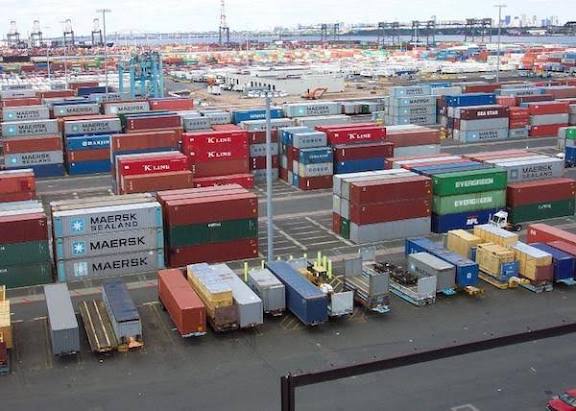

Nearly 1,000 export containers remain stranded at Lagos’ Apapa Port following persistent terminal congestion and a shortage of export vessels, disrupting supply chains and threatening Nigeria’s growing non-oil export sector.
Terminal operator APM Terminals confirmed that the backlog has significantly slowed export operations, while global shipping company Maersk said the affected cargo consists largely of agricultural commodities destined for markets across Africa and the Far East.
According to Maersk, the congestion initially left around 1,800 export containers awaiting shipment. About 800 containers have since been evacuated, but roughly 1,000 remain at the terminal awaiting loading onto outbound vessels.
Among the stranded cargo are hibiscus flowers, sesame seeds and other agricultural products that are highly sensitive to prolonged storage. Although dried hibiscus has a shelf life of up to one year under appropriate conditions, extended delays can reduce product quality, increase storage costs and weaken exporters’ competitiveness in international markets.
The Nigerian Shippers’ Council (NSC), the country’s port economic regulator, has stepped into the dispute, warning Maersk that exporters could seek compensation if shipment delays result in spoilage, contract breaches or financial losses.
The intervention underscores growing concerns over recurring logistics bottlenecks at Nigeria’s busiest seaport, where congestion has repeatedly slowed cargo movement despite ongoing reforms aimed at improving port efficiency.
In response to the crisis, Maersk said it plans to deploy a dedicated export vessel within the next week to clear the remaining containers and restore normal shipping operations. The company expressed confidence that the additional vessel would substantially reduce the backlog and minimise further disruption to exporters.
Industry stakeholders, however, argue that the immediate intervention addresses only the symptoms rather than the underlying causes of congestion. They point to limited terminal capacity, inconsistent vessel schedules, road traffic challenges around the Apapa port corridor and broader infrastructure constraints as recurring obstacles to efficient trade.
The delays also come at a time when Nigeria is intensifying efforts to diversify export earnings away from crude oil by promoting agricultural and manufactured products in regional and global markets. Analysts warn that persistent congestion could erode buyer confidence, increase logistics costs and reduce the competitiveness of Nigerian exports if structural bottlenecks remain unresolved.
Exporters have continued to call for improved port infrastructure, faster cargo processing, expanded shipping capacity and stronger coordination among shipping companies, terminal operators and government agencies to prevent similar disruptions in the future. They argue that efficient port operations will be essential if Nigeria is to achieve its long-term ambition of expanding non-oil exports and strengthening its position in international trade.