
The Nigeria LNG Limited (NLNG) has raised concerns over the sharp increase in cooking gas prices, accusing some marketers of buying liquefied petroleum gas (LPG) at relatively low prices and reselling it to consumers at significantly higher rates.
The company said some marketers purchased LPG from NLNG for between N800 and N900 per kilogramme, but the product later reached retail prices of as much as N2,400 per kilogramme during the recent price surge.
NLNG Managing Director and Chief Executive Officer, Adeleye Falade, disclosed this during a media briefing in Lagos. He said the increase was not caused solely by the company’s pricing but was also linked to supply shortages, artificial scarcity and problems within the distribution chain.
According to Falade, the retail price should have remained around N1,000 to N1,200 per kilogramme after transportation and other logistics costs were considered, based on guidance from the Nigerian Midstream and Downstream Petroleum Regulatory Authority (NMDPRA).
He said the large difference between the price at which some marketers obtained the product and the final retail price indicated that there were serious distortions within the market.
NLNG also discovered that some buyers were holding LPG in storage facilities instead of quickly distributing it to retailers. The company said this practice contributed to shortages and pushed prices higher.
To address the problem, NLNG engaged a major consulting firm to assess its off-takers and determine their ability to distribute LPG across the country.
The assessment examined factors such as storage capacity, distribution networks and the ability of companies to move products to retailers. Falade said the findings showed that some off-takers had limited distribution capacity despite receiving LPG from the company.
As a result, NLNG introduced an ordering system that gives preference to buyers with stronger distribution networks and the ability to supply retailers directly.
Falade also acknowledged that Nigeria has infrastructure challenges across the LPG value chain. However, he stressed that NLNG has continued to sell all the LPG it produces, with demand often exceeding its available supply.
He said supply shortages were another major factor behind the price increase. At the height of the crisis, demand was significantly higher than available supply, creating a gap of roughly 400,000 tonnes.
NLNG currently supplies about one-third of Nigeria’s domestic LPG production, with all of its LPG output directed to the local market.
Falade said the company could have provided greater protection against price shocks if it supplied the entire Nigerian market. However, declining gas feedstock has limited how much LPG the company can produce.
NLNG’s LPG production has increased substantially over the years, rising from about 70,000 tonnes to around 500,000 tonnes. The company expects the completion of Train 7 to increase its LPG production by about 50 per cent, potentially improving domestic supply.
Meanwhile, LPG retailers say prices have started stabilising after the sharp increase.
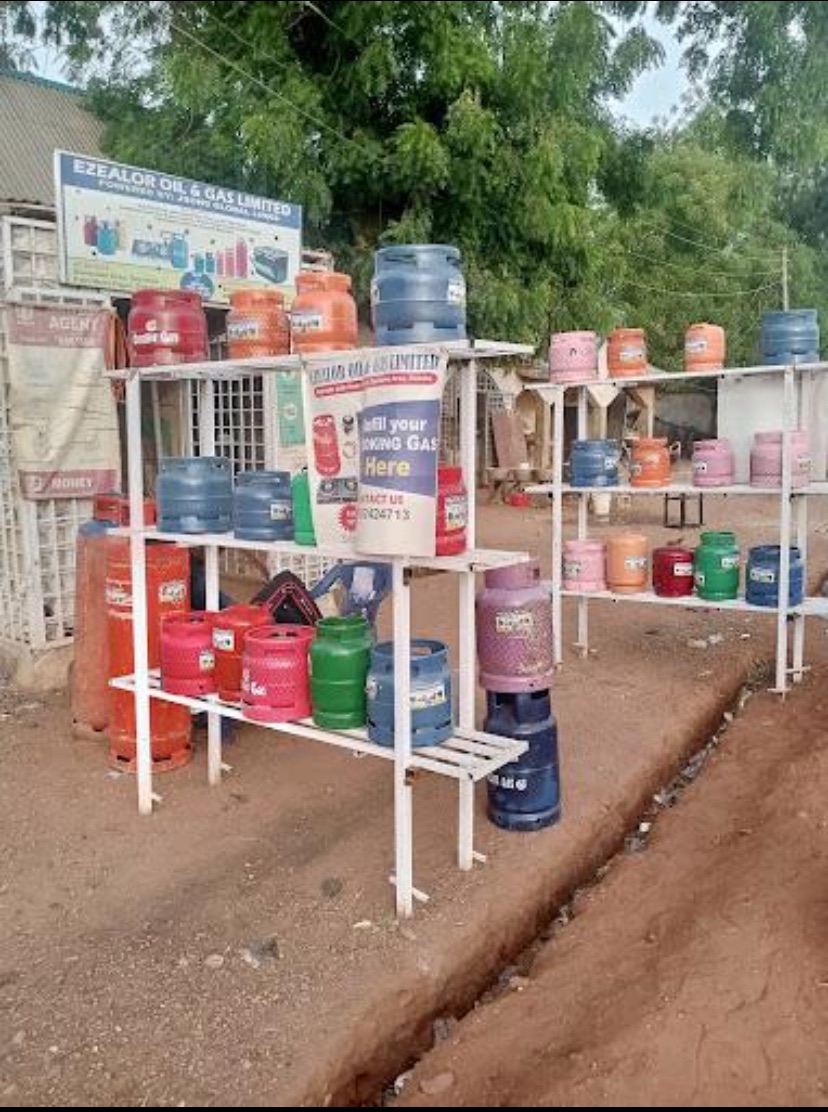
The President of the Association of LPG Retailers, Ayobami Olarinoye, said cooking gas currently sells for about N1,350 to N1,600 per kilogramme, depending on location and transportation costs. Retailers reportedly buy the product from plants for around N1,100 to N1,200 per kilogramme.
Although prices have fallen considerably from the N2,400 peak, they remain above the levels recorded before the May increase.
The latest development highlights the need for stronger distribution networks, adequate supply and effective market monitoring to prevent artificial shortages and protect households from sudden increases in the cost of cooking gas.