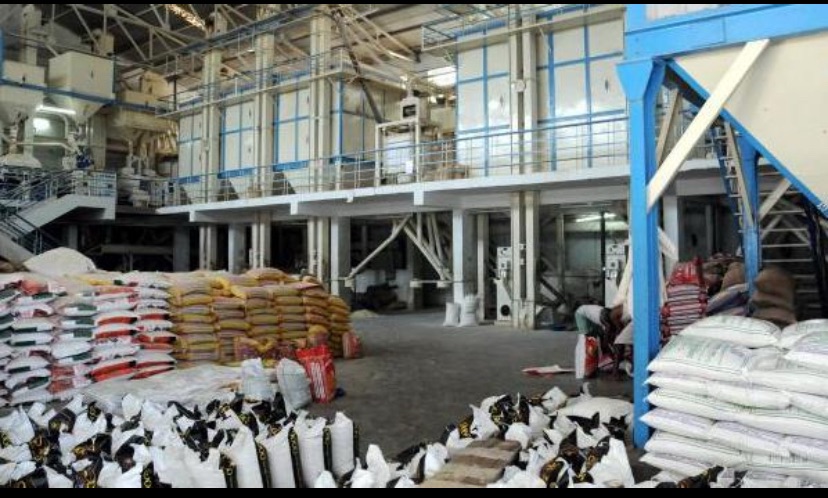

Nigeria’s rice milling industry is facing growing pressure as cheaper imported rice enters the market, making it increasingly difficult for local millers to compete.
The National Chairman of the Rice Millers Association of Nigeria, Peter Dama, said the Federal Government’s decision to reduce import barriers may be helping consumers buy rice at lower prices, but it is creating serious problems for local producers.
Dama explained that consumers, particularly in Lagos, have welcomed the lower prices because some varieties of rice are now selling for around N48,000 to N49,000 per bag. However, he warned that the benefit to consumers could come at the expense of Nigeria’s domestic rice industry.
According to him, imported rice is cheaper partly because several major rice-producing countries provide substantial support to their farmers. Countries such as India, China, Malaysia and Japan have various forms of agricultural support that help their farmers reduce production costs and remain competitive.
Dama argued that Nigerian farmers and millers do not receive comparable support. As a result, local businesses face much higher costs for producing, processing and transporting rice.
He said the situation had become so difficult that some millers were producing rice at costs higher than the prices at which imported products were being sold.
Rising labour expenses are also making matters worse. Dama pointed out that workers involved in drying, washing, processing and handling rice now demand significantly higher wages.
Transportation and loading costs have also increased sharply. He explained that the cost of loading a bag of rice onto trucks has risen from only a few naira in the past to hundreds of naira in some locations. For businesses transporting hundreds of bags at a time, these additional expenses quickly add up.
Electricity is another major challenge. Many rice mills depend on alternative sources of power because of unreliable grid electricity. The cost of diesel, equipment maintenance and other operational expenses further increases the price of locally processed rice.
Dama said the combination of high production costs and cheaper imports had already forced some rice millers to suspend operations.
He warned that continued pressure on local producers could weaken Nigeria’s rice-processing capacity and increase the country’s dependence on foreign food supplies.
The Federal Government introduced a temporary duty-free import window in 2024 for selected food commodities, including certain forms of rice, maize, wheat and beans. The policy was designed to increase food availability and reduce the impact of rising food prices.
The government later moved toward broader tariff reforms. In 2026, import duties on several agricultural products, including rice, were reduced rather than completely removed.
While lower import duties can help consumers access cheaper food, local producers argue that the policy must be balanced with measures that strengthen domestic agriculture.
Industry stakeholders are therefore calling for better access to affordable financing, reliable electricity, improved transportation infrastructure, modern farming equipment and stronger agricultural support.
They believe such measures would allow Nigerian farmers and millers to reduce production costs and compete more effectively with imported rice.
The debate highlights a difficult choice for policymakers: keeping food affordable for consumers in the short term while protecting local producers and building a stronger domestic food industry for the future.
For Nigeria’s rice sector to become truly competitive, millers say reducing import barriers alone will not be enough. The country must also make it cheaper and easier to produce rice locally.