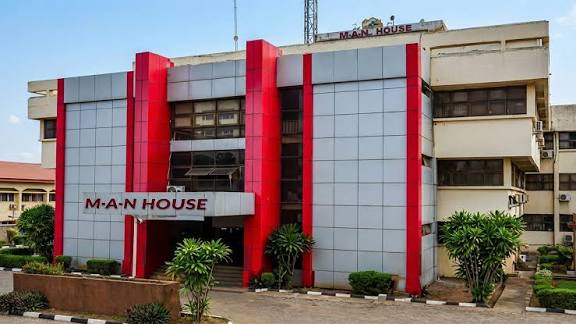

Nigeria’s industrial revival is hitting a credit brick wall, as bank lending to the manufacturing sector contracted by N1.92 trillion (22.5%) over the past year, choking capital investment and threatening jobs in Africa’s largest economy.
According to a position paper released by the Manufacturers Association of Nigeria (MAN), total credit extended to the real sector fell from N8.53 trillion in December 2024 to N6.61 trillion by December 2025. The sharp pullback underscores mounting distress among producers grappling with soaring production costs, forex volatility, and a severe liquidity squeeze in the banking system.
The contraction comes amid one of the most restrictive monetary environments in recent years. The Central Bank of Nigeria has maintained a hawkish stance to curb inflationary pressures and defend the naira, resulting in sharply elevated borrowing costs across the economy. While commercial banks have continued expanding lending to select sectors, manufacturers contend that current interest rates have effectively priced most productive enterprises out of the credit market.
“With prime lending rates hovering at 27% and maximum rates hitting 35.6%, accessing working capital has become economically irrational,” said Segun Ajayi-Kadir, Director-General of MAN. “Borrowing at these levels doesn’t finance growth; it accelerates insolvency. Our members are being forced to scrap expansion plans and deplete internal reserves just to keep the lights on.”
The CBN defends its aggressive tightening, which has pushed the Monetary Policy Rate to historic highs, as a necessary trade-off to tame stubbornly high inflation and stabilise the currency. It has also resisted calls to revive direct development finance interventions, arguing that past schemes, though popular with industry, often distorted market pricing, fuelled excess currency circulation, and failed to drive sustainable capacity utilisation.
This policy stalemate has left the sector in a precarious limbo. The federal government’s proposed N1 trillion Manufacturing Stabilisation Fund, announced as part of broader industrial support, has yet to see meaningful implementation. Stakeholders say the absence of clarity regarding eligibility criteria and funding structure has limited its immediate impact. Industry sources attribute the delay to fiscal bottlenecks, bureaucratic inertia, and difficulty sourcing counterpart funding amid shrinking fiscal headroom. With no clear disbursement timeline, the facility is rapidly losing its relevance as an emergency response tool.
The implications extend far beyond factory floors. Manufacturing is a vital engine for employment, value addition, and export diversification. A sustained credit contraction risks triggering a vicious cycle: reduced capital expenditure leads to stagnant productivity, which limits output growth and erodes competitiveness against regional and Asian peers. In contrast, manufacturers in emerging economies such as Vietnam and India benefit from far more affordable long-term financing, giving them a distinct competitive advantage. Nigerian producers already contend with elevated financing costs, infrastructure constraints, and foreign-exchange volatility, all of which severely limit their capacity for significant capital investment.
These operational headwinds are intensifying. Rising electricity tariffs, logistics costs, exchange-rate fluctuations, and expensive imported inputs have increased pressure on margins across multiple subsectors, including food processing, chemicals, textiles, and building materials. Industry operators warn that prolonged constraints on affordable credit could further weaken capacity utilisation and delay much-needed investment in new production lines.
For policymakers, the data presents a stark challenge: tame inflation without strangling industry. Manufacturers argue that targeted interventions, credit guarantees and concessionary financing windows, could provide temporary relief without undermining broader monetary objectives. Yet with borrowing costs crushing working capital and the Stabilisation Fund mired in bureaucratic limbo, time is running out. Without immediate action, the sector faces de-industrialisation, deepening import dependence, and widespread job losses. The choice is no longer between stability and growth; it is whether Nigeria will have any manufacturing sector left to stabilise.