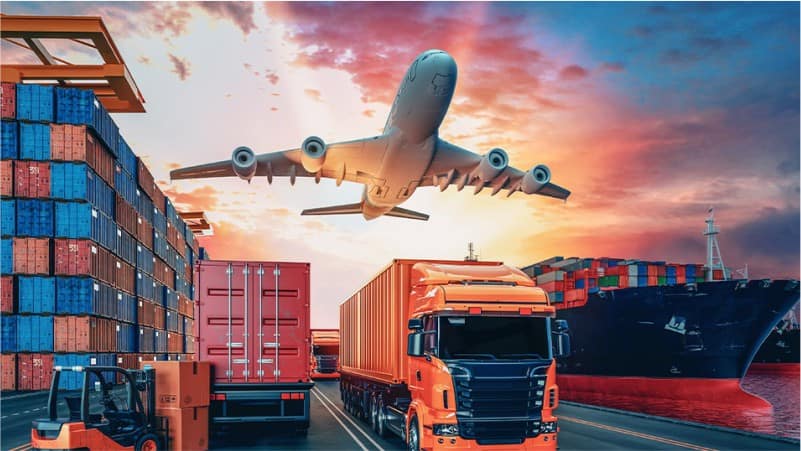

Nigeria’s logistics industry is projected to grow from $10.95 billion in 2025 to $15.05 billion by 2030, according to Mordor Intelligence’s November 2025 market estimate. But high transport costs, poor infrastructure, congestion and fragmented supply chains continue to limit the sector’s economic potential.
The cost is particularly visible in agriculture. In June 2026, Chartered Institute of Logistics and Transport (CILT) President Dr Boboye Oyeyemi estimated that Nigeria loses between $2.3 billion and $3.3 billion annually to post-harvest losses and logistics inefficiencies.
Oyeyemi also said in June 2026 that as much as 40% of food transported from the Middle Belt to Lagos could be lost to spoilage, underscoring weaknesses in transportation, storage and cold-chain infrastructure.
Separately, Dr Oluwasegun Musa, chairman of Global Transport Policy, said at the organisation’s 2026 annual conference in Lagos that transport inefficiencies cost Nigeria about N3.2 trillion ($4 billion) annually. He cited congestion, poor integration between transport modes and fragmented logistics operations.
Nigeria remains heavily dependent on road transport for freight movement. Industry data cited by The Guardian in March 2026 indicated that roughly 90%–95% of port cargo is evacuated by road, while rail handles less than 5%.
The imbalance has put additional pressure on road infrastructure and contributed to congestion around major gateways.
The Lekki Deep Sea Port, which the Nigerian Ports Authority identified in March 2026 as handling a significant share of national cargo throughput, has also faced concerns over cargo evacuation infrastructure. Plans for a rail connection to the port have been announced as part of efforts to improve multimodal transport.
Technology companies are attempting to modernise the fragmented market.
According to Disrupt Africa in October 2025, logistics-fintech platform truQ had onboarded about 3,000 transporters and digitised 300,000 trips. Disrupt Africa reported in December 2025 that last-mile logistics platform RUN had more than 8,400 customers and 1,900 riders in Nigeria.
Meanwhile, Nigeria’s National Single Window, which went live in 2026, is designed to digitise and integrate trade processes across government agencies.
Industry stakeholders have repeatedly called for better roads, stronger rail and inland-waterway connections, fewer illegal checkpoints and more efficient customs procedures.
The challenge is no longer simply moving goods from one point to another. It is reducing the time, cost and losses associated with doing so.
For Nigeria, a more efficient logistics system could strengthen agriculture, trade and manufacturing while reducing avoidable economic losses. But unlocking that opportunity will require infrastructure investment to move alongside regulatory and technological reform.