
Nigeria’s era of relatively cheap living has been steadily eroded as the cost of food, transportation, housing and energy has climbed sharply, leaving households and businesses struggling to keep pace with rising expenses.
A March 3, 2026 analysis by Dataphyte, based on a comparison of Nigeria’s Numbeo grocery basket, found that items costing ₦25,225 in 2020 would cost ₦147,050 in 2026, a 582% increase. The comparison is not an official inflation measure, but highlights how dramatically the prices of everyday goods have changed.
Few measures capture the pressure on Nigerian households as clearly as the cost of preparing jollof rice.
In its April 30, 2026 report, SBM Intelligence said the national average cost of preparing a pot of jollof rice for a family of five reached ₦30,435 in March 2026, up 19.4% from ₦25,486 in October 2025. The research linked the increase to higher fuel and transport costs and the global oil-price shock associated with the Middle East conflict.
However, the pressure eased slightly afterwards. In its July 22, 2026 Q2 report, SBM Intelligence said the national average Jollof Index fell to ₦29,578 in June, although it remained 14.6% higher than a year earlier.
Dataphyte’s March 3, 2026 analysis also showed steep increases across staple foods between 2020 and 2025. Yam recorded the largest increase at 733%, followed by eggs at 478%, fresh catfish at 469%, brown beans at 439% and vegetable oil at 431%.
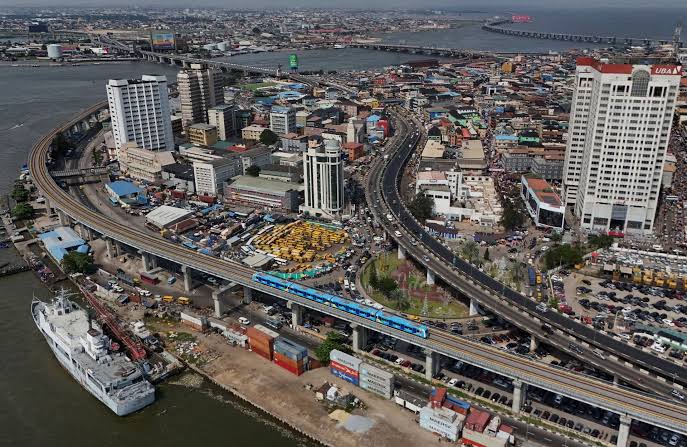
On February 24, 2026, the Lagos Metropolitan Area Transport Authority (LAMATA) announced that the Lagos State Government had approved a 13% fare increase across the Bus Reform Initiative, including BRT and standard bus services. The new fares took effect on March 2. LAMATA said operators had cited mounting economic pressures and the sustainability of transit operations.
Diesel has added to the burden on transport operators and businesses. NBS data reported on May 29, 2026 showed that the average retail price of diesel rose 43.67% year-on-year to ₦2,474.69 per litre in April 2026, from ₦1,722.45 in April 2025.
Housing affordability has also deteriorated, particularly in Lagos.
A GTI Research study reported on August 25, 2026 estimated that rents across Lagos rose by between 80% and 120% from 2024 to 2026, while wages increased by only 7% to 9% over the same period.
The disparity means households are devoting a growing share of their incomes to securing accommodation, leaving less money for food, transportation, education and other necessities.
Fuel remains one of the biggest drivers of the wider cost increase.
In a June 2, 2026 report, The PUNCH calculated that petrol prices rose from ₦175 per litre in May 2023 to about ₦1,300 in May 2026, representing an increase of roughly 643%. The newspaper linked the initial surge to the removal of the petrol subsidy in May 2023, with naira depreciation adding to the pressure.
The impact extends beyond motorists. Higher fuel costs raise transportation, logistics and production expenses, which businesses can ultimately pass on to consumers.
Nigeria’s price shock is therefore not confined to one commodity or sector. Food, transport, housing and energy costs have all moved substantially higher, while income growth has struggled to match the pace in many households.
The result is an economy in which falling inflation does not necessarily mean falling prices. Inflation measures the rate at which prices are increasing; once prices have risen sharply, a slowdown in that rate does not reverse the increases already absorbed by consumers.
For millions of Nigerians, the challenge has consequently shifted from simply managing inflation to coping with a permanently higher cost base, one that continues to reshape what households can afford each month.